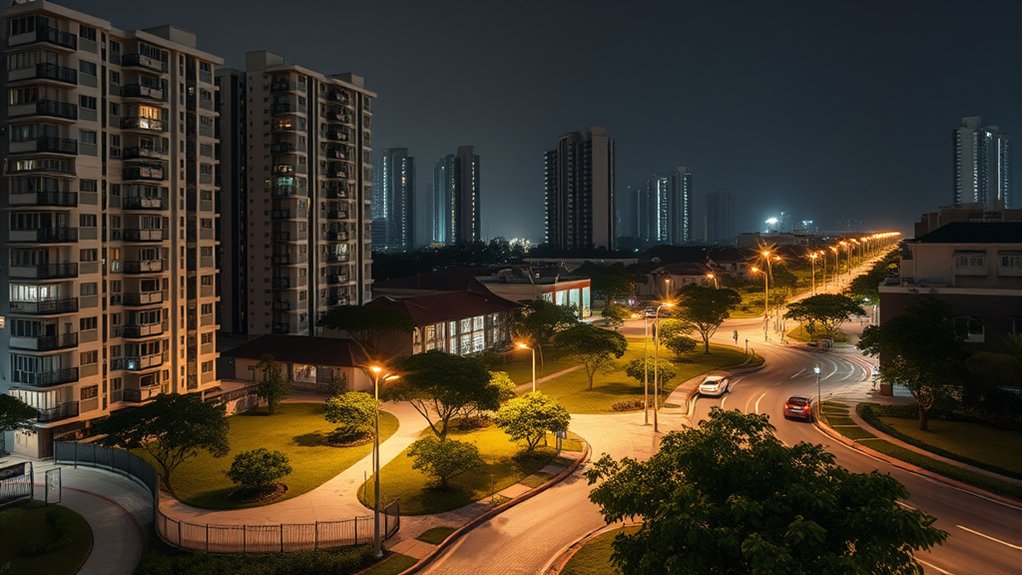
For a family choosing a home in Singapore, the distance to a primary school can affect far more than the morning journey. It may influence priority during Primary 1 registration, shape daily routines for years and affect how other family buyers view the property later. That combination makes school proximity a meaningful housing consideration—but not a promise of admission, a universal price premium or a guaranteed investment return.
What the 1km and 2km categories actually mean
Home-school distance matters when a chosen primary school receives more applicants than it has vacancies. Under the Ministry of Education’s current distance-priority framework, Singapore Citizens living within 1km are considered first, followed by citizens living between 1km and 2km, then citizens outside 2km. Permanent Residents are considered after citizens, in the same distance order.
This is priority within an oversubscribed registration phase, not a reserved seat. If applications still exceed vacancies within the relevant citizenship-and-distance group, balloting may be required. MOE explains that computerised balloting is conducted centrally and applicants who must ballot within the same priority group have an equal chance. A home within 1km can therefore improve a family’s position without guaranteeing a place.
Parents should also avoid treating a property portal’s straight-line estimate or a sales brochure as the official answer. MOE says home-school distance is determined using building outlines and the school boundary, and it can change when building plans or boundaries are updated. Its address guidance directs parents to verify the category through the OneMap School Query service in the year of registration.
Why families still place a high value on proximity
Even with no certainty of admission, proximity has practical value. A shorter school run can reduce time spent in traffic, make walking feasible and give working parents or caregivers more flexibility at drop-off, pick-up and after-school activity times. Over six primary-school years, those small daily savings can matter more than a one-off feature such as a larger balcony.
There is also an option value. A home may fall within the distance category of several primary schools, allowing a family to consider alternatives rather than anchoring its entire plan to one highly subscribed school. Buyers can read our overview of Singapore’s 1km school rule, but the sensible approach is to shortlist homes only after comparing current vacancies and balloting history for multiple schools. Past demand is useful context, not a forecast of a future exercise.
The priority also comes with a real residential commitment. A child who gains admission through home-school distance priority must generally live at the registered address for at least 30 months from the start of the P1 Registration Exercise, although the starting point differs for qualifying new and resale properties. MOE can transfer a child if the stay condition is not met or if the address information cannot be substantiated. Families should therefore buy a home they can genuinely occupy, not an address acquired only as an admissions tactic.
Singapore evidence suggests value—but not a fixed premium
Local research supports the idea that school allocation rules can be reflected in housing prices. A Singapore study by Sumit Agarwal, Satyanarain Rengarajan, Tien Foo Sing and Zoe Yang examined school relocation events from 1999 to 2009. Its published research abstract reports that, before relocations, private housing prices near the old school locations declined relative to homes outside the 2km zone; effects in the public housing market were smaller. The effects also varied with school popularity.
That is credible evidence that proximity can have economic value, but it should not be converted into a blanket claim that every home within 1km deserves a set percentage premium. The study covered a historical period and used school relocations to identify an effect. A particular unit’s price today still reflects tenure, remaining lease, age, condition, floor, view, project quality, transport access, supply and the wider market cycle.
There can also be costs at very close range. School traffic, bells, activity noise and congestion may be most noticeable for units facing an entrance or sports area. Families should visit at school opening and dismissal times, not only during a quiet weekend viewing. Our earlier look at whether elite primary schools always translate into higher condo prices offers a useful counterpoint: buyer demand is heterogeneous, and other attributes can outweigh the school effect.
Do not let the school premium break the family budget
The emotional stakes of education can encourage overbidding. A better decision starts with the family’s maximum sustainable monthly housing cost, including mortgage payments, maintenance fees, property tax, insurance, renovation and transport. Buyers should then compare the extra price for the preferred distance category with alternatives: a slightly larger home farther away, renting within the area, choosing a less subscribed nearby school, or keeping funds available for childcare and enrichment.
Paying more may be reasonable when the home also works on independent grounds—for example, it is near jobs, public transport, grandparents, healthcare and everyday amenities. The risk rises when the purchase case depends on one child winning a place at one school. If the ballot is unsuccessful, the school relocates, family needs change or a future buyer does not share the same preference, the assumed premium may not be recovered.
A practical checklist before committing to a home
- Verify the exact block and address. Check the official OneMap category in the child’s registration year; do not rely on an agent’s map pin or an old listing.
- Understand the relevant phase. Distance affects priority when applications exceed vacancies, but eligibility and available places vary by registration phase.
- Study more than one school. Compare nearby alternatives, recent demand and the family’s fit with each school rather than pursuing prestige alone.
- Plan for genuine occupation. Make sure completion, move-in timing and the 30-month stay requirement align with the family’s circumstances.
- Inspect the micro-location. Test the walking route, road crossings, traffic, noise and caregiver logistics at real school-run times.
- Value the home without the school. Compare recent transactions and ask whether the property remains acceptable if admission does not happen.
The best family home has to work beyond P1 registration
School proximity is powerful because it combines an admissions priority with years of daily convenience and a recognisable source of demand from other parents. Yet its value is conditional. The official category must be verified, oversubscription can still lead to a ballot, and the address carries residency obligations when it secures priority.
For family buyers, the strongest purchase is not simply the closest home to the most popular school. It is a financially comfortable, liveable home near a range of suitable schools—one that still serves the household if the preferred admission outcome, future resale premium or market conditions do not unfold as hoped.


One thought on “Why School Proximity Shapes Family Home-Buying Decisions in Singapore”