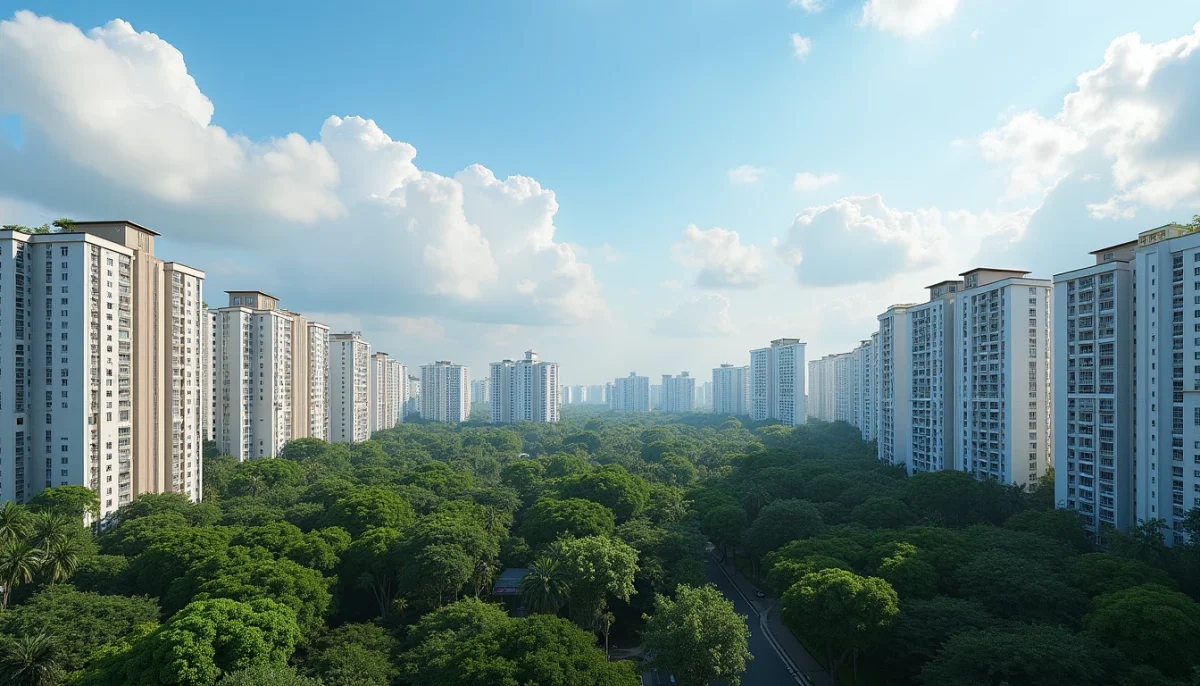
Although the dream of owning a home once seemed within reach for most Singaporean youths, today a perfect of economic pressures, lifestyle choices, and policy shifts is turning that dream into a formidable challenge. Median age of first‑time buyers in the United States has already hit 40, and Singapore mirrors this delay: BTO resale waiting times stretched beyond five years by late 2025, while private residential prices jumped 12 % year‑on‑year in 2024, outpacing wage growth of just 4 %. Rental rates in the city centre rose 9 % in the same period, shrinking the gap between renting and buying, and the home‑price‑to‑income ratio topped a historic 12 : 1 in 2025. These market trends tighten the affordability window for any young adult hoping to step onto the property ladder.
Rising prices, stagnant wages, and lengthy waiting times now make homeownership a distant dream for Singapore’s youth.
Financing constraints add another layer of difficulty. In the United States, 32 % of Gen Z reported higher debt than savings, and Singapore’s loan‑to‑value ceiling for first‑time condo buyers is capped at 75 %, limiting leverage. Average household debt in Singapore reached S$78,000 per capita in 2025, while mortgage rates hovered around 3.5 %, increasing monthly outflows. Even a new HDB flat still demands a 10 % down‑payment—S$30,000 on a S$300,000 unit—forcing many to save longer or borrow more, both of which strain limited cash reserves.
Employment patterns further erode buying power. Median salary growth for Singaporeans aged 25‑34 fell to 1.8 % YoY in 2025, and real wage growth lagged behind inflation by 0.9 %. Part‑time and gig‑economy work now accounts for 27 % of Gen Z employment, reducing stable income streams, while youth unemployment sits at 5.2 %, higher than the overall 2.1 % rate. Disposable household income grew only 2.3 % YoY, insufficient to offset the rising cost of housing and everyday living.
Cultural shifts reveal a changing mindset. A 2025 Northwestern‑Chicago survey found 46 % of Gen Z believed homeownership unattainable despite effort, and 38 % of Singaporean respondents prioritized travel and experiences over property investment. “Doomspending”—discretionary spending despite financial stress—appears in 22 % of young adults, and social media sentiment shows a 15 % rise in negative posts about housing affordability. Flexible living arrangements gain appeal, with 31 % of Gen Z favoring co‑living spaces over traditional ownership.
Alternative investments attract risk‑tolerant youths. Cryptocurrency holdings rose 18 % YoY in 2025, peer‑to‑peer lending participation grew 27 % in 2024, and real‑estate crowdfunding captured 9 % of investors under 35. Stock market exposure reached 34 % of households, and desired annual yields increased by 12 %, indicating a shift toward higher‑return, higher‑risk assets.
Policy responses are modest. The HDB’s 2025 “Starter Flat” scheme targets households earning below S$4,500 monthly, but its impact remains limited against soaring prices and debt burdens. For those who do pursue ownership, executive condominiums in emerging districts like District 27 offer a more accessible entry point, with recent sites launched at approximately SGD 692 per sq ft ppr and positioned near MRT stations, schools, and established amenities. Consequently, many young Singaporeans quietly challenge the rush to own a home, opting for rental flexibility, shared living, or diversified investments, while the traditional path to ownership feels increasingly out of reach. Home‑price‑to‑income ratio has risen dramatically. Young Singaporeans are increasingly opting for co‑living arrangements as a practical alternative.