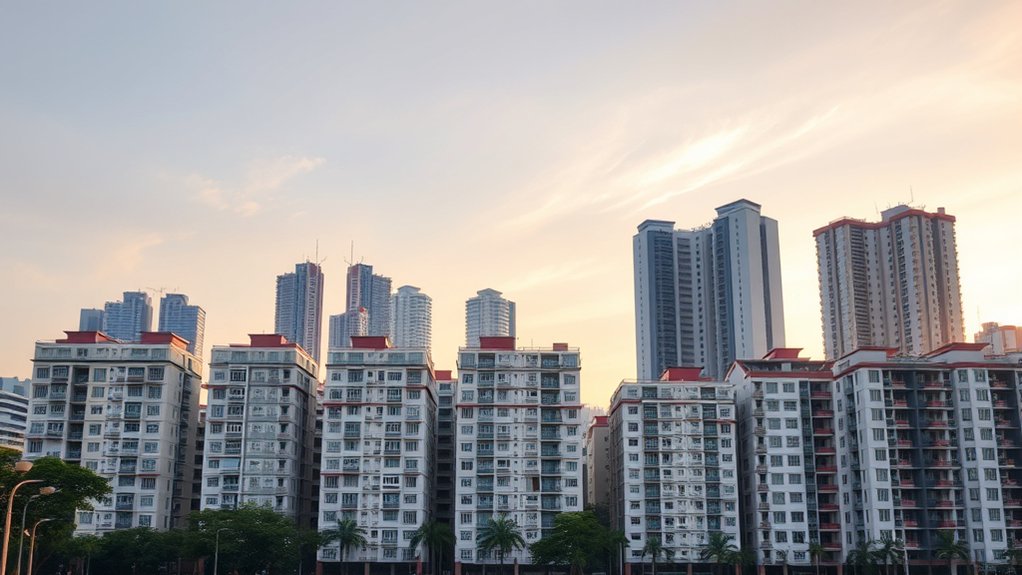
There is no compulsory Singapore property ladder. A BTO flat can be a long-term home, while a resale flat, executive condominium (EC) or private home may be the better first purchase for a household with different timing, space and financing needs. “Progression” is useful only when each move improves your housing situation without weakening retirement savings or leaving too little cash.
The comparison below focuses on the durable differences: eligibility, time to move in, occupation restrictions, financing and exit costs. Grant amounts, income ceilings and tax rules can change, so obtain an HDB Flat Eligibility (HFE) letter and check the relevant agencies before paying an option fee.
Start with the destination, not the next rung
Before comparing property types, decide how long the home must work for you. Consider family size, workplace and school access, caregiving, acceptable commute, renovation appetite and the earliest realistic moving date. Then set a budget that includes the downpayment, stamp duties, legal fees, renovation, furnishings and an emergency reserve—not just the monthly instalment.
| Route | Main advantage | Main trade-off | Best suited to |
|---|---|---|---|
| BTO | Subsidised new flat and potential grants | Balloting, construction wait and occupation rules | Eligible buyers who can plan ahead |
| HDB resale | Existing location and much faster completion | Market price, lease condition and possible cash-over-valuation | Buyers who need certainty or an earlier move |
| New EC | Condo facilities at a regulated entry stage | Higher quantum plus public-housing eligibility and MOP rules | Eligible households with stronger income and cash flow |
| Private housing | Wider choice and no HDB MOP | Highest capital requirement and exposure to stamp duties | Buyers with adequate liquidity and borrowing capacity |
BTO: lower entry cost in exchange for time and restrictions
A BTO flat is sold directly by HDB at a subsidised price, but successful applicants must accept the project’s location, flat mix and estimated completion timeline. Balloting is not guaranteed, and the wait continues after selection. This route works best when current accommodation is stable and major life plans can tolerate construction risk.
For eligible families applying for an HFE letter from 24 August 2026, the monthly household income ceiling for a subsidised flat, the CPF Housing Grant on a resale flat, or an HDB housing loan is $16,000; the corresponding ceiling for eligible singles aged 35 and above is $8,000. These revised ceilings do not simply rewrite every earlier HFE assessment, so check HDB’s 2026 income-ceiling implementation details. Eligible first-timer families may receive the means-tested Enhanced CPF Housing Grant (EHG), currently up to $120,000; eligible singles may receive up to $60,000. The actual amount depends on assessed income and other conditions.
New flats are now classified Standard, Plus or Prime. Standard flats generally carry a five-year Minimum Occupation Period (MOP). Plus and Prime flats have a 10-year MOP, subsidy recovery on resale and a permanent prohibition on renting out the whole flat. Review the MND classification framework and the conditions for the specific project. Location-specific previews, such as this guide to BTO choices across four towns, should be treated as supplementary to HDB launch documents.
HDB resale: speed and choice, with price and lease checks
A resale flat lets you inspect the unit, assess the block and neighbourhood, and negotiate for an established location. Completion is much faster than waiting for a BTO, although it is not literally immediate. This can save years of rent or solve an urgent need to live near parents, schools or work.
Resale buyers should compare recent HDB transactions, the official valuation and remaining lease. Any cash-over-valuation cannot be funded by CPF or a housing loan. Renovation and maintenance can also be substantial for an older unit. Eligible first-timers may combine the EHG with applicable resale and proximity grants, but headline maximums assume that every condition is met.
Resale eligibility differs from BTO eligibility. For many ordinary resale flats there is no purchase income ceiling, although income ceilings still apply to grants and HDB loans; Plus and Prime resale flats have tighter buyer restrictions. Private-property owners and recent disposers face separate wait-out and financing rules, with limited exceptions. Use the HFE assessment for your actual household rather than extrapolating from another buyer’s case.
Executive condominiums: distinguish new ECs from resale ECs
A new EC is built and sold by a private developer but remains subject to public-housing eligibility at purchase. The revised household income ceiling is $18,000 only for new units in ECs whose land-sale tender closes on or after 24 August 2026; it does not apply to balance units in existing ECs or projects with earlier tender dates. Buyers must form an eligible family nucleus, satisfy citizenship and property-ownership rules, and generally must not own private property or have disposed of it within the preceding 30 months. A second-timer may also owe a resale levy. Unlike BTO flats, new ECs use bank financing rather than an HDB concessionary loan.
The five-year MOP is measured from the EC’s Temporary Occupation Permit. During that period, owners must occupy the unit and cannot sell it or rent out the whole unit. After five years it may be sold to eligible Singapore citizens and permanent residents; after 10 years it becomes fully privatised and citizenship restrictions fall away. A resale EC past MOP is therefore not governed by the same income ceiling as a new EC. This distinction is useful when reading local EC coverage, including this overview of Sengkang EC resale demand.
ECs can offer facilities and a private-condominium format at a lower initial price than some nearby private launches, but “cheaper than private” does not mean affordable. Maintenance fees, renovation, property tax and a larger mortgage should all fit comfortably without relying on future appreciation.
Private housing: flexibility comes with a larger funding burden
Private condominiums and landed homes do not have HDB income ceilings or an HDB MOP. Buyers can choose completed resale homes or uncompleted developer launches, subject to the contract and any Seller’s Stamp Duty exposure on an early sale. Foreign ownership restrictions also apply to certain property types, especially landed homes.
The main constraint is often financing. Under the MAS housing-loan framework, financial institutions apply loan-to-value limits and a Total Debt Servicing Ratio (TDSR) ceiling of 55% of gross monthly income. The Mortgage Servicing Ratio (MSR), capped at 30%, applies to HDB flats and relevant EC purchases, not an ordinary private condominium. Actual loan-to-value depends on outstanding housing loans, age and tenure; 75% is not automatic for every borrower.
Budget for Buyer’s Stamp Duty and check whether Additional Buyer’s Stamp Duty applies based on citizenship, ownership count and the buyers named in the purchase. Selling an HDB flat before buying private property can materially change both ABSD exposure and cash timing, so sequence the transactions with legal and financing advice.
Calculate the exit before committing to an upgrade
Do not estimate upgrade funds as “expected sale price minus outstanding loan.” If CPF was used, sale proceeds first discharge the mortgage and then fund the required CPF refund. This normally includes CPF principal used, housing grants and accrued interest. CPF explains the order of payment in its property-sale refund guide. Refunded CPF remains your money, but it is not the same as cash proceeds; age 55 rules may also affect where the refund is credited.
Build three figures before viewing the next home:
- Net cash from sale: expected sale price less loan redemption, CPF refund and selling costs.
- Funds available for purchase: usable CPF plus cash, after preserving emergency and renovation reserves.
- Affordable monthly cost: mortgage, maintenance, property tax, insurance and a buffer for higher rates.
Finally, stress-test a delayed sale, lower valuation and higher interest rate. Apply for an HFE letter for HDB routes or bank in-principle approval for EC and private routes before making a commitment. The best progression plan is not the one with the most transactions; it is the one that leaves the household securely housed, liquid enough for surprises and still saving for retirement.


5 thoughts on “Singapore Property Progression: BTO, Resale, EC or Private?”