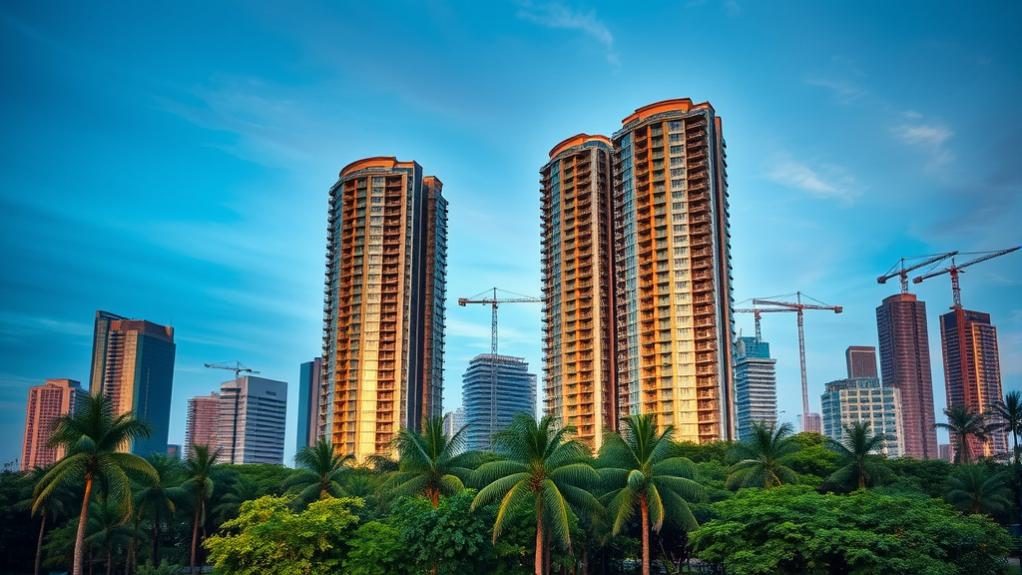
Springleaf Residence recorded one of the strongest opening launch weekends in the suburban property market, with joint venture partners GuocoLand and Hong Leong Holdings selling 870 of its 941 units. Achieving a 92% take-up rate at an average selling price of S$2,175 per square foot, the Upper Thomson development demonstrated robust pent-up demand for biophilic, nature-oriented homes positioned along major rapid transit corridors. The performance provides valuable insights into current homebuyer preferences, transit accessibility premiums, and developer product positioning in District 26.
Massive Opening Weekend Take-Up and Pricing Metrics
The swift absorption at Springleaf Residence reflects disciplined developer pricing tailored to domestic end-users. Unit prices started from S$1,995 psf, with entry-level one-bedroom apartments starting below S$900,000 and two-bedroom configurations starting around S$1.35 million. These price points resonated strongly with young professionals, first-time homebuyers, and downsizing parents residing in neighboring private and public estates across Yishun, Ang Mo Kio, and Upper Thomson.
Nearly all one-bedroom and two-bedroom units were committed during the first 48 hours of sales, while larger three-bedroom and four-bedroom apartments saw steady absorption among growing families. Official market transaction records published in URA property data confirm that suburban new home sales have consolidated around transit-connected developments offering competitive quantum pricing beneath key buyer affordability ceilings.
The pricing strategy adopted by GuocoLand and Hong Leong created an attractive risk-reward profile for buyers. By pricing the majority of units between S$2,000 and S$2,250 psf, the developers established a palpable discount relative to new launches located closer to the central core, while offering superior product specifications, generous garden grounds, and modern smart-home fittings.
Thomson-East Coast Line Connectivity at Springleaf Station
Direct rapid transit connectivity served as a major catalyst for the project’s launch success. Springleaf Residence is situated within immediate walking distance of Springleaf MRT station on the Thomson-East Coast Line. The rail line has significantly enhanced connectivity for Upper Thomson residents, cutting commuting times to prime employment and lifestyle nodes.
According to transit route plans published by the Land Transport Authority, passengers boarding at Springleaf reach Orchard in approximately 22 minutes and Shenton Way in under 30 minutes without changing trains. Historically, Upper Thomson was considered a tranquil but transit-dependent enclave relying primarily on private vehicles or bus services along Sembawang Road. Direct access to a modern subway line provides residents with the lifestyle benefits of suburban living alongside seamless urban accessibility.
Furthermore, the Thomson-East Coast Line integrates smoothly with existing interchanges, connecting commuters to the Circle Line at Caldecott, the Downtown Line at Stevens, and the North-South Line at Orchard. This comprehensive transit grid allows residents to travel across Singapore without relying on congested expressway corridors during morning and evening rush hours.
Nature-Centric Living by the Central Catchment Reserve
Beyond rail links, Springleaf Residence was designed to capitalize on its unique natural surroundings. The development directly borders the Central Catchment Nature Reserve and sits minutes away from Springleaf Nature Park and Lower Seletar Reservoir. GuocoLand incorporated its signature biophilic design language, integrating lush multi-layered landscaping, organic water features, and expansive communal lawns that blend into the adjacent forested greenery.
Unblocked panoramic views toward the nature reserve and low-density landed housing enclaves along Thong Soon Green created strong emotional appeal during showflat previews. In a dense city-state like Singapore, homes offering permanent unblocked greenery while retaining rapid train connectivity represent an uncommon combination that commands sustained appeal among owner-occupiers.
The biophilic concept extends across the residential blocks, incorporating passive ventilation designs, energy-efficient building materials, and generous communal terraces. This emphasis on wellness and outdoor recreation resonates strongly with modern homeowners seeking a calm retreat from urban work environments.
Target Demographics and Local Upgrader Demand
The demographic profile of buyers at Springleaf Residence highlights the depth of domestic capital in the Outside Central Region. Over 85% of purchasers were Singapore Citizens, with Permanent Residents comprising the remainder. A significant portion of buyers consisted of HDB upgraders from surrounding northern towns looking to advance through the private housing market.
Understanding buyer motivations requires examining broader asset accumulation patterns. Our study on Singapore property progression across BTOs, ECs, and private condominiums illustrates how equity accumulated through public housing appreciation allows families to make disciplined transitions into private residential developments. In addition, many multi-generational families bought multiple units in Springleaf Residence to allow parents and adult children to reside in close proximity while maintaining independent living quarters.
For long-term capital preservation, buyers should also monitor future supply pipelines across the Thomson and Sembawang corridors. The planned commercial enhancements around Springleaf village, combined with protected green reserves, create a permanent physical barrier against overdevelopment. As subsequent land sales materialize along the northern transport spine, early benchmark pricing established at Springleaf Residence offers meaningful downside protection for prudent purchasers.
Balancing Capital Outlay with Debt Servicing Guidelines
While the strong sales at Springleaf Residence reflect healthy market liquidity, prospective buyers must maintain financial discipline when planning their purchase. Under mortgage directives issued by the Monetary Authority of Singapore for housing loans, residential borrowers are subject to the 55% Total Debt Servicing Ratio (TDSR) framework and a 75% maximum Loan-to-Value limit for their first mortgage.
Buyers must ensure that their monthly repayment obligations remain sustainable under regulatory interest rate stress-test levels. Applying the practical guidelines outlined in the 3-3-5 rule for property affordability ensures that households keep adequate emergency cash buffers rather than stretching liquidity to the maximum loan ceiling. Those planning their property acquisition can also review our analysis of how TDSR and MSR borrowing rules work in Singapore to calculate their exact borrowing limits before committing to option fees.