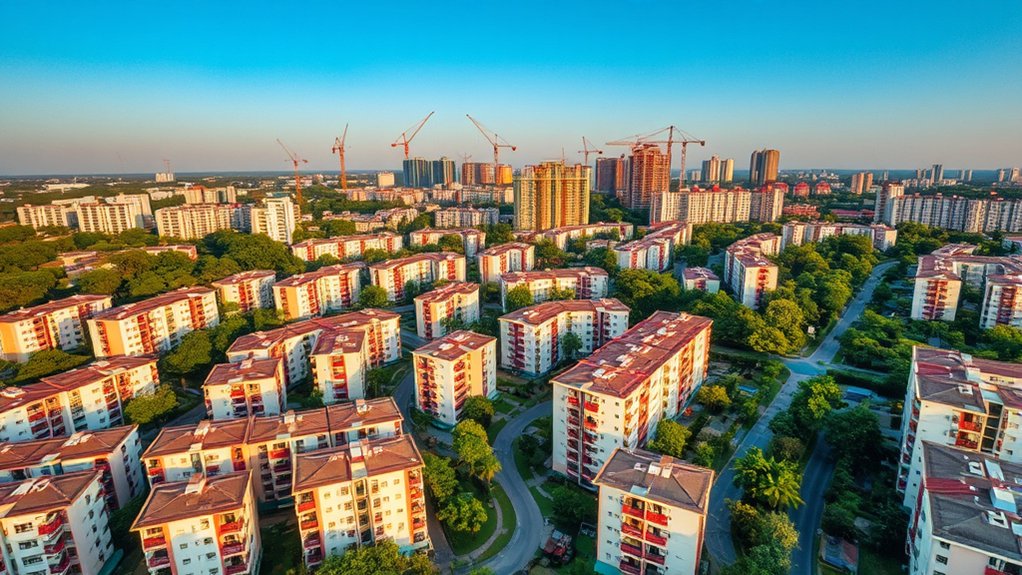
The annual volume of public housing flats completing their five-year Minimum Occupation Period (MOP) is entering an expansive cycle across Singapore. After a moderated supply phase in 2025 where fewer than 7,000 Build-To-Order (BTO) flats crossed the MOP threshold, the pipeline of newly eligible resale homes rebounds to approximately 13,000 to 13,500 units in 2026. This upward trajectory continues into 2027, when an estimated 18,000 to 19,000 flats will attain resale eligibility.
This progressive supply expansion fundamentally alters marketplace leverage. When newly eligible flats become available in clustered precincts, prospective buyers gain broader choice, tempering the aggressive bidding and high Cash-Over-Valuation (COV) that characterized previous inventory squeezes. Understanding the operational framework of HDB Minimum Occupation Period rules is essential for households evaluating whether to list their flat or commit to an open-market resale purchase.
Town-by-Town Supply Concentrations and Secondary Market Impact
The impending surge in newly MOP homes is not distributed evenly across Singapore’s 26 towns and estates. Official delivery timelines from the Housing & Development Board show that the vast majority of these completions are concentrated in non-mature towns, including Sengkang, Punggol, Yishun, Woodlands, and the pioneer parcels in Tengah.
These towns absorbed major construction volumes when the public housing building programme accelerated to clear post-pandemic delivery backlogs. As these sizable BTO precincts cross the five-year occupation milestone in batches, local secondary housing markets experience an influx of modern, well-maintained housing stock.
In precincts where several BTO contracts reach five years simultaneously, buyers encounter multiple similar listings within the same development cluster or neighbouring blocks. This density of supply fosters direct price competition among sellers. Properties featuring identical layouts, comparable floor levels, and similar orientations must compete on condition, interior upkeep, and realistic pricing rather than speculative premiums.
Conversely, mature estates such as Queenstown, Bukit Merah, Toa Payoh, and Kallang/Whampoa face far more restrained new resale inflows. Because BTO developments in central locations are smaller in scale and take longer to build, newly unboxed resale units in mature towns maintain scarcity value, supporting price premiums even as broader market volumes expand.
Buyer Leverage, Asking Prices, and Negotiation Dynamics
As the pool of newly eligible resale flats widens, the balance of power between buyers and sellers undergoes a natural adjustment. Prospective purchasers who previously had to accept firm seller asking prices now enjoy greater flexibility to compare multiple alternatives before making an offer.
This dynamic encourages a more disciplined pricing environment. Sellers who enter the market with inflated expectations risk extended listing durations as buyers gravitate toward competitively priced units in the same cluster. Recent transaction patterns indicate that while demand for five-year-old flats remains healthy due to their long remaining 99-year leases, price growth has moderated into steady single-digit rates rather than sharp quarterly spikes.
For buyers, this environment reduces the necessity of paying substantial Cash-Over-Valuation. Banks and financial institutions conduct appraisals anchored closely to recent localized transactions, ensuring home purchasers avoid unnecessary out-of-pocket cash outlays when securing mortgage loans. Purchasers can systematically assess layout efficiency, natural lighting, and floor height without feeling pressured into rushed deposits.
Financial Due Diligence for Upgrading Homeowners
Many homeowners reaching MOP view their flat sale as a primary stepping stone toward upgrading to an executive condominium or private condominium. However, executing this progression requires rigorous calculation of net sales proceeds. Sellers must review the complete guidelines on HDB MOP rules and owner restrictions before listing their home or signing purchase option agreements.
A primary consideration is the mandatory refund of Central Provident Fund (CPF) capital. Under regulations administered by the Central Provident Fund (CPF) Board, all CPF savings withdrawn toward the flat purchase, housing grants, and accrued interest compounded at 2.5 percent per annum must be returned to the owner’s CPF Ordinary Account upon disposal.
For households that utilized substantial CPF funds over their ownership tenure, accrued interest can absorb a noticeable share of gross sales proceeds, leaving smaller liquid cash balances than initially anticipated. Upgraders must also evaluate the Total Debt Servicing Ratio (TDSR) framework to verify that their household income comfortably supports private property loan commitments under prevailing interest rate conditions.
Managing Transaction Timelines and Mortgage Transitions
Beyond capital calculations, upgraders must manage operational timelines to avoid double-financing or temporary homelessness. Families transitioning from an HDB flat to an uncompleted condominium development often face a construction lag of two to three years. In such instances, sellers must weigh the trade-offs between renting interim accommodation, applying for temporary extension of stay with resale buyers, or leveraging staggered completion schemes.
For those purchasing a completed resale private property or executive condominium, bridging loans offer short-term liquidity while waiting for sales proceeds from the existing flat to clear. However, financial planners advise keeping a cash reserve equivalent to six to twelve months of living and mortgage expenses to cushion against unexpected delays in legal completion or conveyance.
Policy Evolution and the Resale Market Reality
Public housing policy continues to evolve to ensure long-term stability and equitable access. Statements from the Ministry of National Development emphasize the priority of keeping public housing affordable and accessible for genuine owner-occupiers through targeted supply releases and calibrated grant structures.
Notably, regulatory updates have removed the previous 15-month wait-out period that temporarily applied to private residential property owners acquiring non-subsidized HDB resale flats. The scrapping of this restriction provides smoother transition options for downsizing families, adding a steady current of mature buyers into the resale segment without artificially constraining mobility.
For current owners contemplating their next housing move, careful timing remains critical. Those intending to sell right at the five-year mark must weigh the benefits of monetizing their flat against the costs of immediate replacement housing. Our detailed guide on selling an HDB flat immediately after MOP examines the trade-offs between realizing paper gains and securing a sustainable long-term home.

One thought on “HDB Resale Supply Wave: How MOP Completions Shift Pricing”