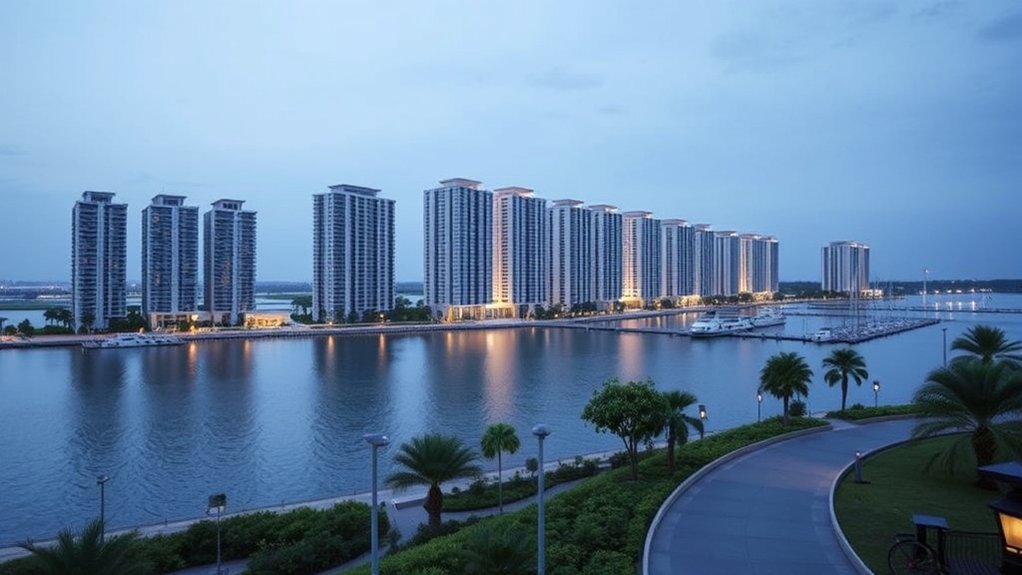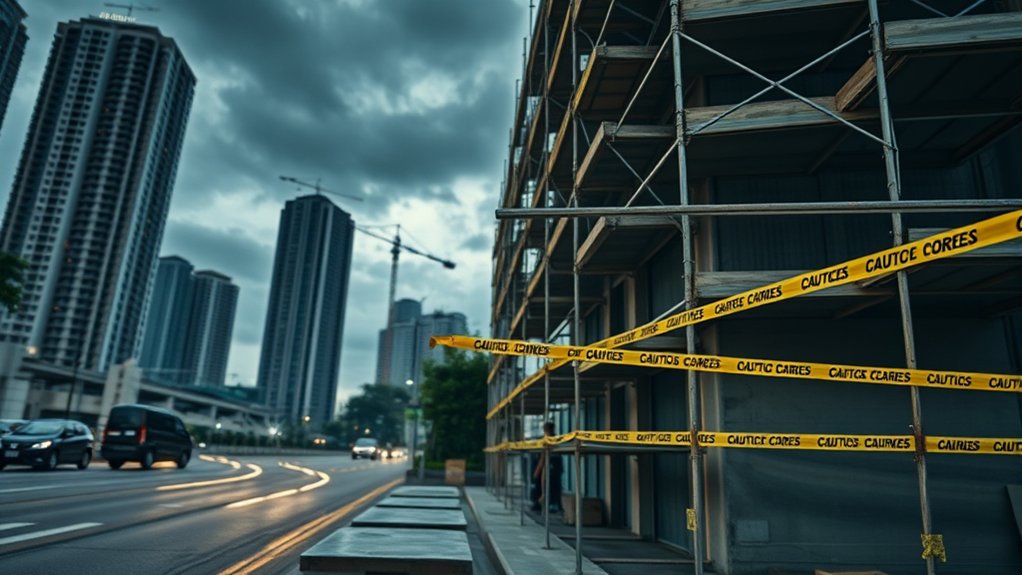
On May 22, 2026, Singapore housing authorities introduced a comprehensive enforcement mechanism to penalize residential developers that deliver substandard, defect-laden projects. Administered jointly by the Ministry of National Development, the Urban Redevelopment Authority, and the Building and Construction Authority, the Land Sales Disqualification and Sales Suspension Framework marks a decisive regulatory move toward greater buyer protection in the private residential sector.
Under the new rules, developers responsible for egregious building defects or major safety failures can be barred from Government Land Sales tenders for up to five years and prohibited from selling uncompleted units in future projects. Crucially, the policy extends liability beyond corporate shell entities to encompass directors and substantial shareholders, eliminating loopholes that previously allowed errant developers to re-enter the market under fresh corporate identities.
The Two-Pillar Enforcement Architecture Explained
The regulatory framework operates through two coordinated enforcement mechanisms tailored to target both land acquisition pipelines and retail sales operations. The official guidelines published by the Urban Redevelopment Authority outline the specific criteria under which developer sanctions are enacted.
The first pillar is the Land Sales Disqualification Framework. Under this mechanism, errant developers can be disqualified from bidding in Government Land Sales tenders for sites with residential components for a period of up to five years. This applies to all land released for tender by government ministries, organs of state, and statutory boards, including purely residential plots, mixed-use commercial and residential parcels, and White sites. While private land transactions such as collective en bloc sales remain outside this GLS tender restriction, being locked out of the primary state land bank creates a severe bottleneck for developers seeking to maintain their local project pipeline.
The second pillar is the Sales Suspension Framework. Administered by the Controller of Housing, this measure allows authorities to withhold or revoke the sale licence for future unlaunched projects. Instead of receiving a standard licence that permits off-plan sales prior to construction completion, an errant developer may be issued a no-sale licence. This restriction forces the developer to complete construction entirely with its own capital before selling any completed units, removing the financial benefit of collecting progressive buyer payments during development.
The tightening of developer oversight coincides with rising competition across the government land bank. Recent tenders, such as the bidding patterns seen for small-scale GLS residential sites, demonstrate how critically developers depend on state tenders to sustain their construction pipelines.
Holding Directors and Substantial Shareholders Accountable
A notable strength of the 2026 framework is its deliberate effort to pierce the corporate veil. In private development, it is standard practice to establish an individual special purpose vehicle (SPV) for every individual project. In the past, this structure could insulate parent companies and company leadership from ongoing accountability once a project’s Defect Liability Period ended.
The new regulations explicitly define relevant parties subject to disqualification. If a developer company is disqualified or suspended, the sanctions automatically apply to its individual directors and substantial shareholders who hold an interest of 5 percent or more under Section 81 of the Companies Act. Furthermore, any newly incorporated company or joint venture consortium that includes a disqualified director or shareholder is barred from participating in GLS tenders.
This comprehensive coverage ensures that individuals cannot evade regulatory penalties by dissolving a distressed SPV and forming a new joint venture with different partners. Parent entities and individual executives now face direct commercial consequences if their active projects fail to meet required construction standards.
Quality Benchmarks and the Triggering of Penalties
Enforcement actions under the framework are not triggered by minor cosmetic imperfections, such as isolated wall scuffs or hairline paint blemishes, which are routinely rectified during typical defect rectification periods. Instead, sanctions are reserved for systemic non-compliance, severe structural failures, and persistent refusal to remediate genuine construction defects.
The Building and Construction Authority tracks construction quality through formal audit systems, including the Construction Quality Assessment System (CONQUAS) and Quality Mark certifications. Sanctions can be initiated when a development exhibits critical safety hazards, such as spontaneous glass balustrade fractures, recurring water ponding that compromises electrical integrity, or failures in structural waterproofing systems that render units uninhabitable.
Historical precedents highlight why structured penalties became necessary. In 2019, the Controller of Housing issued a no-sale licence to Kingsford Huray for Normanton Park following serious building non-compliances, and in 2022, MCC Land received temporary sales curbs on Sceneca Residence pending resolution of concrete quality issues. The 2026 framework formalizes these previously ad-hoc interventions into a transparent statutory process with published registries of errant entities.
These quality measures align with broader regulatory initiatives across the urban planning landscape, including recent moves where URA reviewed building floor space guidelines to encourage better architectural standards and enhanced residential ventilation.
Buyer Rights Under the Defect Liability Period
For homeowners taking delivery of a new launch condominium, understanding the statutory defect rectification process remains vital. Under standard Sale and Purchase Agreements regulated by the Ministry of National Development, every developer is legally bound by a 12-month Defect Liability Period starting from the date the purchaser receives Notice of Vacant Possession.
During this 12-month window, the developer must make good any defect attributable to defective materials or workmanship within one month of receiving formal written notification from the buyer. If the developer fails to rectify the reported items within 30 days, the buyer has the right to notify the developer of their intention to engage an independent contractor, obtain a cost quotation, and allow another 30 days before executing the repairs independently.
Financial leverage is built into this framework through the Singapore Academy of Law. Under the standard progressive payment schedule, the final 5 percent of the purchase price is held in stakeholder escrow by the SAL upon Temporary Occupation Permit. Out of this retention sum, 8 percent (representing 0.4 percent of the total purchase price) is retained specifically until the end of the DLP, providing funds to settle unrectified repairs if the developer defaults. Homebuyers preparing for key handover can review our detailed new launch condo purchase guide to navigate inspection protocols and legal protections effectively.
Long-Term Market Implications for Private Housing
The introduction of the disqualification and suspension framework represents a healthy maturation of Singapore’s real estate ecosystem. By establishing clear statutory consequences for shoddy workmanship, the government is protecting homebuyer capital and reinforcing confidence in off-plan residential sales.
Reputable developers with robust quality control protocols stand to benefit from an elevated standard of competition. Errant players that previously relied on aggressive pricing and thin construction margins will find it increasingly difficult to bid on prime residential parcels without investing in better project governance.
For purchasers, the framework offers welcome peace of mind. While meticulous defect inspections will always remain a necessary step upon key collection, institutional accountability now ensures that developer commitments to quality are backed by substantial operational and commercial consequences.