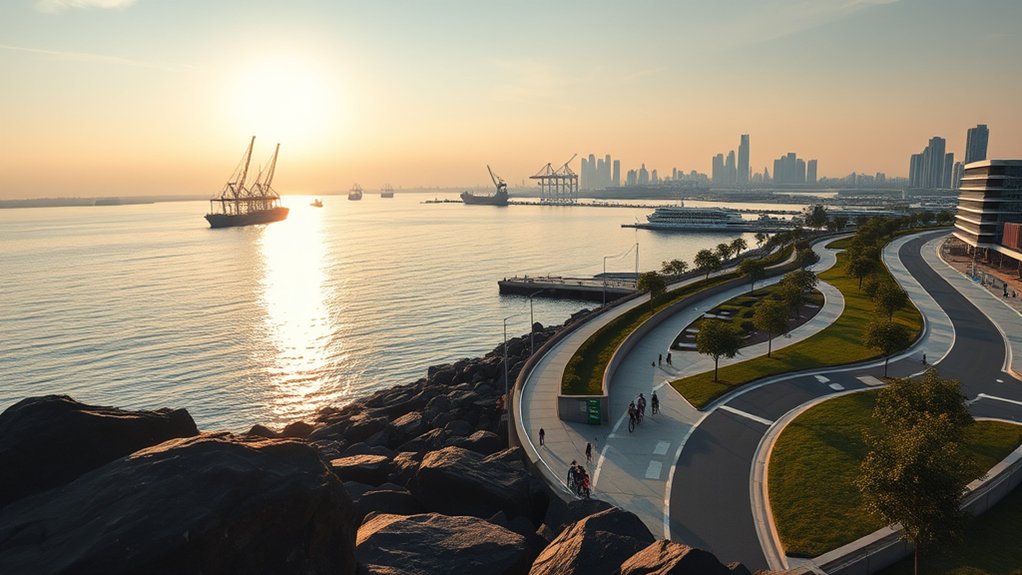
Against a backdrop of global economic uncertainty, Singapore’s property market is holding its ground with quiet confidence. Property consultancies ERA and Huttons point to several stabilising factors, including GDP growth forecast at 2.2% for 2026 and resident unemployment sitting at a manageable 3.0%, both of which support buyers’ ability to service mortgages and sustain demand.
Singapore’s property market holds its ground with quiet confidence, buoyed by steady GDP growth and manageable unemployment rates.
Private home prices are expected to grow at a steady pace in 2026, driven by strong buying sentiment and lower interest rates. However, the market is maturing. Buyers are growing more selective, more price-conscious, and increasingly focused on location, signalling a shift away from the frenzied momentum of recent years toward something more measured and sustainable. New private launches are also expected to drop from around 25 projects in 2025 to just 19 in 2026, a 17% reduction in units. Over 60% of that incoming supply will sit in the Outside Central Region, nearly double the proportion seen in 2025.
Landed housing has been a standout performer. Prices surged 7.7% in 2025 after a cautious 0.9% growth in 2024, and analysts are projecting a further 5% to 7% rise in 2026 if momentum holds. Constrained supply is a key driver here, benefiting both new developments and resale properties. District 10, covering Tanglin and Holland, is particularly well-positioned given its established prestige, school catchment appeal, and MRT connectivity. Boutique freehold projects like Vila Naga in Bukit Timah and Vila Natura in Lentor further reinforce confidence in landed housing as a premium asset class.
On the HDB front, over 13,000 resale flats will become eligible for sale in 2026, double the 2025 figure, which should temper price growth in that segment. The government has signalled its intent to moderate HDB resale prices further, with a significant influx of new flats planned between 2025 and 2027. Adding further weight to cooling efforts, the seller’s stamp duty holding period was raised to four years and rates increased by four percentage points across all tiers, effective July 4, aimed at curbing property flippers amid concerns over a potential resurgence in sub-sales.
Meanwhile, commercial real estate is also performing well, with Grade A CBD office rents expected to grow faster in 2026 amid firm occupier demand and limited supply. The industrial and logistics sector adds another layer of strength, with prime logistics rents projected to resume mild growth in 2026 as constrained supply continues to tighten the market. Analysts remain cautiously upbeat about Singapore’s broader property outlook, noting that the private Housing Index reached a record high of 211.50 points in early 2025, a signal of sustained demand even as global headwinds intensify. Singapore’s property market, it seems, remains a remarkably resilient place to park capital.