Following a prolonged period of cautious consolidation in the wake of regulatory tightening and anti-money laundering (AML) scrutiny, Singapore’s commercial shophouse sector demonstrated renewed investment momentum in the third quarter of 2026. According to quarterly research by Huttons Asia based on Urban Redevelopment Authority (URA) caveat records, transaction volume climbed to 21 lodged caveats in 3Q2026, representing a decisive 31.25% quarter-on-quarter increase from the 16 caveated transactions recorded in 2Q2026.
While the total transacted value moderated to $157.7 million—down 18.6% from 2Q2026’s $193.7 million—market analysts emphasize that the previous quarter’s aggregate was disproportionately elevated by a single landmark $70 million portfolio deal comprising three adjoining shophouses along Lorong Liput in Holland Village. When stripped of abnormal bulk distortions, third-quarter transaction figures establish a healthy, normalized transaction baseline anchored by genuine high-net-worth individuals (HNWIs), boutique family offices, and seasoned domestic commercial investors.
More revealing than the headline volume is the quality of capital entering the space. High-quantum transactions dominated activity, with over 70% of transacted shophouses fetching prices above $5 million, while perpetual and long-dated tenures captured an overwhelming majority of market interest.
The Flight to Infinite Tenures: 81% of Volume in Freehold and 999-Year Assets
The defining structural narrative of 3Q2026 was an emphatic investor preference for capital preservation over speculative yields. Caveat data indicates that 81% of all shophouse transactions during the quarter were either freehold or 999-year leasehold properties, with purchasing activity heavily concentrated in District 8 (Jalan Besar, Little India) and District 15 (Joo Chiat, East Coast Road).
| Quarter / Period | Caveated Volume | Total Transacted Value | Share of ≥$5M Deals | Dominant Tenures |
|---|---|---|---|---|
| 3Q 2026 | 21 caveats | $157.7 million | > 70% | 81% Freehold & 999-Year |
| 2Q 2026 | 16 caveats | $193.7 million* | ~65% | Mixed (incl. $70M Lorong Liput deal) |
| 1Q–3Q 2026 (9M) | 51 caveats | $441.3 million | ~68% | Predominantly Freehold |
Unlike standard 99-year leasehold commercial spaces—which face gradual lease decay and tightening bank loan-to-value limits as remaining tenures dip below 60 years—freehold and 999-year conservation shophouses function as generational wealth vaults. For family offices navigating global inflationary pressures and currency volatility, an unencumbered land-title deed in a land-scarce global financial centre represents an irreplaceable balance-sheet anchor.
Top Transactions of 3Q2026: South Bridge Road and Circular Road Lead Deals
Trophy transactions in core commercial enclaves continued to set strong valuation benchmarks throughout the quarter:
- South Bridge Road (District 01 / Chinatown): The quarter’s largest registered deal was clinched along South Bridge Road, transacting at $16.8 million. Located along the bustling heritage spine connecting the Central Business District to Maxwell, the property commands heavy pedestrian footfall and strong food and beverage (F&B) tenant covenant.
- Circular Road (District 01 / Boat Quay): In another standout transaction, a prime shophouse along Circular Road was acquired for $16.2 million by prominent investor Roman Scott, Chairman of The Calamander Group. Situated in Singapore’s premier nightlife, craft dining, and executive entertainment enclave, Circular Road assets command substantial rental premiums from evening corporate spending.
These benchmark sales illustrate that well-located properties in prime commercial zoning continue to attract aggressive capital commitments when vendor price expectations align with current debt-financing realities.
Leasing Momentum Accelerates: 800 Contracts Inked Amid Lifestyle F&B Growth
The operational backbone of the shophouse market remained resilient, with leasing activity picking up notably across the third quarter. A total of 800 rental contracts were executed in 3Q2026, marking a 4.2% expansion from the 768 leasing contracts inked in the preceding quarter.
Islandwide median shophouse rents held firm at $6.47 psf per month on a quarter-on-quarter basis. However, micro-market performance diverged significantly:
- District 02 (Tanjong Pagar / Chinatown) Outperformance: Median rents in District 2 recorded the steepest expansion for the second consecutive quarter, jumping 8.9% quarter-on-quarter to approximately $7.35 psf per month.
- High-Profile Dining Concepts Driving Take-Up: Tenant demand was supported by an influx of curated, experiential food and lifestyle concepts, including restaurant openings such as Árō Singapore, Assaggi, Casa Lola, and KIN-NOMI.
The robust leasing absorption in Tanjong Pagar and Telok Ayer demonstrates that conservation shophouses have evolved far beyond basic retail shopfronts. Today, multinational corporate headquarters, private family office suites, bespoke wellness practices, and Michelin-recognized dining groups actively seek shophouse floor plates for their distinct architectural identity and high street presence.
Why Commercial Shophouses Remain Heavily Insulated from Cooling Measures
A primary catalyst driving ongoing domestic and cross-border interest in shophouses is Singapore’s regulatory tax architecture. Following the April 2023 property cooling measures, foreign buyers purchasing residential property face a punitive 60% Additional Buyer’s Stamp Duty (ABSD), while Singaporean citizens acquiring their second and third residential properties incur 20% and 30% ABSD respectively.
In contrast, commercial-zoned conservation shophouses attract zero ABSD and zero Seller’s Stamp Duty (SSD). Foreign investors, private corporations, and local trusts can acquire commercial shophouse titles subject only to the standard Buyer’s Stamp Duty (BSD) and prevailing Goods and Services Tax (GST). For an in-depth breakdown of statutory purchase mechanics, review our essential guide on everything you need to know before buying commercial property in Singapore.
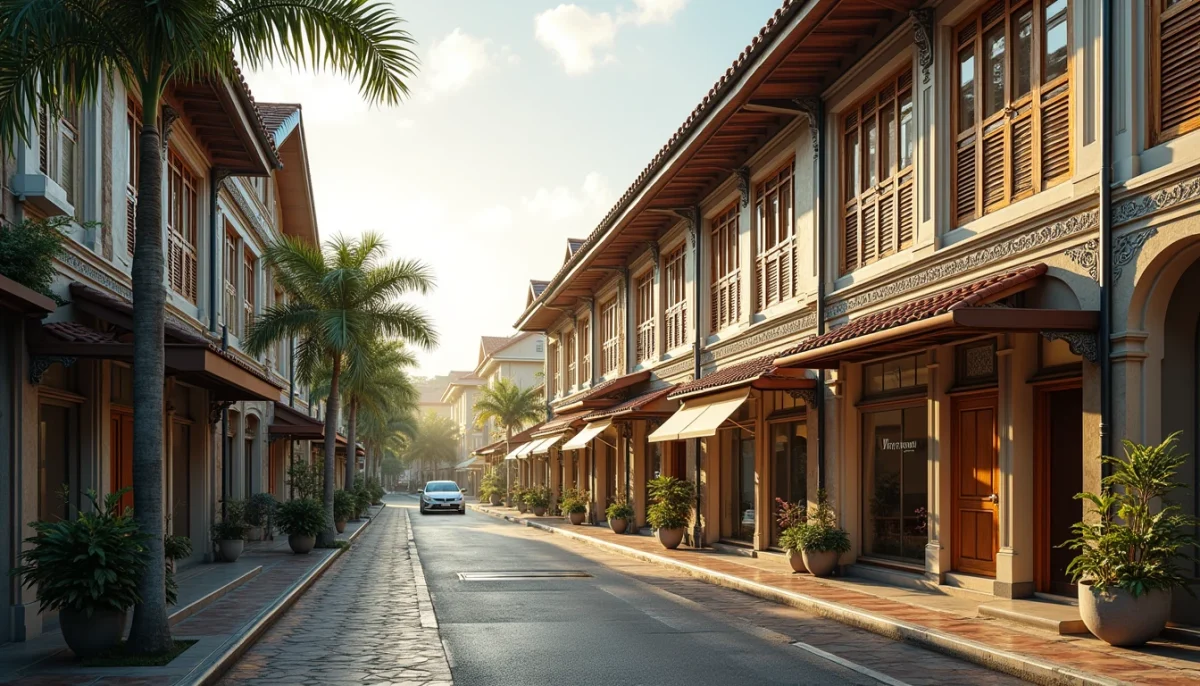
Furthermore, Singapore’s conservation shophouse inventory is strictly capped by the state. Across the entire island, only approximately 6,500 gazetted conservation shophouses exist—spanning historic historic districts like Telok Ayer, Tanjong Pagar, Chinatown, Kampong Glam, Little India, and Joo Chiat. Because this finite supply cannot be expanded via Government Land Sales tenders or land reclamation, scarcity value acts as an unyielding structural floor under long-term capital values.
Strategic Due Diligence: Navigating Planning Uses and Operational Realities
While the long-term wealth preservation thesis of conservation shophouses is compelling, prospective investors must exercise meticulous technical due diligence before entering binding contracts:
- Approved URA Planning Uses: Do not assume a ground-floor unit can automatically operate as an F&B restaurant. URA strictly manages dining quotas in conservation areas to prevent noise, traffic congestion, and waste overloads. Changing use from “Shop” to “Restaurant” requires formal planning permission and may be subject to kitchen exhaust and grease trap restrictions.
- Mixed-Use Residential Portions: If a shophouse carries “Commercial with Residential on Upper Floors” zoning, the residential portion is subject to residential ABSD rates. To enjoy total ABSD exemption, buyers must target properties zoned strictly “Commercial”.
- Conservation Guidelines and Structural Capex: Historic timber floorboards, facade preservation mandates, and building fire-safety regulations governed by the Singapore Civil Defence Force (SCDF) can entail substantial restoration and maintenance expenditures.
Buyers looking to balance commercial heritage exposure against residential portfolio yields can evaluate broader private housing benchmarks across our portal on historical shophouse market transitions or review current residential launch comparisons on Launch Property Singapore.
Conclusion: Long-Term Conviction Anchors Singapore’s Heritage Real Estate
The rebound in 3Q2026 shophouse transactions confirms that Singapore’s heritage real estate has emerged from its post-audit reset on a more sustainable, institutional footing. By pairing strict zero-ABSD commercial advantages with finite physical supply and vibrant dining tenancy, conservation shophouses continue to represent one of Asia’s most resilient, prestige wealth-preservation vehicles.