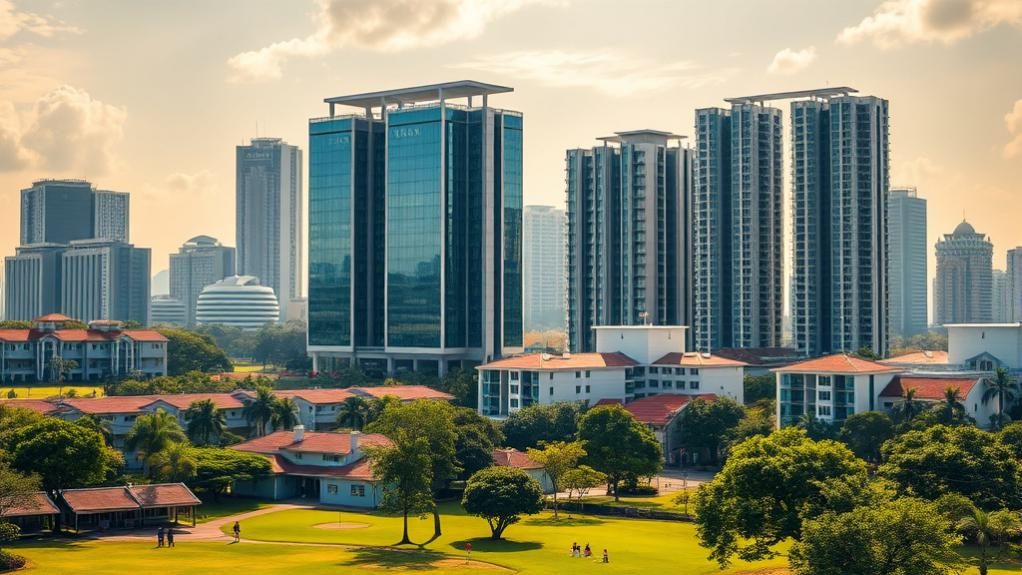
Although many factors shape the real estate market, the quality of local primary schools emerges as a surprisingly influential driver of home prices, drawing families keen to secure first-rate education for their children. Studies across the U.S. and globally show a strong correlation between high-performing school districts and elevated property values, with one widely cited report linking a 5% improvement in school test scores to a 2.5% rise in home prices. In fact, homes in top districts are often valued 49% above national median, highlighting the premium placed on educational excellence.
This pattern holds in places like China, where homes in key primary school areas command about a 5% premium over those in ordinary catchments, sometimes reaching 5-8% in Beijing or 6.5% in Shanghai due to historic school classifications. It’s no wonder families flock to these zones, creating fierce buyer competition that speeds up sales and keeps inventory low, even during market slumps—after all, who wouldn’t want a neighborhood that screams stability and safety?
Yet, this school-driven boost isn’t always a sure thing, especially when you dig into the details. In some regions, the causal link feels a bit shaky, with mixed study results depending on the methods used. Moreover, correlation does not imply causation, underscoring that various other factors also significantly affect property values. Policy tweaks, like resource equalization reforms, can even erase these premiums by leveling the playing field.
And here’s where it gets interesting: condo markets often tell a different story. Research indicates that the elite school premium weakens or vanishes in high-density urban areas filled with apartments, where buyers might prioritize transit or nearby shops over school ratings. In dense cities, reforms like lottery-based assignments dilute the geographic edge, so that swanky condo near a top school doesn’t always fetch extra cash—talk about a plot twist for city dwellers chasing deals! Recent market data from Singapore shows companies like Noel Gifts making strategic investments in freehold properties regardless of school zones, highlighting alternative value drivers in the property market.
Demand plays a big role too, as non-family buyers still gravitate toward these areas for their perceived community perks, helping values hold steady in tough times. But in places without property taxes, like China, the dynamic shifts without that tax-funded loop boosting schools further.
In the U.S., higher home values mean steeper taxes, which feed back into better resources, widening gaps between districts—a classic chicken-or-egg scenario. One key finding notes every $1 increase in property taxes can amplify this effect, yet not all markets feel it equally. So, while elite schools often pump up prices in single-family zones, condo data whispers a cautious “maybe not,” reminding us that real estate’s full picture is as varied as the buyers themselves.



One thought on “Do Elite Primary Schools Really Drive Higher Home Prices? Some Condo Data Say No”