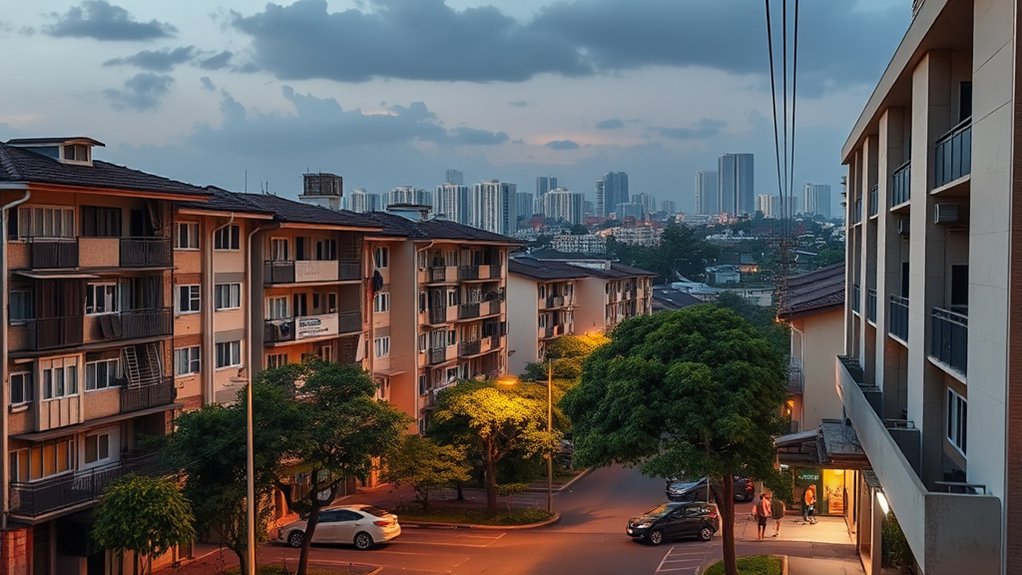
Older HDB flats can still draw serious buyer interest, but not because lease decay has stopped mattering. Their appeal is usually practical: established neighbourhoods, usable layouts, shorter journeys to work or family, and an entry price that may be lower than that of newer flats nearby. For a household buying mainly for occupation, those benefits can outweigh the disadvantage of a shorter remaining lease.
That does not make every ageing flat a bargain. The remaining lease affects CPF usage, the amount and tenure of an HDB loan, future buyer demand and the flat’s value at the end of the lease. A sensible comparison therefore looks beyond the asking price and asks whether the flat still works for the buyer’s life plan.
The resale market is active, but the data needs careful reading
Official HDB figures show that the wider resale market remains liquid. HDB registered 6,396 resale applications in the second quarter of 2026, up from 6,285 in the first quarter. At the same time, the Resale Price Index slipped 0.3% quarter on quarter after a 0.1% decline in the first quarter. The market is still recording thousands of transactions, but broad price growth has paused rather than accelerated.
These statistics do not isolate flats by remaining lease, so they cannot prove that all older flats are enjoying stronger demand. Buyers should be wary of claims based on a few headline transactions in mature estates. A high price may reflect a rare floor plan, central location, high floor, renovation or proximity to an MRT station—not age itself. HDB’s resale statistics and transaction tools are a better starting point: compare the same town, flat type, approximate floor level and remaining lease.
Why some buyers still prefer an older flat
For owner-occupiers, an older flat can solve needs that a newer but more distant home cannot. Mature estates often have established transport links, markets, clinics and community facilities. Some older units also have layouts that buyers find easier to furnish or adapt. Immediate availability matters too: a resale buyer can inspect the actual unit and neighbourhood instead of waiting for a home to be built.
Location can be especially valuable to households caring for parents, shortening a daily commute or planning around a child’s routine. Our guide to school proximity and family home-buying decisions explains why convenience can influence a household’s shortlist, although admission rules and school demand should always be checked separately.
Price is the other part of the equation. A shorter-lease flat may offer a lower total purchase price than a newer alternative in the same vicinity. That can reduce the absolute mortgage required, but only if the discount is large enough to compensate for renovation, financing constraints and a potentially smaller resale pool later. Price per square foot alone is not a complete measure because it ignores lease length and the household’s expected holding period.
The age-95 CPF rule is not a simple pass-or-fail test
For flat applications under the current framework, the key comparison is between the remaining lease and the age of the youngest owner. If the lease can cover the youngest owner to age 95, CPF usage may be allowed up to the applicable valuation limit. If it cannot, CPF usage is pro-rated. CPF states that a pro-rated amount may still be used when the property has at least 20 years of remaining lease; its housing usage guidance directs buyers to the official calculator for the exact amount.
This means a 39-year remaining lease is not automatically suitable for every buyer in their mid-50s. The calculation depends on the youngest owner’s age, not simply the oldest buyer or an average chosen by the household. A younger co-owner can materially change the result. Buyers also need to distinguish permission to use CPF from affordability: using more Ordinary Account savings for housing leaves less compounding for retirement, and the CPF principal used plus accrued interest generally has to be refunded to the owner’s CPF account from sale proceeds when the flat is sold.
Shorter leases can tighten financing and future resale options
CPF limits and mortgage limits are related but separate. Under HDB’s published loan rules, a resale flat with more than 20 years remaining may qualify for an HDB loan, subject to the household’s eligibility and credit assessment. Where the lease covers the youngest buyer to age 95, the HDB loan can be up to 80% of the lower of the resale price and HDB’s value. Where it does not, the loan limit is pro-rated. The repayment period is also constrained by the 25-year cap, the buyers’ age and the remaining lease minus 20 years. Buyers should confirm their actual entitlement through a valid HDB Flat Eligibility letter before committing to an Option to Purchase.
HDB’s housing-loan guidance also makes clear that the maximum is not an entitlement: income, existing debts, repayment record and job stability affect the approved amount. A bank applies its own credit and property criteria. For an older flat, a shorter usable loan tenure or lower approved loan can mean a larger cash-and-CPF outlay than the headline price suggests.
Exit risk deserves equal attention. Five or ten years later, the remaining lease will be shorter and the next buyer will run the CPF and financing tests using their own age profile. The pool of fully financed buyers may narrow. This does not mean the flat becomes unsaleable on a particular birthday, but it does mean a buyer should avoid relying on rapid appreciation or a quick resale to make the numbers work. Buyers moving from private housing should also check the prevailing eligibility rules; this overview of the 15-month wait-out rule and the resale market provides useful context, but HDB’s current rules should be the final reference.
Do not price an older flat as if SERS were guaranteed
SERS should not be treated as a hidden bonus in the purchase price. HDB describes the scheme as highly selective and says there are currently no plans for more SERS projects because most sites with high redevelopment potential have already been selected. The official SERS page is unambiguous on this point.
Absent a specific government announcement, the prudent assumption is that the lease continues to run down and the flat returns to the state when it expires. Possible estate improvements, transport projects or redevelopment plans may improve day-to-day living, but they should not be converted into a guaranteed windfall.
A buyer’s checklist for comparing older HDB flats
- Verify the lease: check the lease commencement date and exact remaining term in HDB’s records.
- Run the official numbers: obtain an HFE letter and use the CPF housing usage and HDB payment-plan calculators for the actual household.
- Compare like with like: use recent transactions from the same block or nearby blocks, adjusted for floor, condition, size and remaining lease.
- Budget for the unit, not just the price: inspect plumbing, leaks, windows, electrical capacity and renovation condition, and allow cash for repairs and moving costs.
- Stress-test the exit: consider the flat’s remaining lease at the likely sale date and whether a future buyer could face tighter CPF or loan limits.
- Buy for a clear reason: proximity, space and an affordable total cost are stronger reasons than speculation about SERS or future price spikes.
An older HDB flat can be a sound home when its location and price suit the household and its lease comfortably covers the intended stay. The balanced conclusion is not that old flats are unexpectedly immune to depreciation; it is that some buyers rationally accept lease risk in exchange for present-day utility. The decision becomes safer when the buyer prices that trade-off explicitly and keeps enough financial flexibility for the years ahead.



8 thoughts on “Why Older HDB Flats Still Attract Buyers in Singapore — and Where the Risks Begin”