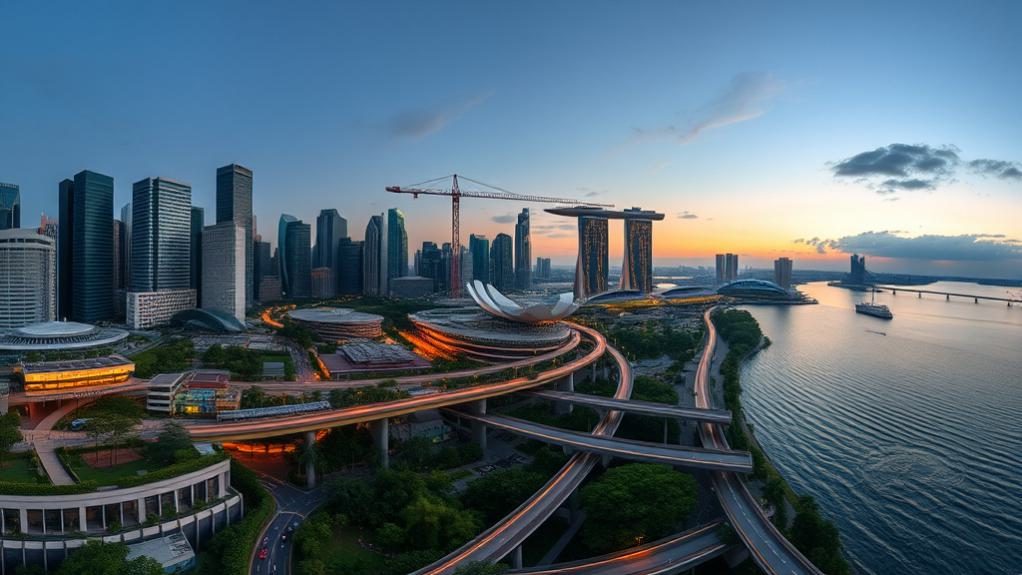
Imagine a city where work, home, and play blend seamlessly, and Singapore is boldly stepping into that future with its 2025 Master Plan. This ambitious blueprint isn’t just about building structures; it’s about crafting a lifestyle where everything you need is closer than ever.
Picture a city where life flows effortlessly—Singapore’s 2025 Master Plan is designing a future with work, home, and play just steps apart.
The plan focuses on decentralizing the bustling city center, spreading out office and commercial hubs to places like Bishan, as well as the north, west, and east regions. Bishan, for instance, is gearing up to rival Paya Lebar Central as a major business hub, bringing jobs right to the doorstep of many residents. Mixed-use developments are popping up in these regional centers, blending homes, workplaces, and amenities, so a quick lunch or gym session is just a short walk away. Additionally, new community amenities like a polyclinic and a revamped bus interchange are planned to enhance Bishan’s livability.
Beyond easing city-center congestion, the plan reimagines industrial areas for a modern economy. Old zoning rules are getting a makeover, shifting from single-purpose industrial zones to flexible, mixed-use districts. This means older estates will adapt to high-value manufacturing and logistics, while some plots will welcome shops or even schools alongside factories. Better transport links around these clusters will also make it easier for workers to commute and for goods to move swiftly. It’s a practical pivot, ensuring Singapore stays competitive in a fast-changing world. In Newton, the transformation of Monk’s Hill Road into a linear park promises to create a green oasis amidst urban growth, enhancing the quality of life for residents. The Lentor area is seeing significant development with new sites like Lentor Gardens and Lentor Central offering approximately 1,005 residential units to meet increasing housing demand.
Then there’s the exciting transformation at major gateways like Changi Airport and Tuas Port. With Terminal 5, Changi will handle 50 million more passengers yearly, strengthening its role as a global connector, while nearby Changi Aviation Park boosts aviation businesses. In the west, Tuas Port is set to become the world’s largest fully automated container port, a marvel of logistics.
Up north, the Northern Gateway ties into high-value industries, aided by the Johor Bahru-Singapore RTS Link by 2026. Add to this new community hubs in areas like Sengkang, packed with sports, retail, and healthcare near transport nodes, and over 25 new parks, and you’ve got a recipe for vibrant living. Singapore’s 2025 vision isn’t just planning for growth—it’s planning for balance, connection, and, frankly, a pretty cool future to live in.