Although the island nation covers a mere 734 square kilometers of land, Singapore continues to redefine the limits of urban growth through strategic ingenuity. As of 2024, the urban population growth reached an impressive 1.9945% annually, a figure that highlights the relentless pace of development in this Southeast Asian powerhouse. Researchers calculated these metrics using a combination of World Bank estimates and United Nations urbanization data, engaging a rigorous statistical methodology to track how many people pack into this bustling city-state.
Even with such limited space, population density remains consistently high across the territory, proving that vertical expansion is just as important as horizontal planning. Detailed records provide a historical baseline for this density, comprising data that spans from 1960 to 2024. This sustained and continuing expansion is not happening by accident, but rather reflects the ongoing, deliberate development of new residential and mixed-use districts.
The government actively drives this physical transformation through specific incentive schemes and *integral* strategic planning, ensuring that every square inch of available land serves a constructive purpose. It is a tricky balancing act to maintain, yet the authorities manage to juggle the pressing need for new homes with the demands of a competitive, thoroughly modern and global economy.
By focusing on creating vibrant districts where people can live comfortably near where they work, the planners are effectively reshaping the city’s demographic layout. Furthermore, the state follows a detailed, long-term *holistic* urban planning approach, recognized globally as an essential reference for balanced urban development and good governance.
They utilize core strategies that balance housing needs, critical infrastructure, national defense capabilities, and essential green spaces. This might seem like an impossible puzzle to solve given the severe land constraints, but the *ingenious* execution proves otherwise.
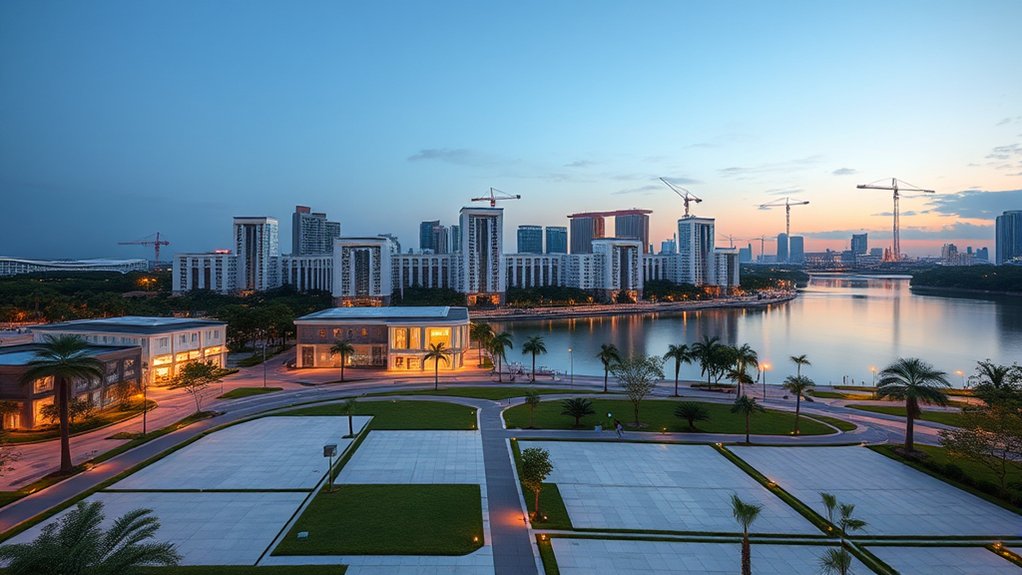
The result is a high quality of life maintained within a sustainable environment. As the urban population swells, the strategic shift from purely commercial zones to newer mixed-use areas becomes *essential*. This evolution is exemplified by the transformation of Marina South into a mixed-use neighborhood designed to contain about 10,000 homes within the precinct.
Consequently, the rapid urban growth observed today is merely the tangible output of a governance framework prioritizing competitive efficiency, showing the world exactly how a small island can accommodate a growing populace without ever bursting at the seams. The limited supply of residential properties coupled with high housing demand has created unique challenges that the government actively addresses through various initiatives aimed at stabilizing the rental market.