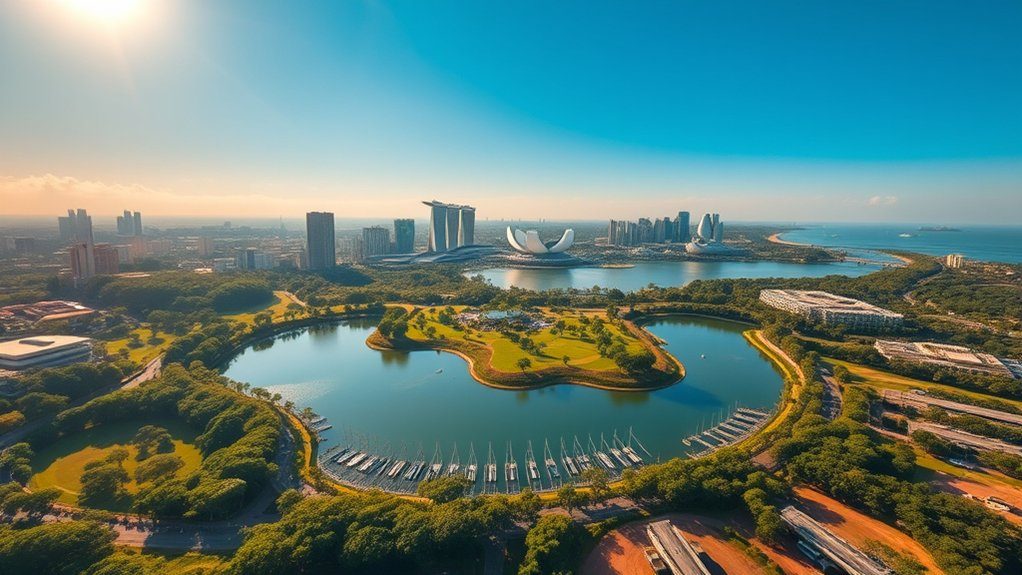
While the original vision for the Jurong Lake District faced a setback when a massive master-developer site failed to award, the government has recalibrated its strategy for the first half of 2026 by releasing a more manageable 3.72-hectare plot at Town Hall Link. This newer, slimmer parcel sits on the reserve list, meaning it will only be activated for launch if a developer places a minimum acceptable price that signals sufficient market interest. This specific plot is part of a broader government land sales programme that introduces a total of 10 new sites for the upcoming period.
The government recalibrates by releasing a manageable 3.72-hectare reserve list plot at Town Hall Link.
Unlike the previous attempt, which aimed to swallow a massive 6.5-hectare area all at once, this specific white site represents a smart, calculated pivot to reduce overall development risk. Experts suggest that such a phased approach aims to attract broader developer participation amid current macroeconomic uncertainties.
To understand the strategic change, one must revisit recent history. The original master-developer site, released in 2023, aimed to encompass three massive plots developed over ten to fifteen years. However, a consortium’s bid of S$640 psf ppr—equivalent to about S$2.5 billion total—was rejected in September 2024 for being too low, proving that dragging such a heavy financial load was perhaps too ambitious for the market’s current appetite.
By carving out this specific 3.72-hectare section, which is roughly half the size of the original offering, the government effectively creates a scenario that eases the immediate capital outlay and construction cost burdens for prospective builders.
The specific numbers for this new plot are quite promising, providing critical mass without being overwhelming. It spans a potential gross floor area of 186,000 sq m, offering room for up to 1,200 private residential units.
Additionally, it includes at least 40,000 sq m dedicated strictly to office space and 44,000 sq m for complementary uses, such as retail shops or a hotel.
To simplify proceedings further, observers note a potential shift to price-only tender evaluation, directly addressing prior concerns developers had over complexity.
To sweeten the deal, the government is undertaking upfront infrastructure works, ensuring developers don’t get bogged down by utility costs, including integration for a district cooling plant.
Connectivity won’t be an issue either, considering the Jurong Region Line stations open in 2028, followed by the Cross Island Line in 2032.
This move invites a wider pool of bidders who prefer biting off what they can arguably chew, setting the stage for a bustling mixed-use district. Similar to how HDB enforces MOP regulations to ensure proper use of public housing, these new development parcels will likely come with specific requirements to ensure genuine occupancy and use.