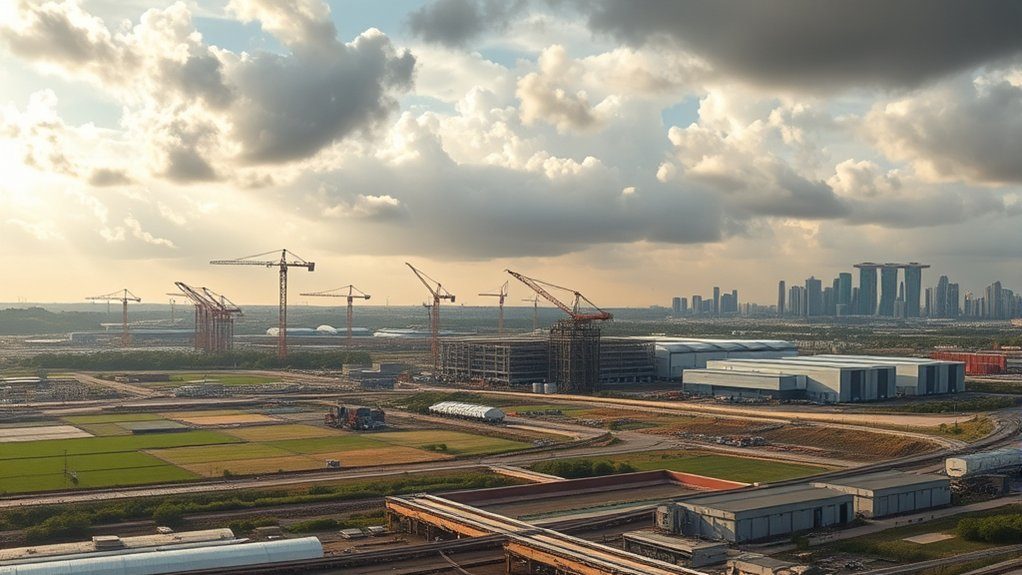
While the first half of 2025 feels like a bumpy ride for the industrial real estate sector, the market is actively clearing the path for a much smoother 2026. The current year has certainly brought its fair share of headaches, primarily because builders simply built too much, too fast. In the first six months alone, developers delivered a staggering 194.6 million square feet of new space, yet companies only absorbed 27.0 million square feet.
Builders simply built too much, too fast, creating a bumpy 2025 that clears the path for a smoother 2026.
This mismatch pushed vacancy rates up by 50 basis points to 6.7%, creating a temporarily crowded, tough, and fiercely competitive market. To make matters trickier, leasing volume dipped 6.3% in the second quarter amid volatility, largely due to worries about tariffs and high interest rates making everyone a little bit more nervous. Nevertheless, trade-related shocks have a limited impact on overall demand because the sector remains firmly anchored in domestic consumption.
However, looking ahead offers a much brighter picture, as the pipeline for new buildings is finally shrinking aggressively. Construction starts for 2025 are down 25% compared to pre-pandemic averages, and the total square footage under construction has plummeted from 1 billion in 2022 to just 466 million. Similar to how the Thomson-East Coast Line enhances urban connectivity through its strategic 11-station addition, industrial real estate is repositioning for better market integration.
By 2026, new deliveries are expected to drop by over 70% from their pandemic peak, helping supply and demand get back on friendly terms. High replacement costs, which currently sit 20% above class A market rents, are also discouraging unnecessary new projects, curbing potential oversupply.
Significantly, the construction of massive facilities over 750,000 square feet is down 85%, proving that developers are tapping the brakes.
Furthermore, demand is shifting gears rather than stalling completely. E-commerce and third-party logistics firms still lead the charge, while manufacturing now accounts for 20% of new leasing in regions like the Southeast and Central US. Looking forward, an anticipated rebound in consumer confidence is expected to escalate warehousing needs over the long term.
Reshoring efforts in electronics and data centers rely on specific occupational needs, greatly boosting long-term stability. Although places like Phoenix are working through a glut of inventory, the national outlook for 2026 includes a rebound in absorption to 119.3 million square feet.
As trade policies settle, the sector anticipates lower vacancy rates and steadier growth, proving that this year’s turbulence is just a necessary reset for future success.