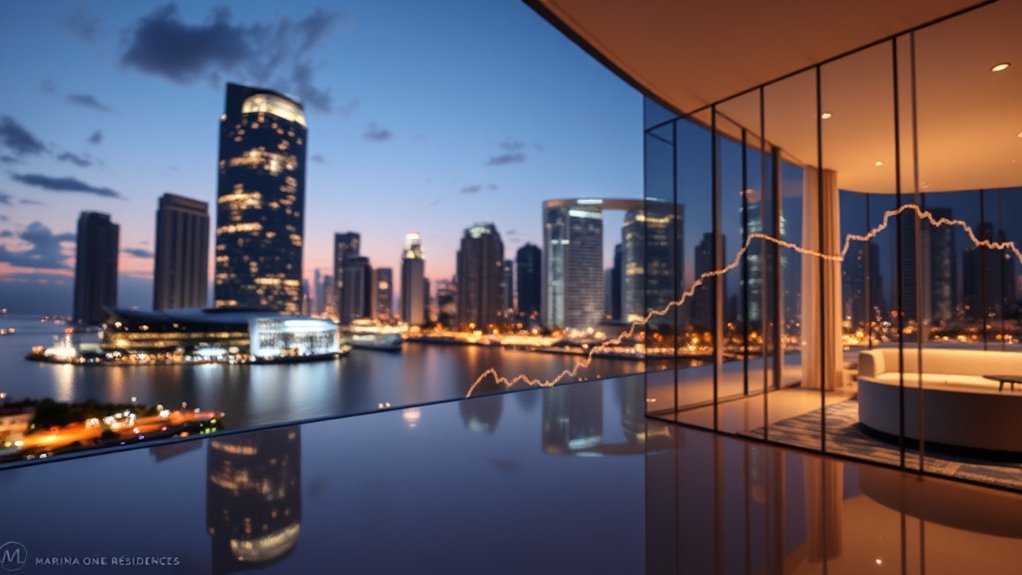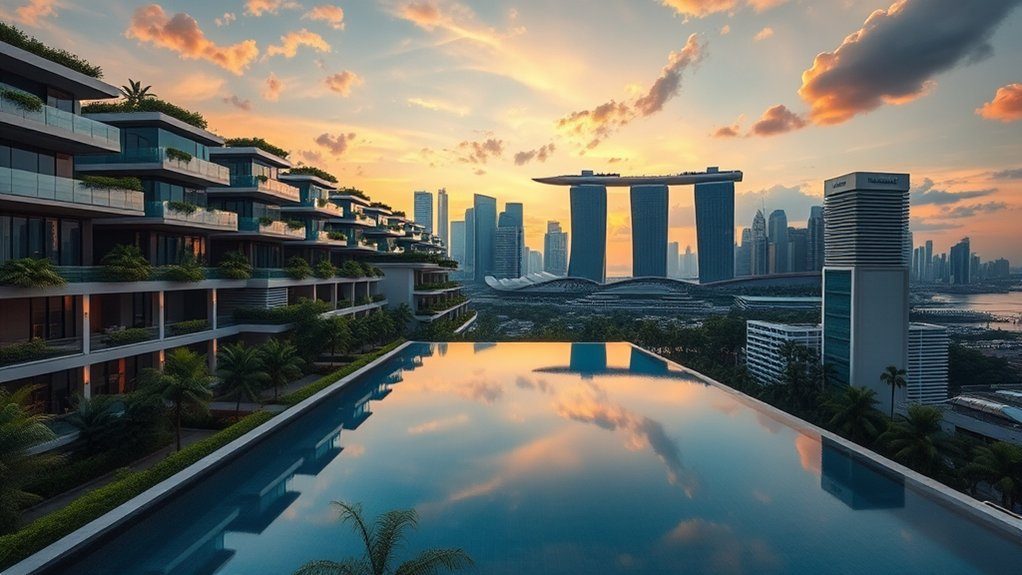
While global markets wobble, Singapore’s luxury homes are drawing a broader crowd of buyers who prize stability as much as style. The appeal begins with safety: a politically stable city-state, predictable regulations, and a strong currency give investors confidence that capital will be protected over time. Industry forecasts project the Singapore luxury residential market to expand at a >3% CAGR from 2025 to 2030, underpinned by resilient demand and constrained supply.
Stability meets style: Singapore’s luxury homes attract buyers seeking safety, predictability, and steady value.
Ultra-high-net-worth individuals continue to migrate assets and residency to Singapore for precisely these reasons, using the city as a secure hub for wealth management while enjoying a lifestyle that is sleek, efficient, and, yes, impeccably air-conditioned.
Low interest rates have nudged global buyers toward hard assets, and prime condominiums in the Core Central Region have benefited, with sales rebounding even amid periodic market jitters. In line with long-term trends, luxury segments have outperformed broader property markets during downturns, supporting sustained investor interest. Prices have proven steady, despite cooling measures that made speculation costlier; landmark landed homes, including Good Class Bungalows, continue to hold their value.
Where some segments paused, others adapted. Wellness-centric residences, with better air, light, and amenities, now command premiums around Orchard Road and Sentosa Cove, a reminder that comfort often outperforms hype.
Technology is widening access too. Tokenized property platforms allow fractional ownership, letting investors test the market with smaller tickets, while still gaining exposure to prime locations. This sits neatly alongside government-backed growth in fintech and biotech, sectors that draw talent to the central business district and emerging precincts, lifting rental demand and supporting values. The recent opening of the Thomson-East Coast Line has further enhanced the appeal of luxury properties by providing superior connectivity to key destinations across Singapore.
For buyers wary of global trade tensions and geopolitical noise, the combination of economic growth and a clear regulatory playbook feels revitalizing in the best possible way, almost boring in the same way as a crisp, cool breeze.
Recent data add weight to sentiment. The economy expanded 4.3 percent year on year in the second quarter of 2025, and lower rates have supported luxury apartment activity, even if volatility has slowed select niches.
The higher Additional Buyer’s Stamp Duty has curbed quick flips, yet long-horizon investors remain, encouraged by the resilient Singapore dollar and consistent pricing.
Sentosa Cove’s sales were muted early 2025, but its waterfront lifestyle still signals status. In short, safety, status, and stability now share the same address. For many, that is enough to make the leap confidently today.