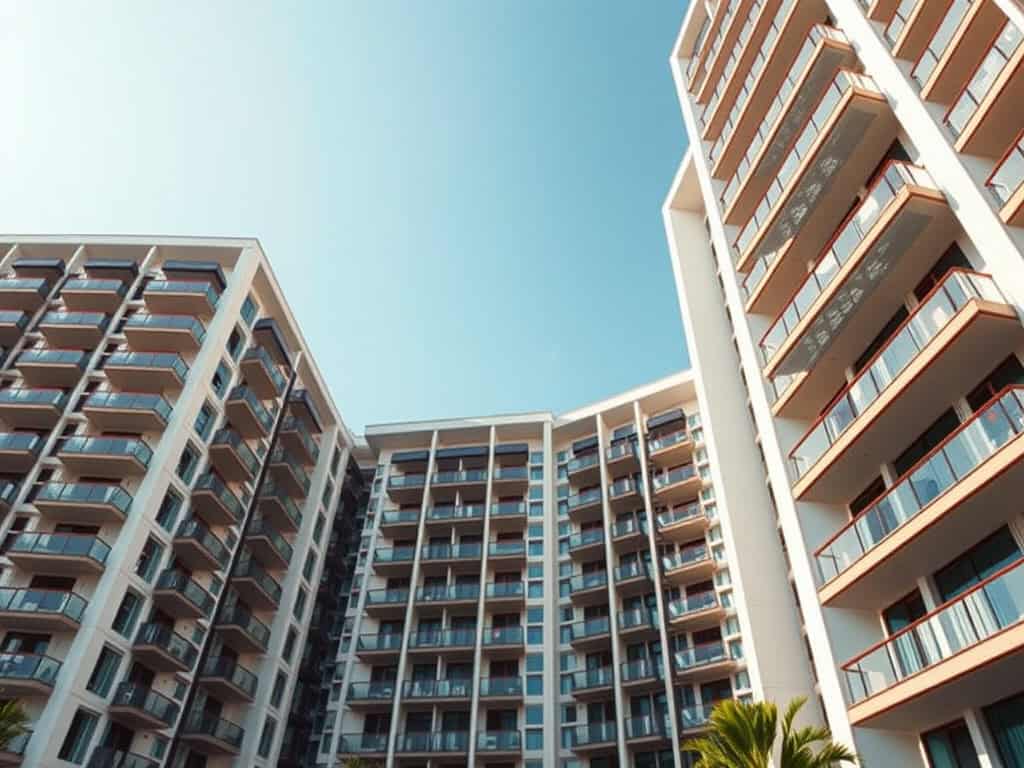
Singapore’s public housing system is founded on a 99-year leasehold model. Over 80 percent of resident households live in Housing and Development Board (HDB) flats, and a growing share of estates is now entering the second half of its tenure. As older blocks cross the 50-year mark, discussions surrounding lease decay, estate rejuvenation, and capital depreciation have become central to property planning.
To renew ageing towns systematically, the government introduced the Voluntary Early Redevelopment Scheme (VERS), slated to commence from the mid-2030s. For flat owners, understanding how VERS differs from the Selective En bloc Redevelopment Scheme (SERS), how the Home Improvement Programme (HIP) maintains liveability, and how Central Provident Fund (CPF) rules affect financing is vital for long-term planning.
Understanding the 99-Year Lease and Bala’s Curve Depreciation
Under Singapore law, state land leased for public housing reverts to the state without compensation when the 99-year tenure expires, as set out in the Singapore Land Authority lease policy. This mechanism allows land to be recycled for future generations, but it also establishes that flats have a finite economic lifespan.
The financial impact of lease decay is typically evaluated using Bala’s Table (commonly called Bala’s Curve), an actuarial scale derived by the Land Office. Bala’s Curve shows that depreciation is non-linear:
- First 30 to 40 Years: Leasehold value declines gradually. At 60 years of remaining lease, a property typically retains roughly 80 percent of its freehold equivalent value.
- Years 40 to 60: Depreciation accelerates as the remaining lease slips below 60 years, influenced by tighter mortgage tenures and buyer eligibility limits.
- Final 30 Years: Value drops steeply toward zero because commercial banks limit mortgage terms and CPF usage becomes restricted.
While convenient locations and spacious floor plans often sustain resale demand during early decades, terminal lease decay inevitably impacts asset values as expiry nears.
SERS vs VERS: The Structural Shift in Estate Redevelopment
Homeowners once viewed the Selective En bloc Redevelopment Scheme (SERS) as an assured exit for ageing flats. Launched in 1995, SERS is a compulsory acquisition programme targeting precincts with high redevelopment potential, where under-utilised land can be rezoned for denser development. SERS offers market-value compensation, guaranteed replacement flats nearby, and relocation packages.
However, SERS was never intended for widespread renewal. According to an MND parliamentary reply on SERS criteria, only around 4 to 5 percent of flats possess the redevelopment potential suitable for SERS. The vast majority of HDB blocks will run their full 99-year term without compulsory acquisition.
VERS was created to offer an orderly renewal path for the remaining 95 percent of estates. Several key distinctions separate the two programmes:
- Precinct Polling: SERS is mandatory, whereas VERS requires precinct consensus. A designated supermajority of eligible flat owners must vote in favour before redevelopment proceeds.
- Qualifying Age: VERS applies to precincts aged around 70 years, offering a predictable timeline for ageing neighbourhoods.
- Compensation Terms: Payouts for VERS will be less generous than SERS, reflecting the modest market value of an estate with 20 to 30 years of remaining lease.
- Rehousing Packages: The government will assist residents with alternative housing options, but VERS will not replicate the subsidized replacement flat packages provided under SERS.
Owners who anticipated speculative windfalls should adjust expectations accordingly, as highlighted in our assessment of older HDB flats left out of SERS.
HIP and HIP II: Sustaining Flat Liveability Across Generations
Ensuring that estates remain structurally safe and comfortable over 99 years requires proactive maintenance. To this end, the government conducts two comprehensive upgrading programmes.
The initial Home Improvement Programme (HIP) is offered around the 30-year mark, rectifying spalling concrete, ceiling leaks, and old waste pipes, with optional bathroom upgrades. The state covers up to 95 percent of essential costs for citizen households.
As flats reach 60 to 70 years of age, HIP II will be rolled out to replace building services, overhaul plumbing, and refresh common precinct infrastructure. This second upgrading cycle ensures that even if residents vote against VERS or wait years for redevelopment, their buildings remain safe and liveable.
CPF Usage Limits and Mortgage Rules for Older HDB Flats
Financing parameters heavily dictate secondary market liquidity for older flats. Under rules introduced in May 2019, borrowing limits depend on whether the remaining lease covers the youngest buyer to at least age 95.
Under CPF Board housing rules, these requirements determine CPF Ordinary Account (OA) usage and loan quotas:
- Covered to Age 95: Buyers can utilise CPF OA savings up to the Valuation Limit (VL) and secure maximum loan-to-value limits from HDB or banks.
- Not Covered to Age 95: CPF usage and housing loan caps are prorated according to the ratio of the remaining lease to the buyer’s age.
- The 20-Year Absolute Floor: No CPF savings can be used to acquire a flat with under 20 years of remaining lease, and HDB does not grant loans for such properties.
Because of these restrictions, older flats increasingly appeal to buyers whose age profile meets the 95-year threshold. Before committing to older units, buyers should conduct thorough structural and financial reviews, incorporating the 5 essential checks before buying an old HDB flat.
Even with financing limits, older flats retain distinct appeals, such as mature amenities and larger layouts. For details on resale demand drivers, see our review on why older HDB flats still command strong demand.
What Owners of Ageing Flats Need to Plan for Ahead of the Mid-2030s
With VERS scheduled to begin in the mid-2030s, flat owners should plan prudently. Public housing serves primarily as a long-term residence rather than a perpetual investment asset.
Senior homeowners have options to unlock equity ahead of VERS. The Lease Buyback Scheme (LBS) allows seniors to sell the tail-end of their lease to HDB while retaining a lease covering them for life, directing proceeds to top up CPF retirement payouts. Alternatively, seniors can right-size to shorter-lease 2-room Flexi flats using the Silver Housing Bonus.
Market participants should also monitor regulatory adjustments. For example, the previous temporary 15-month wait-out period for private property owners buying non-subsidized HDB resale flats was removed, easing transitions for households moving between sectors. For further transactional considerations, refer to what buyers and sellers of older flats need to know.
As VERS guidelines develop closer to implementation, realistic financial planning, regular home maintenance, and alignment with retirement timelines remain the most reliable approach for flat owners.