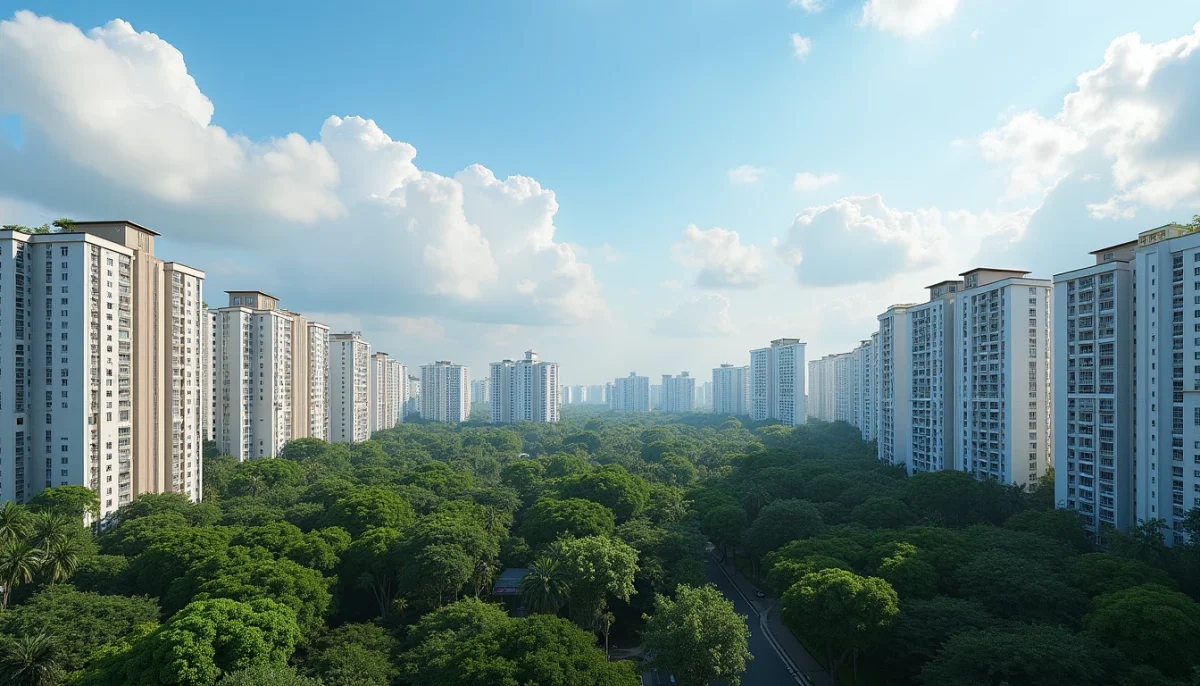
When property investors discuss residential rental yields in Singapore, conversations almost invariably gravitate toward top-tier private condominiums. However, an empirical cross-comparison of rental yields across all 25 Singapore housing towns reveals an unexpected reality: public housing flats consistently outperform private residential condominiums in rental yields across virtually every district.
The yield differential is most dramatic in compact homes. While entry-level 2-bedroom private condominiums generated a median gross yield of 3.42%, 3-room HDB flats produced a nationwide median gross rental yield of 7.50%—with selected mature estate clusters reaching peaks as high as 9.08%. This 4.08 percentage point premium has created a complex strategic dilemma for HDB upgraders who have met their Minimum Occupation Period (MOP).
The Data Across 25 Towns: Why Public Housing Yields Dominate
Public rental data from the Housing & Development Board (HDB) and private transaction records from URA demonstrate that the yield gap stems directly from capital base disparities:
- Lower Purchase Base: A typical 3-room resale flat in mature towns such as Toa Payoh, Queenstown, or Geylang commands purchase prices between S$380,000 and S$520,000, yet commands monthly tenant leases between S$2,700 and S$3,300.
- Compressed Private Yields: In contrast, comparable 2-bedroom suburban condominiums trade at S$1.3 million to S$1.6 million, commanding monthly rents of S$3,500 to S$4,200. Despite higher absolute rent, the much larger capital outlay compresses private gross yields to the 3.2% to 3.5% corridor.
- Yield Narrowing on Larger Units: The yield gap narrows as flat sizes expand. 4-room flats average yields around 6.2% against 3.3% for 3-bedroom condos, while 5-room and Executive flats average 5.4% against 3.1% for 4-bedroom private homes.
The Upgrader Dilemma: Keep the Flat or Cash Out?
For an owner-occupier household whose flat has cleared its 5-year MOP, the prospect of holding onto a residential asset generating a 7% to 9% yield is undeniably tempting. However, retaining an existing HDB flat while purchasing a private property triggers major regulatory and financial friction:
1. The 20% ABSD Hurdle
Under prevailing Inland Revenue Authority of Singapore (IRAS) stamp duty regulations, a Singapore Citizen purchasing a second residential property is subject to a 20% Additional Buyer’s Stamp Duty (ABSD). On a modest S$2,000,000 private condominium, the upfront ABSD liability amounts to an immediate S$400,000 in cash or CPF Ordinary Account capital.
For a detailed breakdown of stamp duty rates, exemptions, and remissions, review our comprehensive analysis on ABSD rates and remissions for Singapore homebuyers.
2. Restrictive Loan-to-Value (LTV) Limits
Purchasing a second property while servicing an existing home mortgage reduces the statutory borrowing ceiling from 75% down to 45%. This mandates a minimum 55% downpayment, of which at least 25% must be funded in hard cash. For most middle-income households, absorbing both the 20% ABSD and a 55% equity requirement proves financially unfeasible without full flat liquidation.
3. Net Yield Reality: Taxes and Maintenance Overheads
Gross yields can be misleading. Once an HDB flat is converted to a pure investment rental property, owners face recurring deductions:
- Non-Owner-Occupier Property Tax: Ranging from 12% to 36% of Annual Value (AV) compared to concessional owner-occupier rates of 0% to 32%.
- Town Council S&CC and Upkeep: Town Council conservancy charges (S$60–S$90/month), routine air-conditioning servicing, and agent leasing commissions.
- Condo Maintenance Fees: While private condos face substantially higher monthly maintenance contributions (S$350–S$550/month), their net yields typically stabilize around 2.4% to 2.7% after all property taxes and sinking fund provisions.
Alternative Strategies for Upgrading Families
Rather than absorbing punitive stamp duties to hoard an older HDB flat, experienced real estate planners typically evaluate three alternative paths:
- Sell and Reinvest via Single-Name Ownership: Selling the flat unlocks accumulated capital gains and principal refunds without ABSD. Coupes can then structure the private purchase under one spouse’s name, leaving the second spouse’s name clean to acquire a second investment property later without ABSD friction.
- The Executive Condominium (EC) Route: Eligible Singapore Citizen HDB upgraders buying a brand-new Executive Condominium enjoy automatic ABSD remission—paying 0% upfront ABSD and retaining the right to reside in their current flat until the new project receives its Temporary Occupation Permit (TOP).
- Balancing Capital Growth vs Immediate Cash Flow: While HDB flats deliver superior percentage cash flow yields, private residential properties historically demonstrate higher long-term capital compounding and unrestricted liquidity upon sale.
By balancing net yield math against stamp duty penalties and holding horizon goals, upgraders can make rational, data-backed decisions that protect long-term household wealth.

One thought on “HDB vs Condo Rental Yields Across 25 Towns: 3-Room Flats Hit 9% and the Upgrader ABSD Dilemma”