Singapore’s Good Class Bungalow market experienced a noticeable revival in deal volume across 2025, recording approximately 36 transactions with a collective sales value reaching $1.364 billion. This recovery in deal activity occurred alongside a measured softening in landed price benchmarks, with the average transacted rate moderating to approximately $2,134 per square foot on land area. The figures underscore a market finding healthy price equilibrium after a prolonged period of cautious buyer sentiment.
The willingness of sellers to moderate their price expectations served as the primary catalyst for unlocking transaction volume. In previous quarters, aggressive asking rates had led to a protracted standoff between landed property owners and prospective purchasers. As realistic valuations returned to the negotiating table, well-capitalized buyers stepped forward to secure trophy assets within Singapore’s 39 designated Good Class Bungalow Areas.
Transaction Volumes and Realistic Price Adjustments
The total of 36 GCB transactions in 2025 marks a decisive improvement over the subdued volumes recorded in 2023 and 2024, when annual sales hovered in the low twenties. The total transaction value of $1.364 billion demonstrates that high-net-worth capital continues to view Singapore landed residential property as the ultimate store of long-term value.
The downward adjustment in average square-foot prices reflects greater concentration of transactions in suburban landed pockets and sites requiring extensive structural redevelopment. While pristine, newly constructed mansions in ultra-prime enclaves like Nassim Road and Cluny Road still command elevated valuations, older properties requiring full teardown and reconstruction were transacted at realistic land-value rates.
The dynamics governing prime landed transactions are analyzed in our detailed look at landed home sales trends and detached house transaction values, showing how price discovery varies across distinct geographical zones.
Enclave Distribution Across Nassim, Cluny, and Bukit Timah
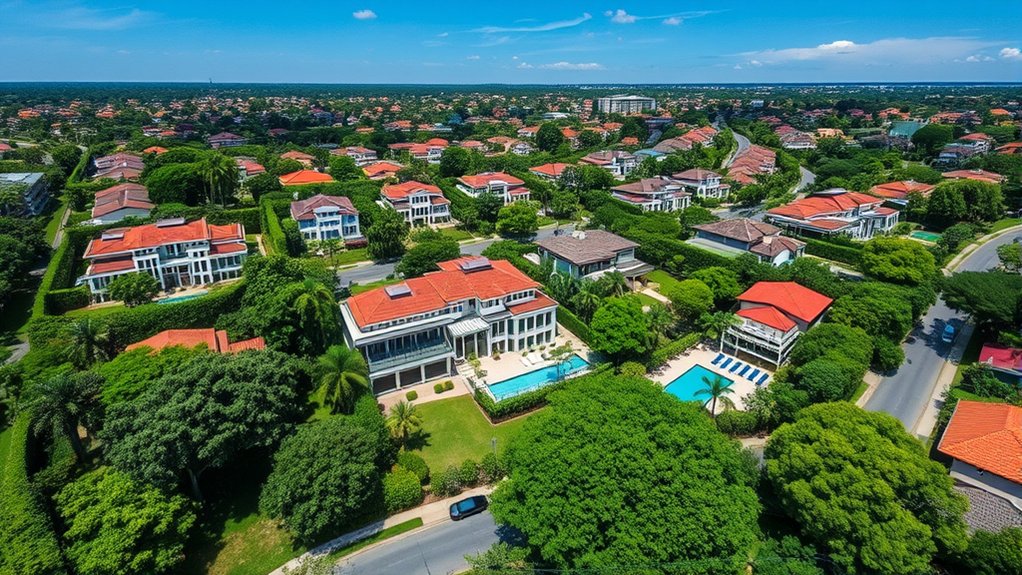
Deal activity across the year was distributed across established prime residential enclaves. Transactions in District 10—encompassing coveted neighbourhoods such as Queen Astrid Park, Leedon Park, Belmont Road, and King Albert Park—accounted for a substantial share of total dollar volume. These locations remain highly sought after due to their expansive land plots, lush greenery, and proximity to premier educational institutions.
District 11 enclaves, including Swiss Club Road, Camden Park, and Chee Hoon Avenue, also saw consistent buyer enquiries. Buyers in these precincts often seek large, regular-shaped parcels that offer multi-generational living configurations with ample privacy and private gardens.
The structural and planning attributes of top bungalow zones are explored further in our report on Bukit Timah Good Class Bungalow enclaves and development guidelines, detailing the specific site constraints that govern land use in prime sectors.
Strict Citizenship Mandates and Residential Property Act Rules
Good Class Bungalows occupy the most tightly regulated echelon of Singapore’s real estate framework. Under the Residential Property Act, landed residential properties in Singapore—and Good Class Bungalows in particular—are restricted properties that can only be purchased by Singapore citizens. Foreign individuals and permanent residents are legally prohibited from acquiring GCBs, except in exceptionally rare cases where specific approval is granted by the Minister for Law.
The Land Dealings Approval Unit within the Singapore Land Authority enforces these statutory restrictions with uncompromised rigor. Approval for foreign purchasers requires demonstrating exceptional economic contribution to the nation, and even when granted, properties cannot be rented out and are restricted to owner-occupation as a primary home.
Furthermore, planning controls administered by the Urban Redevelopment Authority mandate that any designated Good Class Bungalow must possess a minimum land plot of 1,400 square meters (approximately 15,070 square feet) and cannot exceed a two-storey building height restriction, ensuring the preservation of low-density character across all 39 designated areas.
Wealth Composition Among Ultra-High-Net-Worth Buyers
The buyer demographic in the GCB sector has evolved, reflecting broader changes in Singapore’s wealth creation engine. While traditional business families and established tycoons continue to expand their family estates, an increasing proportion of buyers consists of young technology entrepreneurs, fintech founders, digital asset executives, and second-generation leaders taking over family conglomerates.
These buyers bring substantial liquidity, often purchasing without the need for extensive bank financing. Many view prime landed estates not only as personal residences but as permanent inter-generational family anchors in a secure jurisdiction. However, regulatory guidelines established by the Inland Revenue Authority of Singapore regarding Buyer Stamp Duty rates of up to 6 percent on residential properties valued above $3 million ensure that significant transaction taxes are contributed to public revenues upon transfer.
For high-net-worth families preparing for significant acquisitions, Pat Ko’s advisory on what documentation and financial preparations are needed before buying Singapore property outlines the critical steps required for smooth settlement and legal compliance.
In addition, banks and conveyancing law firms apply exhaustive Anti-Money Laundering and Know-Your-Customer verification procedures on all landed purchases. Source-of-wealth documentation, banking origin trails, and beneficial ownership declarations are thoroughly vetted before transaction funds can be accepted by escrow accounts.
Value Drivers for Singapore’s Most Restricted Landed Asset
Looking ahead, the long-term outlook for Good Class Bungalows remains anchored in absolute scarcity. There are only approximately 2,800 designated GCB plots across Singapore, a fixed inventory that cannot be expanded due to urban land constraints. As Singapore solidifies its position as a global financial, legal, and wealth management center, demand for these premier landed residences from citizens will continue to outpace supply over generational cycles.
The healthy volume of transactions in 2025 demonstrates that when asking prices align with market realities, capital is readily available. For buyers with multi-generational horizons, acquiring a well-configured bungalow in a prime enclave represents an enduring store of wealth protected by national legal safeguards.