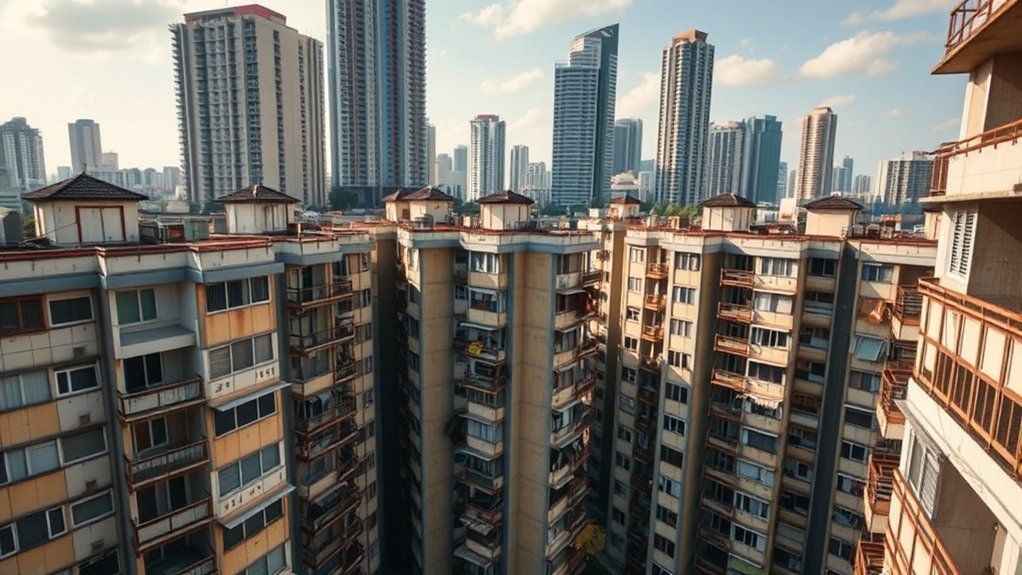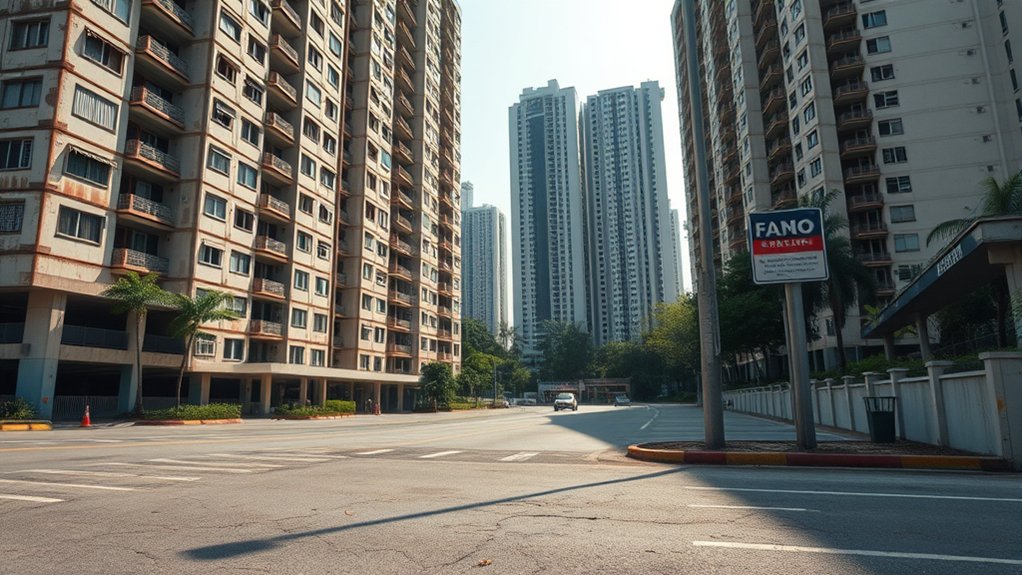
In Singapore, more than a thousand private residential developments—roughly 31 % of the total condo stock—have already crossed the 30‑year mark, and that share is set to climb further as new launches lag behind. By 2025, about 836 units were already three decades old, and analysts project the number could rise to 1,160 by 2035 if no en bloc sales occur. The ageing pool is expanding faster than the rate of new private launches, meaning owners and prospective buyers must confront a growing set of challenges that go beyond mere aesthetics.
One of the most visible problems is lift reliability. Many estates experience multiple breakdowns each year, and the cost of replacing or overhauling aging lift systems can be steep. Waterproofing failures also surface, with water seepage causing structural concerns that require extensive repairs. Outdated electrical wiring, spalling concrete, and façade deterioration are common in 30‑year‑old blocks, and the maintenance expenses associated with these issues often outpace inflation. Owners, consequently, find themselves facing special levies that feel like a surprise bill rather than a planned expense.
Lift breakdowns, waterproofing leaks, aging wiring and concrete, and façade deterioration drive steep, unexpected special levies.
Sinking funds, the financial cushion for such major works, are frequently inadequate. In numerous MCSTs, funds for lift replacement are only accumulated after wear becomes apparent, leaving a gap that forces ad‑hoc levies. These levies are usually unpopular, and resistance can delay essential repairs. Proposals are emerging to set a minimum contribution based on projected long‑term maintenance costs, alongside transparency measures that would publish MCST financial health in a standard format, helping owners gauge the true fiscal health of their estate. Beyond governance reforms, the risk of depleted reserve funds can trigger special assessments ranging from tens to hundreds of thousands per unit, placing sudden financial strain on unprepared owners.
Governance reforms aim to streamline decision‑making. Lowering consent thresholds for essential works should speed up approvals, while capping proxy vote holdings per household is intended to prevent a small group from dominating outcomes. Mandatory training for council members and standardized financial disclosures are also on the table, with possible amendments to the Building (Strata Management) Act under review.
Government support is being explored, particularly partial co‑funding for lift and escalator safety upgrades. Critics warn that subsidies might encourage owners to postpone necessary repairs, but the goal is to lessen reliance on special levies for critical work. Minimum sinking‑fund contribution levels for both new and existing MCSTs could become a regulatory requirement, though the exact mechanisms remain under discussion.
For buyers, the shift is palpable. Prospective owners now scrutinise sinking‑fund adequacy before signing, and standardized disclosures are expected to influence valuations. Higher maintenance liabilities can depress resale prices of older condos, while collective‑sale thresholds may be lowered when reserves are thin. Consequently, investor interest may tilt toward newer developments with stronger reserve positions.
In the long term, the expanding stock of ageing condos will pressure MCSTs to adopt proactive reserve strategies, and legislative reforms will seek to balance owner protection with the financial viability of estates. As the market adapts, buyers who ignore these dynamics risk facing unexpected costs and reduced property value.
The BCA is also considering a cap on proxy holdings per household to prevent small groups from dominating decisions. Council training is also being mandated to improve governance.