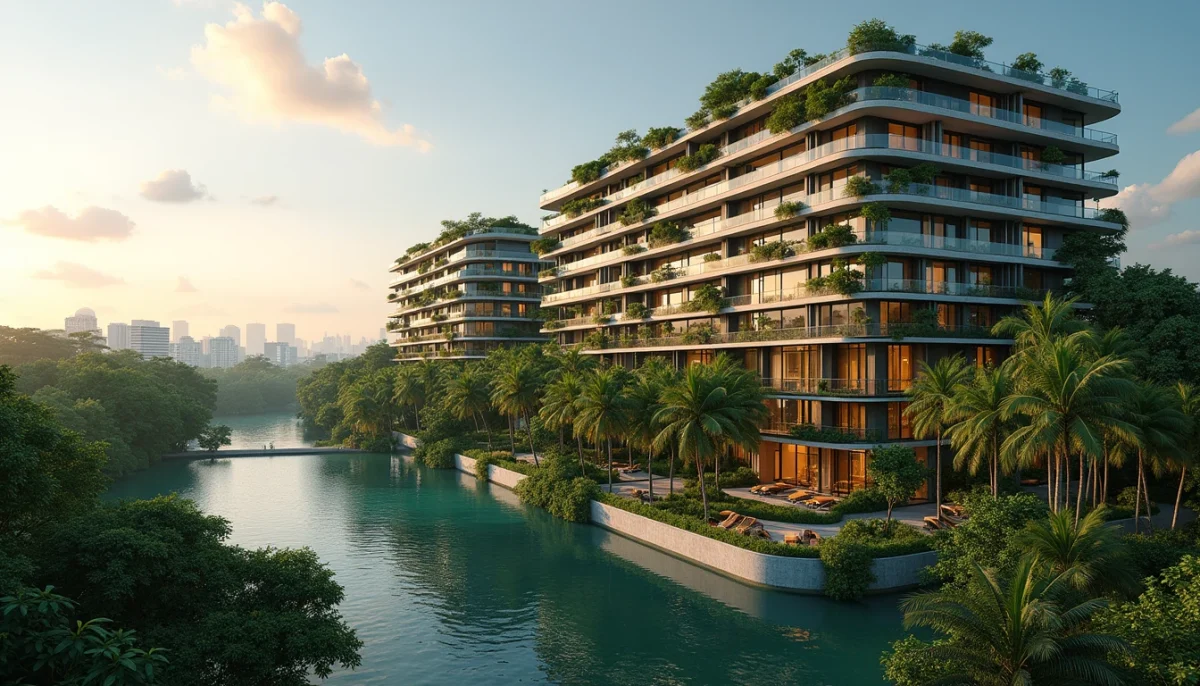
In Singapore’s bustling property scene, the Core Central Region—often just called CCR—has traditionally commanded the highest home prices, with non-landed properties easily exceeding $2,000 per square foot. But lately, things have shifted, and that premium isn’t what it used to be, making CCR homes look like surprising bargains.
Singapore’s Core Central Region (CCR) long boasted premium prices exceeding $2,000 psf, but evolving trends now make these properties surprising value buys.
Over the past decade, CCR price growth stayed moderate, while the Rest of Central Region (RCR) and Outside Central Region (OCR) saw sharper rises. Since 2015, the Private Property Index shows that CCR increased by 35.8%, compared to substantial gains in other regions. Since 2023, high-profile RCR launches near the boundaries have pushed median RCR prices above those in CCR, narrowing the gap and positioning CCR as a potential value buy. It’s like the underdog suddenly stealing the spotlight, isn’t it?
Take current pricing, for example. A 99-year leasehold two-bedroom condo in CCR might cost $1.8 million to $2.1 million, which closely matches similar units in RCR or OCR. Yet CCR options often boast larger average sizes, giving buyers more space for their money.
This affordability makes them appealing for HDB upgraders, who once viewed RCR as the logical step up but now find CCR units comparable in total cost. Similar to how the wait-out rule for private property owners purchasing resale HDB flats may soon be reviewed, the market is showing signs of policy adjustments responding to price stabilization. New launches in OCR and RCR hit benchmark prices in 2024 and 2025, compressing the premium over CCR properties. Investors and upgraders alike are eyeing these for their value, especially with bigger layouts and central perks that feel like a smart, no-fuss choice.
Price trends reveal a bigger shift. CCR has grown steadily but not explosively since 2020, while RCR and OCR accelerated, thanks to projects bordering CCR. Those new developments peaked those segments, leaving CCR undervalued by comparison. Similarly, global trends show narrowing differentials, as seen in the US where the price gap between new and existing homes stood at $14,600 in Q1 2025.
Market watchers call it a fundamental change in buyer tastes and supply patterns, where reduced premiums signal opportunity. Who wouldn’t appreciate a central spot without the usual markup?
Inventory dynamics add intrigue. In 2025, active housing stock rose 28.9% year-over-year, marking five quarters of growth, yet it’s still 12.9% below pre-pandemic levels, hinting at ongoing constraints. CCR sees limited new supply, particularly for large or luxury units, as launches focus on RCR and OCR.
Pending sales dipped 1.6% year-over-year, with more buyer options slowing absorption. Sales volume in CCR remains stable but modest, contrasting higher activity in RCR and OCR after major launches. Homes here spent a median of 53 days on market in June 2025, up five days from 2024, aligning with pre-pandemic norms.
Still, they attract those seeking long-term value, larger designs, and rental potential. Price cuts hit 20.7% of listings that June, the highest ever, showing sellers’ flexibility.
With scarce CCR supply ahead and resilient luxury demand, these homes could rebound strongly—proving today’s dips might just be tomorrow’s wins.