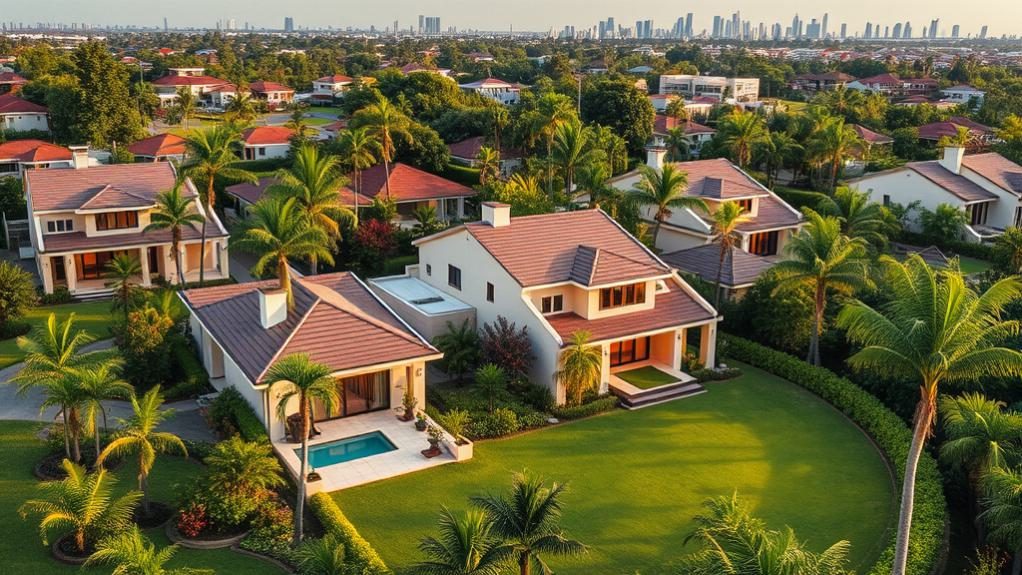
How often do you hear about homes that cost tens of millions, tucked away in the most exclusive corners of a bustling city? In Singapore, such properties, known as Good Class Bungalows (GCBs), are the pinnacle of luxury real estate, and their price tags are nothing short of jaw-dropping. With a market value hitting SGD 1.32 billion in late 2024, and about S$1.1 billion in deals from January to December, it’s clear that demand among ultra-high-net-worth individuals remains rock-solid, even in a fluctuating economy. These aren’t just homes; they’re status symbols, often sprawling over 15,000 square feet of land in prime spots like Tanglin and Nassim.
Ever wondered about homes worth millions in Singapore? Good Class Bungalows, true status symbols, dominate luxury real estate with jaw-dropping price tags.
Now, let’s talk numbers, because they tell quite a story. The average price per square foot for GCB land in Q4 2024 was S$1,942, a noticeable dip of 22% from the peak in Q2 2023, with quarter-on-quarter drops of 6.6% and 5.4% in Q3 and Q4 respectively. Yet, records are still being shattered—think S$6,197 per square foot for a Tanglin Hill property, or a staggering S$93.9 million deal for a fully furnished, move-in-ready bungalow. Price corrections happen, often due to mismatched expectations between buyers and sellers, but with only around 615 GCBs listed for sale as of mid-2025, scarcity keeps the allure alive. This limited supply, coupled with enduring demand, ensures that GCBs remain a highly sought-after investment. Additionally, with only about 2,700-plus bungalows in GCB Areas, their rarity value continues to underpin their premium pricing despite market fluctuations. One prime example is the prestigious Oei Tiong Ham Park bungalow recently listed at $42.8 million, offering District 10 luxury in one of Singapore’s most coveted neighborhoods.
Who’s buying these mega-mansions? Mostly ultra-wealthy locals and new citizens, particularly from China, willing to pay premiums for brand-new builds in top locations. Many deals are discreet, hidden behind trusts or shell companies, with non-disclosure agreements becoming the norm. It’s a private world, and ownership itself is a privilege, tightly regulated to maintain exclusivity—most buyers must be Singapore citizens or approved foreigners.
Why the fascination? GCBs aren’t just investments; they’re legacies, boasting gardens, pools, even private sports arenas. While the rental market has cooled since 2023 due to regulatory shifts, investors still see these properties as safe bets for long-term value and generational wealth. So, next time you pass a quiet, gated estate in Singapore, just imagine the billion-dollar stakes behind those walls. Pretty wild, isn’t it?


