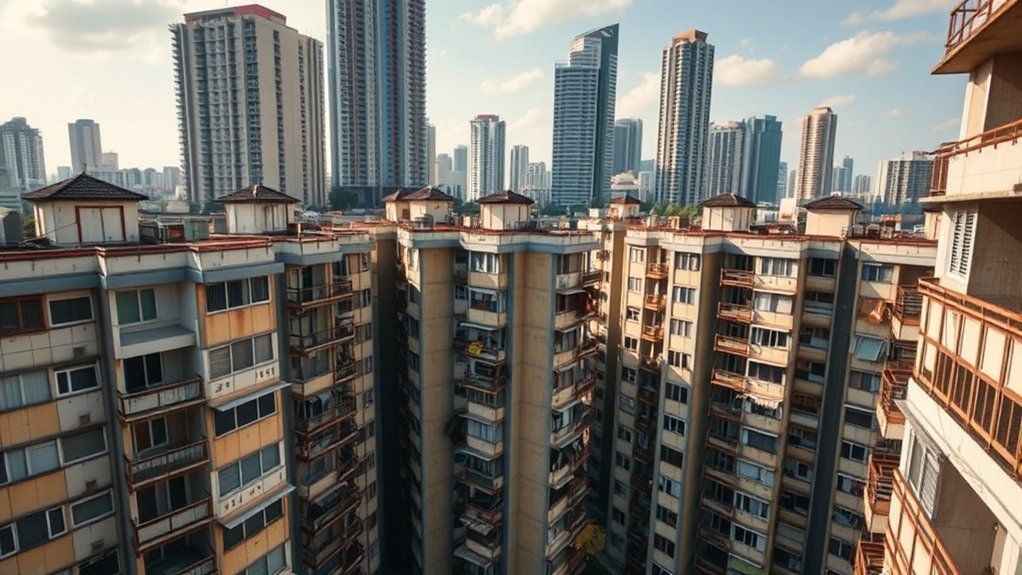
Addressing the growing strain on Singapore’s ageing condominium estates, property managers now face a perfect storm of demographic shifts, financial shortfalls, and regulatory changes. Over a thousand of the nation’s 3,750 private strata developments are three decades old or more, and about fifteen percent of their occupants are senior citizens, a figure that pushes demand for accessibility upgrades such as ramps and wider corridors.
Property managers confront a perfect storm of ageing condos, senior needs, and tightening regulations.
The typical unit, roughly ninety square metres, leaves little room for retrofitted amenities, while the median remaining lease of sixty years narrows financing options for large‑scale works. High density—more than thirty units per hectare—means that any decision must juggle many voices, often turning simple upgrades into complex negotiations.
Financial pressure is palpable. Only forty percent of management corporations have sinking funds covering seventy percent of projected ten‑year repair costs, and the average balance per unit sits at S$1,200, well below the S$2,500 benchmark needed for a major lift replacement.
Special levy requests have climbed twenty‑five percent year‑on‑year since 2023, reflecting the growing number of defects—three per building on average in thirty‑year‑old estates. The Building and Construction Authority‘s proposal to make financial statements publicly available aims to improve transparency, yet owners still worry about the pace at which funds are depleted.
Regulatory reforms promise to ease some bottlenecks. The current seventy‑five percent consent threshold for essential works—lift, fire‑safety, and structural repairs—is slated to drop to sixty percent, a change intended to speed up decision‑making. At the same time, caps on proxy voting, limited to ten percent of total votes per household, are being considered to prevent a small group of owners from dominating outcomes.
Mandatory council training will also be introduced, ensuring that those who vote on essential works understand the stakes.
Government support is emerging in the form of partial co‑funding for lift and escalator safety upgrades, with up to thirty percent of costs potentially covered, provided estates meet a twenty‑percent sinking‑fund adequacy threshold. Pilot projects target buildings older than thirty‑five years that have documented safety deficiencies, though critics warn that waiting for subsidy qualification may delay necessary maintenance.
Cost escalation adds another layer of difficulty. Replacing a lift in a thirty‑year‑old tower now averages S$250,000, a fifteen percent rise since 2022, while escalator safety upgrades add roughly S$80,000 per unit. Inflation in construction materials further fuels budgets, forcing property managers to balance the urgent need for retrofits against the financial realities of owners. Meanwhile, URA’s broader urban planning push to develop underground utilities and logistics infrastructure across Singapore signals a long-term commitment to freeing surface land and reducing the burden of above-ground maintenance in densely built estates.
Light‑heartedly, some residents joke that their condo is “vintage,” but the underlying challenges are anything but nostalgic. By steering through demographic pressures, tightening finances, and evolving regulations, managers must orchestrate collective action while keeping costs in check, a task that demands both strategic foresight and clear communication. public consultation scheduled from Mar 9 to Apr 8, 2026 will allow residents to weigh in on these reforms. The BCA’s review also includes a proposal to lower consensus thresholds for essential upgrades, aiming to reduce voting deadlocks.



One thought on “Aging Condominiums Force Property Managers to Balance Retrofit Demands, Collective Sale Pressure and Soaring Costs”