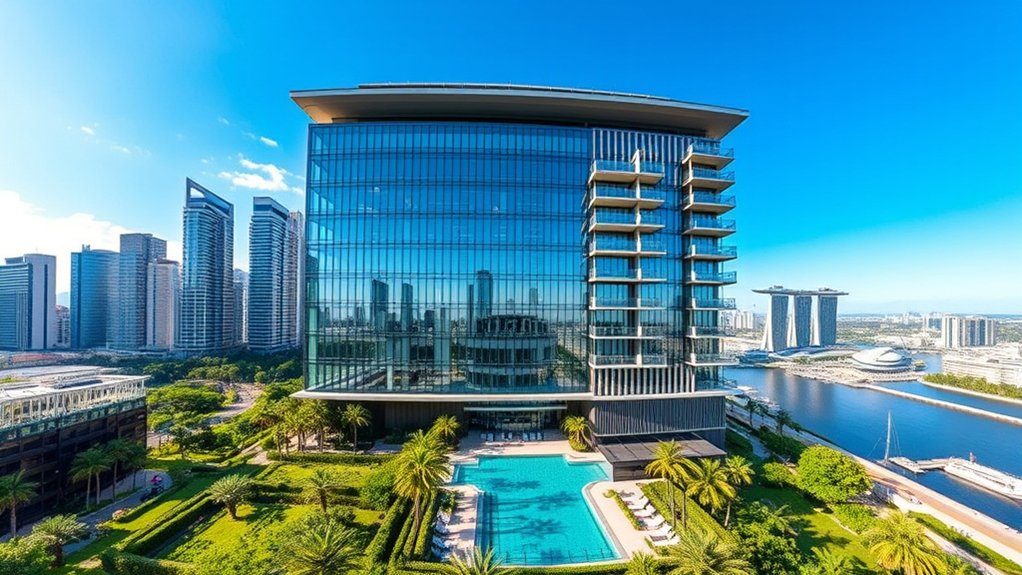
Although the dream of owning a home in Singapore often comes with a staggering price tag, recent market trends suggest that renting might actually be the smarter financial move for the savvy individual in 2025.
Recent market trends suggest renting is the smarter financial move for the savvy individual in 2025.
The financial landscape for buyers has become increasingly steep, as the Property Price Index for private residential properties rose by 3.33% year-on-year in the first quarter alone. With the average price for a standard 2-bedroom unit in top rental markets hovering around SGD 1.08M for prospective home-seekers, the initial capital required to purchase is immense, pushing many to reconsider the immediate necessity of holding a title deed.
While purchase prices climb, the actual returns for owners are dipping, creating a scenario where money locked in property works harder for the bank than the investor. This hesitation among buyers is evident in the luxury segment, where CCR sales plummeted by 78.7% year-on-year as investors retreated from the high costs.
Average gross rental yields declined from 3.40% in late 2024 to a mere 3.29% in 2025, with long-term averages for 2-bedroom properties sitting at roughly 3.38%. Even in District 2, which delivers the highest yields, returns cap at 4.07%, a figure that barely justifies the heavy entry costs and the 24% tax on non-resident rental income.
Conversely, the rental market is showing signs of welcome stabilization after years of previous volatility. The island-wide private rental index saw a remarkably mild increase of just 0.4% year-on-year in Q1 2025, and forecasters like CBRE predict rents will only grow by 1-3% throughout the year. Demand resilience is further evidenced by specific developments, such as where Normanton Park recorded 290 leasing transactions driven by its connectivity and unit mix.
For a 2-bedroom unit, the average monthly rent is approximately USD 3,488, while 1-bedroom units average USD 2,558, offering predictable, manageable costs compared to a mortgage payment.
Additionally, volume is healthy, with HDB rental transactions jumping to 19,728 in the first half of 2025, ensuring liquidity and plenty of options for residents.
Even keeping in mind that the overall private rental price index rose 1.2% in the first half of the year, the pace is far less aggressive than property valuations faced by investors.
With new private unit launches declining by 8.35% quarter-on-quarter, buying options are shrinking, yet leasing activity remains robust and accessible, proving that for 2025, rental flexibility beats building equity. The new Integrated Transport Hub at developments like The Reserve Residences demonstrates the growing focus on convenience for renters rather than just property owners.