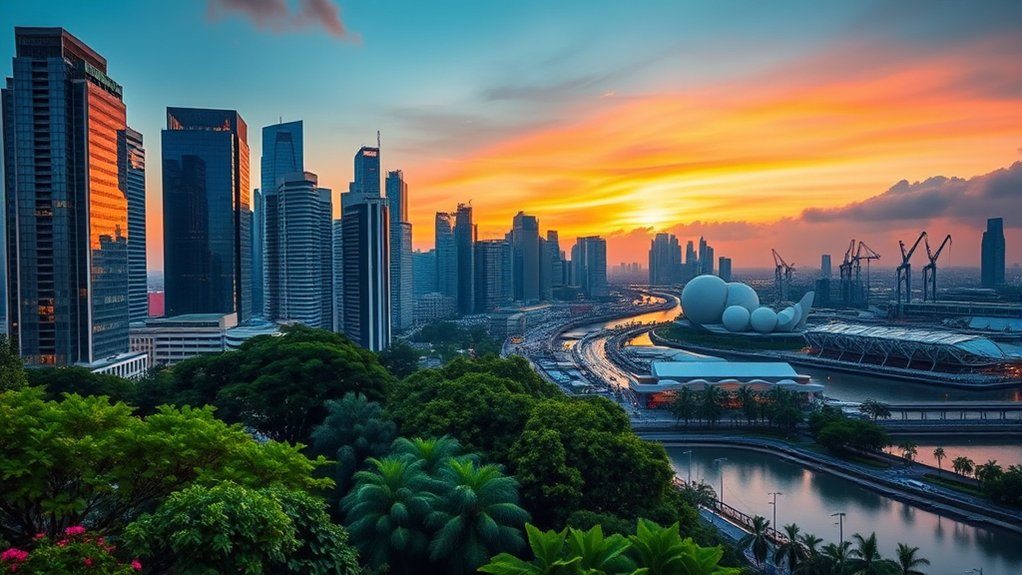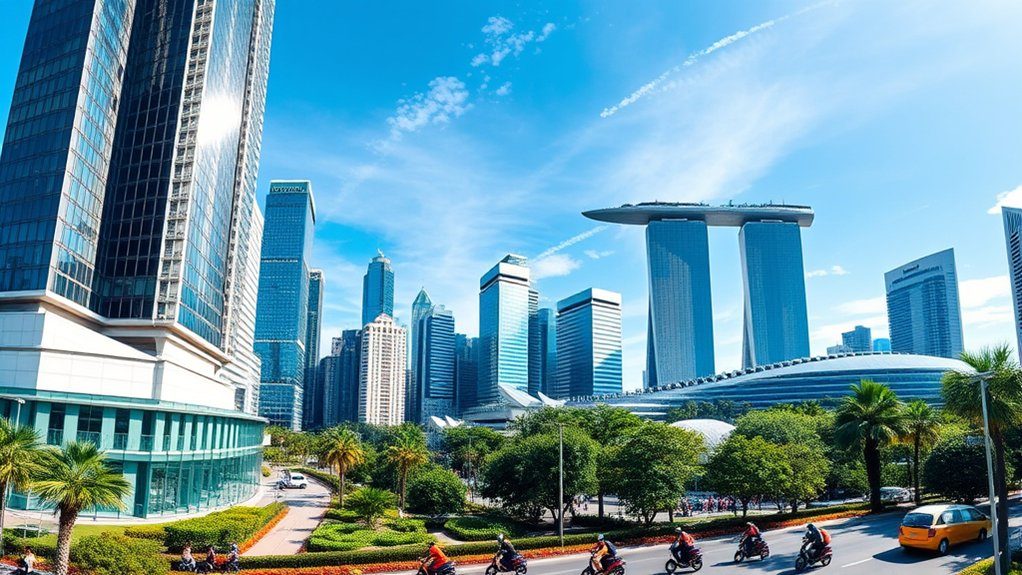
While falling interest rates and a recovering economy provide a reliable backdrop, the current surge in Singapore’s commercial real estate demand is truly being driven by a diverse mix of industries keen to secure their footprint in the city-state. Insurance, asset management, and pharmaceutical companies are actively joining technology firms in a competitive race for space, proving that business is truly booming across the board. This positive sentiment is reinforced by stabilizing price pressures, with local inflation expected to average between 0.5-1.5% in 2025.
Business is booming as diverse industries join tech firms in a competitive race for Singapore’s commercial space.
The office sector is seeing significant action, with vacancy rates in the Core CBD Grade A market dropping noticeably from 5.9% in the first quarter of 2025 to just 5.2% in the second quarter. This tightening suggests prime spots are becoming harder to find, and broad-based demand from banking, transport, government bodies, and flexible workspaces is keeping landlords quite happy.
It isn’t just about suits and ties in skyscrapers, though. The industrial sector is enjoying its own moment in the sun, fueled by e-commerce and a strategic shift to “just-in-case” inventory strategies that boosts logistics needs. The industry must also prepare for heightened transparency requirements as federal authorities intensify regulations to combat money laundering in real estate transactions globally.
Data centers are a massive part of this story, with the market expected to grow from USD 4.16 billion in 2024 to USD 5.59 billion by 2030. This growth is thanks heavily to the government’s ambitious Green Data Centre Roadmap releasing nearly 300MW of new capacity.
Although Cushman & Wakefield forecasts a slightly moderated 2.8% industrial growth in 2025, the demand generally outstrips supply, maintaining low vacancy.
Meanwhile, the retail market offers a mixed bag, as suburban malls stay reliable due to local necessity spending. At the same time, prime urban areas hustle to attract tourists.
Curiously, even with positive net absorption in the Downtown Core, islandwide retail vacancy rose slightly to 7.2% in the third quarter of 2025 due to new stock.
With a looming supply drought for offices following the high occupancy of major projects like the IOI Central Boulevard Towers, rent for prime Grade A spaces is forecast to grow between 2.0% and 3.0%.
Ultimately, a scarcity premium is emerging in key segments, and with non-landed property rents rising 1.1% quarter-on-quarter, the whole real estate market looks poised for continued upward pressure on pricing. This trend is further compounded by limited land supply and strict land use policies that serve to increase property prices.