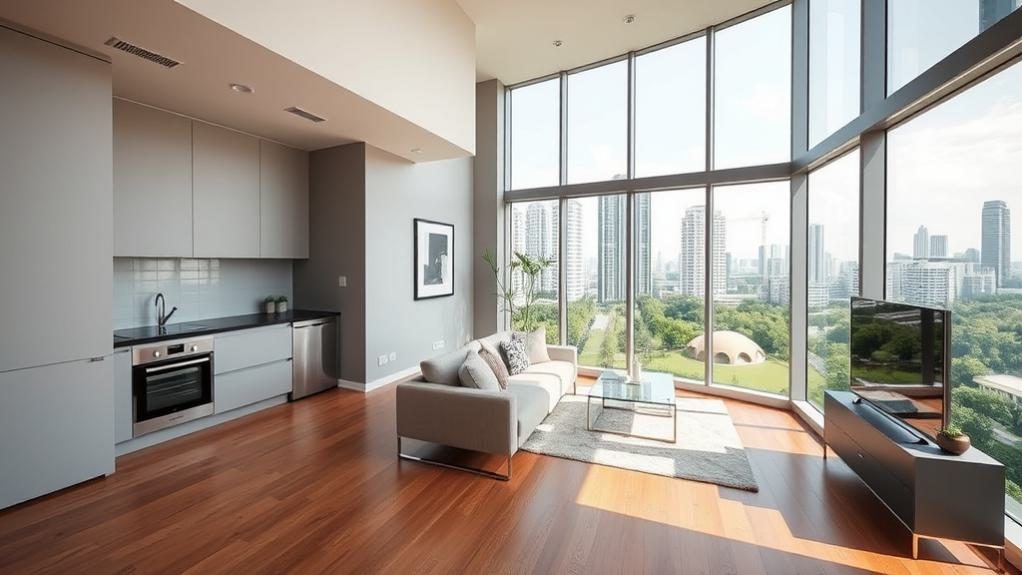
Virtual tours are useful for shortlisting a Sceneca Residence unit, but they are not a substitute for documents, measurements and an on-site inspection. That distinction matters more now than it did at the project’s 2023 launch. A buyer may be assessing an actual unit rather than only a showflat, and the legal and physical position of that unit can differ from an old marketing presentation.
Sceneca Residence is a 268-unit, 99-year leasehold development at Tanah Merah Kechil Link. Its launch drew attention because of the mixed-use proposition and access to Tanah Merah MRT station; 160 units were sold on launch day at an average of $2,072 psf, according to the project’s launch announcement reported at the time. Our earlier report covers the Sceneca Residence first-day sales result. Those historical numbers provide context, not a present valuation.
Use the virtual tour to test the floor plan, not to admire the styling
Start with a simple exercise: keep the official floor plan beside the virtual tour and trace every doorway, window, structural column, cabinet and appliance. Note where the camera changes position or skips a corner. Wide-angle lenses can make the distance between the sofa and television wall, the width of a bedroom aisle and the depth of a balcony look more generous than they are.
Use known dimensions to create a scale. If your own bed, dining table or work desk must fit, measure the furniture and mark it on the plan. Check whether wardrobe doors, bedroom doors and dining chairs can operate at the same time. For compact units, a few centimetres can decide whether a layout works comfortably.
Also distinguish the unit type from the actual unit. A tour labelled by a layout code illustrates that configuration; it does not establish the selected stack’s floor, orientation, view, ceiling condition or exposure to roads, rail lines, communal areas and neighbouring blocks. Ask for the plan and schedule that form part of the sale documents, not a screenshot forwarded through a chat.
What a Sceneca Residence virtual tour cannot prove
A screen cannot reliably establish noise, heat, smell, airflow, water pressure, mobile reception or privacy. It cannot show how the residential arrival route feels during the evening peak, whether lift waiting times suit your routine, or how retail deliveries and ride-hailing traffic interact with residents. These are especially relevant checks in a mixed-use project.
Nor can a tour prove workmanship or current condition. Compression can hide hairline cracks, uneven paint and stained sealant; staged furniture can cover floor damage or awkward sockets. A recorded tour also freezes one moment. It says nothing about later renovation, defects, water seepage, appliance operation or wear. BCA’s pre-purchase guidance for condo buyers specifically points buyers to separate new-condo and resale-condo checklists and to its Quality Housing Portal.
Treat views with equal caution. Confirm the compass direction, stack and level, then compare them with the site plan and the surrounding plots. A panorama from a show unit, drone or rendering is not evidence of the view from the unit offered, and no view should be assumed permanent.
Inspect the actual unit and the mixed-use routes
Visit the exact unit where access is legally and practically available. Go once in daylight and, if possible, again during a weekday peak or weekend evening. Stand quietly with the air-conditioning off. Open windows and listen for trains, roads, loading activity, pool use and mechanical equipment. Check direct overlooking from opposite stacks and common decks.
Inside, bring a tape measure, phone charger and a written checklist. Test doors, windows, taps, flushing, drainage falls, built-in appliances, electrical points and air-conditioning. Look below sinks and around window frames for moisture. Photograph findings with the seller’s permission and record agreed rectification in writing; do not rely on an oral assurance that an issue is “normal”. A specialist inspection may be sensible, particularly where access, defect responsibility or the remaining contractual defect period is unclear.
Then walk the routes that support the convenience premium: home to MRT entrance, pick-up point, car park, bicycle parking and shops. Count unsheltered sections, road crossings, lift changes and access doors. Check what happens after retail closing hours. For a wider framework, see our comparison of an integrated development versus a regular condo; the practical lesson is to verify the specific route rather than buy the label.
Verify the title, plans and transaction evidence
Before paying or exercising an option, ask your conveyancing lawyer to confirm what is being sold, the tenure and lease commencement, title details, encumbrances, completion status and the contract appropriate to the transaction. Do not assume that every 2026 listing follows the same process: establish whether it is developer stock, an uncompleted-property transaction or a completed resale, and use the corresponding checks.
URA advises private-property buyers to ensure that a property has no unauthorised works or inappropriate use, and says buyers can ask the seller for approved plans or requisition planning records. Its buying-property guidance is a better authority than a tour when walls, platforms, enclosed balconies or other alterations raise questions.
Price evidence should also come from lodged transactions, not asking prices or the 2023 launch average. URA’s private residential property data provides transaction and rental searches covering the last 60 months. Compare like with like: floor-area band, floor range, sale type and approximate timing. A high-floor unit, a large penthouse and a compact apartment should not be blended into one headline psf figure without explanation.
Review condo management, costs and the commercial interface
For a completed resale, due diligence extends beyond the front door. Ask through the seller for current maintenance contributions, by-laws, recent general-meeting minutes, audited accounts or financial statements where available, insurance information, planned major works and known disputes. Clarify whether any amounts are outstanding and whether special contributions have been approved or discussed.
Mixed-use arrangements deserve specific questions. Identify which areas are residential common property, whether any limited common property applies, how residential and commercial access is separated, and how relevant costs are allocated. Ask who manages loading bays, shared services, car-park areas, exhaust systems and public access. A pleasant retail podium in a tour does not answer who pays when shared infrastructure needs major repair.
BCA explains that condo owners become subsidiary proprietors and members of the management corporation, with responsibilities that include contributions and compliance with by-laws. Its guidance also notes that maintenance contributions support daily upkeep and future repairs. Build these recurring costs, property tax, insurance, renovation and a repair buffer into the affordability test. Our broader Singapore property due-diligence guide sets out the same evidence-first approach.
A practical sequence before making an offer
- Shortlist remotely: use the virtual tour and official floor plan to reject layouts that do not fit your furniture, storage and household routines.
- Identify the exact property: obtain the unit number, stack, floor area, tenure details, seller identity and transaction type.
- Inspect twice: examine the unit, common areas and station and retail routes at different times; commission professional checks where appropriate.
- Request evidence: review approved plans, sale documents and relevant management records with your lawyer and adviser.
- Benchmark the price: use recent comparable caveats rather than listing prices, launch averages or projected gains.
- Confirm finance and tax: obtain a loan assessment and calculate duties, CPF use, legal costs and holding expenses for your own buyer profile.
- Use proper documents: CEA publishes checklists for completed and uncompleted private homes, as well as standard private-resale contract templates. Let your conveyancing lawyer advise on the applicable terms before money changes hands.
The right conclusion from a Sceneca Residence virtual tour is not “buy” or “do not buy”. It is a sharper list of questions. If the actual unit, documents, management position, comparable transactions and full ownership cost all support what looked attractive online, the tour has done its job.