For many Singaporean families crossing the $3.5 million to $4.5 million purchasing threshold, the ultimate housing aspiration converges on landed living. Yet within this rarefied market segment lies a profound structural divide: should buyers opt for a strata-titled cluster landed home or a conventional pure landed property? Recent caveated resale data underscores a substantial valuation spread — in District 28’s Seletar enclave, freehold cluster terraces at developments like Este Villa transacted at an average of $3.52 million, sitting roughly $734,000 below conventional freehold terraces in the immediate one-kilometer vicinity ($4.26 million).
Across the entire island, this valuation spread is even more pronounced: conventional freehold landed terraces command an average $1.05 million premium over their freehold strata-titled counterparts. Why does this persistent discount exist despite cluster homes offering private home lifts, multiple basement parking lots, and resort swimming pools? We analyze the structural trade-offs governing land titles, ongoing holding costs, and long-term capital compounding.
Head-to-Head Comparison: Strata Cluster Landed vs Pure Conventional Landed
To evaluate whether a cluster home represents compelling arbitrage or a compromise on capital growth, one must examine the legal and physical differences between both formats:
| Key Evaluation Dimension | Strata Cluster Landed (e.g. Este Villa / Belgravia Ace) | Pure Conventional Landed (Fee Simple / Subsidiary Land Title) |
|---|---|---|
| Land Title Ownership | Strata Title (Share Value): You own the internal airspace and an undivided share of the common land compound. | Sole Land Title (Fee Simple / Estate in Perpetuity): You own the exact physical plot of earth beneath the house. |
| Entry Capital Quantum | Lower ($3.2M – $4.0M): Accessible entry into landed-scale multi-level living. | Higher ($4.2M – $5.5M+): Substantially higher barrier to entry for freehold terraces. |
| Mobility & Accessibility | Built-in Private Lift: Most modern cluster developments feature an internal pneumatic or hydraulic lift serving all 4 to 5 levels. | Stair-Heavy Unless Retrofitted: Older conventional terraces require extensive retrofitting ($100k–$150k) to install home lifts. |
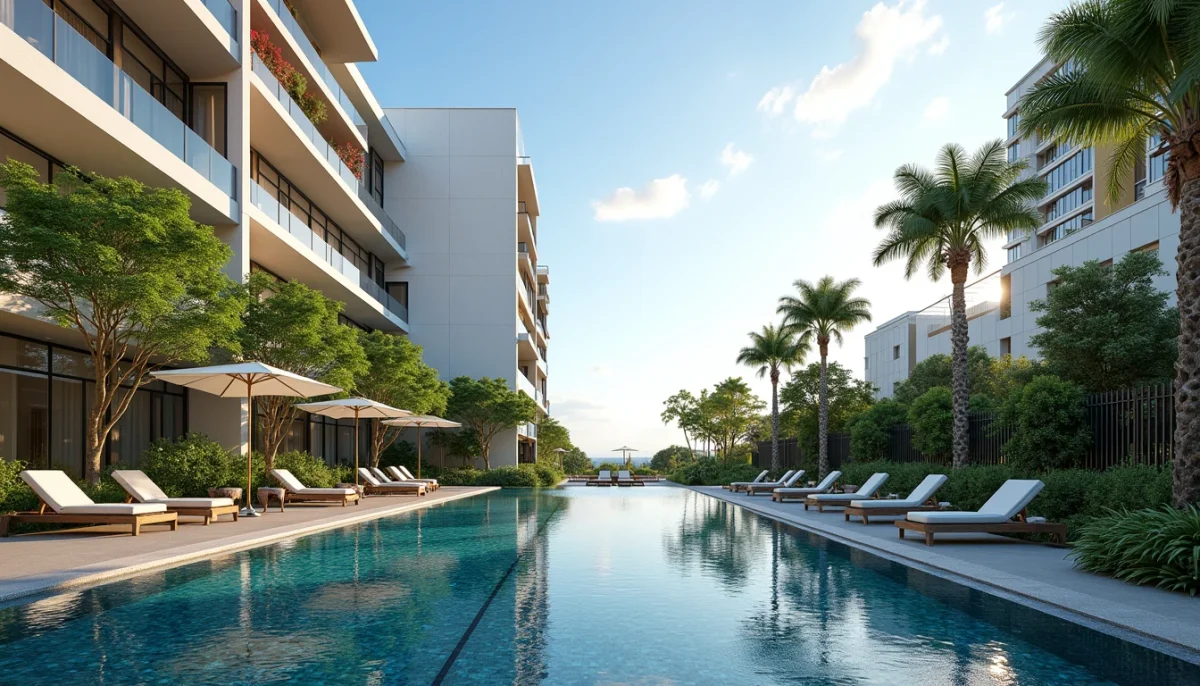
| Communal Facilities & Security | Condo-Grade Amenities: 24/7 security guardhouse, swimming pools, clubhouse, gym, and private basement carparks. | Zero Shared Facilities: No shared amenities; parking restricted to front car porch or street level. |
| Monthly Holding Costs | MCST Maintenance Fees: Typically $500 to $850+ per month for pool, security, landscaping, and sinking fund. | Zero MCST Fees: Only property tax and personal utilities; owner controls all maintenance timing. |
| A&A / Rebuilding Autonomy | Strict Uniformity: Cannot alter external facade, paint color, or envelope. Governed by MCST bylaws. | Complete Freedom: Free to rebuild, add storeys (subject to URA envelope control), or redesign according to personal taste. |
| Long-Term Capital Appreciation | Solid but moderate (averaging ~40%–50% ROI over 6–8 years in prime estates). | Compounding Land Premium: Pure land scarcity drives faster capital growth over 20+ year horizons. |
The District 28 Case Study: Este Villa vs Surrounding Terraces
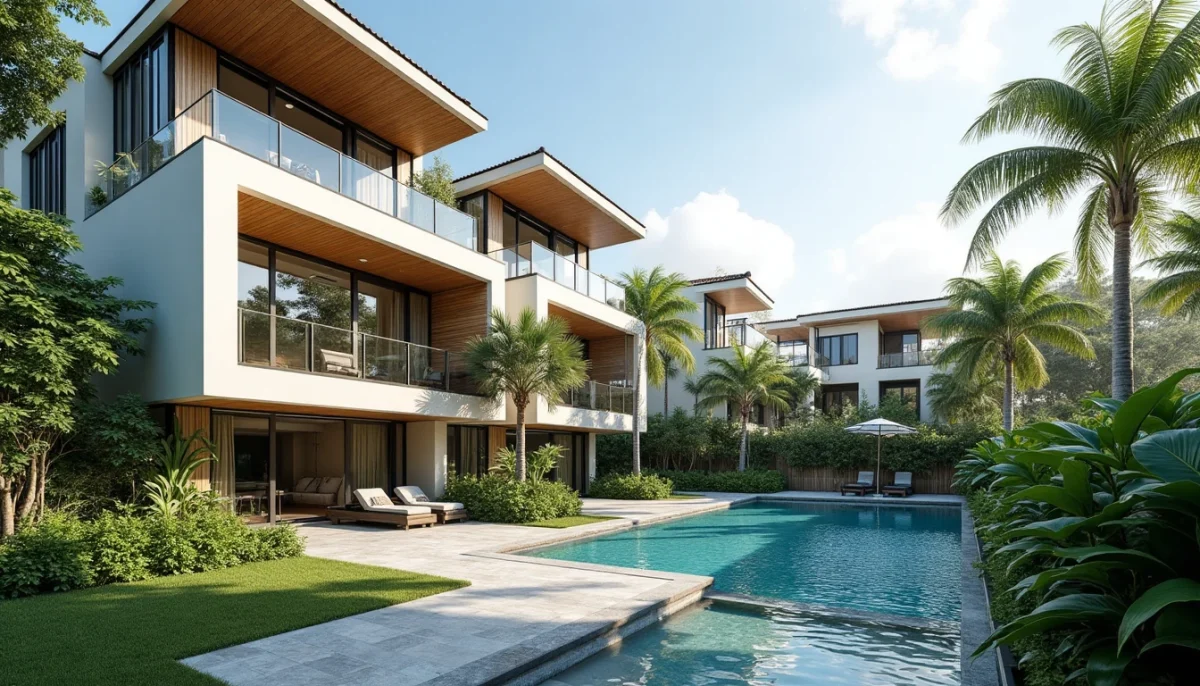
To ground this dynamic in empirical transaction data, consider Este Villa along Nim Road in District 28. Completed in 2013, the development comprises 121 strata homes (119 terraces and 2 semi-detached houses), each spanning five levels — basement with two private lots, three living storeys, and an attic.
Between January 2025 and June 2026, transactions at Este Villa revealed clear pricing patterns:
- Este Villa Average Transacted Price: $3.52 million across strata areas of 3,326 to 5,404 sq ft (~$1,050 to $1,060 PSF based on strata floor area).
- Nearby Conventional Freehold Terraces: $4.26 million (~$2,400 to $2,600 PSF based on land area) in established landed enclaves within a 1km radius (Mimosa, Nim, and Luxus Hills vicinity).
- Net Price Advantage: The cluster home traded at an immediate $734,000 discount.
Furthermore, resale liquidity at Este Villa has proven resilient: eight out of nine matched resale caveats recorded profitable exits, logging an average gross gain of ~$1.05 million (44.02% ROI) over an average holding period of 6.1 years. For family upgraders, this demonstrates that while cluster homes trade at a discount to pure landed properties, they have generated reliable six-figure wealth appreciation.
Why Does the Cluster Home Discount Persist?
Prospective purchasers must recognize that the $730k to $1M pricing gap is not a market inefficiency waiting to be closed — it reflects fundamental structural differences in property rights and buyer psychology:
1. The Sacrosanct Value of Sole Land Ownership
In land-scarce Singapore, the ultimate wealth preservation asset is true physical land. In a conventional landed home, you possess the freehold title to the land itself; you can pass down the plot indefinitely, and its value appreciates regardless of the age or physical decay of the building on top. In a strata cluster home, you own a share value of the master strata lot alongside 100+ co-owners. If the building ages 40 years down the road, collective redevelopment requires 80% consensus under en bloc legislation — stripping the owner of unilateral redevelopment control.
2. The Freedom to Rebuild and Expand
With conventional landed homes, an owner who purchases an older single-storey or two-storey inter-terrace can invest $600,000 to $1.2 million to execute an Addition & Alteration (A&A) or total reconstruction under URA’s Envelope Control Guidelines, transforming the property into a modern 3.5-storey architectural showpiece. In a cluster development, building envelopes, external paint palettes, window frames, and rooflines are strictly locked under MCST governance to preserve development aesthetics.
3. Monthly Sinking Fund and Maintenance Drag
While condominium amenities like 50m lap pools, children’s splash zones, and security gates enhance daily lifestyle comfort, they carry a recurring cost. An MCST maintenance fee of $650 to $800 monthly translates to roughly $8,000 to $10,000 annually. Over a 10-year holding period, a cluster homeowner disburses nearly $100,000 in non-recoverable management expenses — a cost completely avoided by conventional landed owners who manage their own gardening and exterior maintenance on demand.
Who Should Buy a Cluster Home? The Multi-Generational Sweet Spot
Despite these caveats, cluster housing fulfills a vital, highly specialized role in Singapore’s residential ecosystem. It is the premier choice for households seeking landed proportions without landed maintenance friction:
- Elderly Parents and Inter-Generational Mobility: The inclusion of a private elevator serving all five levels is a game-changer for families with aging parents or grandparents with reduced mobility. In conventional landed homes, installing an internal lift is costly, architecturally invasive, and frequently impossible without sacrificing bedroom floorplates.
- Young Children & Safe Communal Recreation: Gated compounds allow young children to cycle, swim, and play freely within secured boundaries without vehicular road hazards.
- Cap on Upfront Borrowing: For upgraders moving from a 5-room flat or suburban condominium with $1.5M in equity, bridging to a $3.5M cluster home is achievable within standard 55% Total Debt Servicing Ratio (TDSR) boundaries, whereas stretching to a $4.5M–$5M pure landed home demands prohibitive cash reserves.
For buyers evaluating upcoming master-planned strata landed communities in the north-east, developments such as Belgravia Ace at Ang Mo Kio represent the benchmark standard — pairing freehold status with contemporary architectural envelopes, direct private car porches, and comprehensive lifestyle clubhouse pavilions.
Strategic Takeaway for Landed Upgraders
If your primary investment thesis is multi-generational wealth preservation, unconstrained architectural freedom, and maximum long-term land value compounding over 20+ years, saving the extra capital for a pure conventional landed home remains the superior play. However, if your immediate priority for the next 10 to 15 years is practical multi-generational family comfort, built-in lift accessibility, resort facilities for children, and a modern landed lifestyle at a sub-$4M quantum, a freehold cluster home delivers outstanding functional utility per dollar.