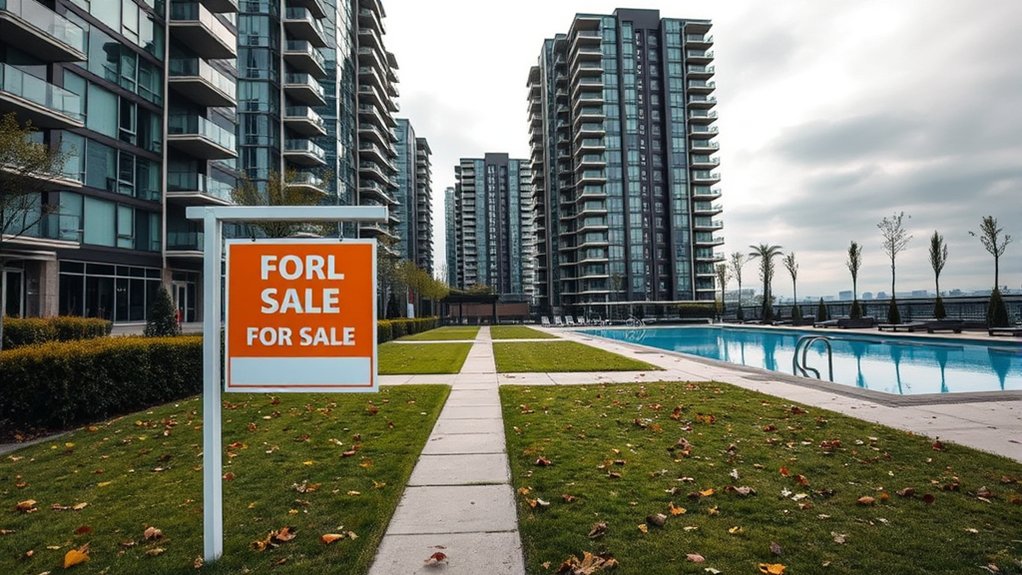
While Singapore’s private residential market has maintained broad price stability over recent years, secondary market transaction data highlights an important reality: property investments do not automatically generate guaranteed profits. Official transaction records reveal that a noticeable number of private condominium units sell at a nominal capital loss upon resale. Understanding the underlying drivers behind these unprofitable transactions is crucial for prospective property purchasers seeking to protect their capital in evolving market conditions.
The Geography of Resale Losses: Core Central Region Vulnerabilities
An examination of unprofitable condominium transactions shows a clear geographical concentration in the Core Central Region (CCR), comprising prime residential districts such as Orchard, River Valley, Marina Bay, and Sentosa Cove. Luxury and prime-location developments frequently record the highest proportion of nominal capital losses upon resale, contrasting sharply with suburban Outside Central Region (OCR) estates where resale margins have generally proven more resilient.
This vulnerability stems directly from historical launch pricing. Many CCR luxury projects were launched between 2007 and 2013 at record high prices per square foot, buoyed by aggressive international buying sentiment and speculative fervor. When cooling measures—most notably escalating Additional Buyer’s Stamp Duty (ABSD) rates on foreign purchasers—curbed international demand, luxury prices plateaued. Units acquired at the peak of previous market cycles have struggled to regain their original purchase levels in the secondary market, as detailed in recent reporting on city-fringe and prime resale pricing dynamics. When high entry pricing meets subdued high-net-worth demand, sellers seeking exit liquidity often have no alternative but to discount their asking prices.
Short Holding Periods and Seller’s Stamp Duty Constraints
Holding duration represents one of the strongest determinants of property investment profitability in Singapore. Sellers who exit their positions within short timeframes frequently suffer losses, both from natural market timing friction and from regulatory taxation. To prevent short-term speculative property flipping, the government enforces Seller’s Stamp Duty (SSD) under official IRAS stamp duty regulations.
Under SSD rules, residential properties sold within the first year of acquisition incur a punitive 12 percent duty on the selling price. Sales executed in the second year face an 8 percent tax, while third-year transactions incur 4 percent. Sellers compelled to liquidate their properties within these initial three years due to business cash flow distress, partnership dissolution, or unforeseen financial emergencies face substantial duty liabilities that virtually guarantee deep net financial losses. Even after the three-year SSD window elapses, sellers holding units for fewer than five years frequently struggle to cover upfront Buyer’s Stamp Duty and legal costs unless market conditions experience an exceptional growth surge.
Carrying Costs, High Interest Rates, and Holding Drag
Beyond headline purchase and sale prices, accumulated holding expenses play a decisive role in pushing marginal transactions into deep loss territory. Private condominium ownership involves substantial monthly outlays, including mortgage interest payments, property taxes, and MCST maintenance fees. During extended periods of elevated interest rates, debt servicing costs escalate significantly, adding tens of thousands of dollars to an owner’s cumulative cash outlay.
When an investment property experiences extended vacancy or generates rental yields insufficient to cover debt service and management fees, the owner endures negative monthly cash flow. As examined in our coverage of rising Singapore mortgage packages, persistent carrying costs erode investor holding power. Consider a prime apartment incurring $800 in monthly MCST fees, $6,000 in annual property taxes, and $30,000 in annual mortgage interest. Over a five-year holding span, non-recoverable carrying costs exceed $200,000. Individual owners facing prolonged financial drag often elect to sell at a nominal price reduction rather than continue absorbing hundreds of dollars in out-of-pocket losses every month.
Boutique Developments Versus Large Master-Planned Projects
The compounding impact of carrying costs becomes evident when examining longer holding horizons. A prime apartment purchased for $2.8 million and held for eight years might eventually resell for $2.75 million, appearing at first glance as a modest $50,000 paper loss. However, when factoring in eight years of maintenance charges totaling $65,000, cumulative property taxes of $48,000, financing interest of over $280,000, and initial Buyer’s Stamp Duty of roughly $100,000, the true cumulative financial deficit exceeds $540,000. Real estate investors who evaluate performance solely on headline transaction prices overlook how severe carrying costs can erode capital over time.
Another structural contributor to loss-making resales relates to development scale. Boutique developments—typically defined as projects featuring fewer than 100 units—often demonstrate lower secondary market price resilience compared to large, full-facility condominiums. Boutique projects lack comprehensive lifestyle amenities such as full-sized lap pools, tennis courts, and expansive grounds, making them less appealing to the broad pool of owner-occupier families.
Furthermore, boutique condominiums record low annual transaction volume. In real estate valuation, bank appraisers and prospective purchasers rely heavily on recent comparable sales records published through the URA property market information system. When a project registers only one or two transactions over several years, a single distressed seller accepting a discounted offer instantly resets the valuation ceiling for the entire development. Subsequent sellers face reluctant buyers and conservative bank valuations that anchor future transactions to that depressed baseline, making profitable exits challenging for neighboring owners.
Debt Servicing Pressures and Prudential Borrowing Boundaries
Macroeconomic adjustments and unexpected income shocks also compel involuntary property sales. In Singapore, lenders enforce strict debt limits through the MAS Total Debt Servicing Ratio framework, which caps overall borrower debt obligations at 55 percent of verifiable income. When borrowers experience business reversals, retrenchment, or sudden loss of variable commission income, maintaining mortgage payments becomes unsustainable.
Borrowers who stretched their balance sheets to the maximum allowable limit during low interest rate environments face the highest vulnerability when circumstances change. Without substantial liquid emergency funds to bridge income disruptions, distressed owners are forced to offload assets into secondary markets under compressed timeframes, accepting price cuts to ensure swift transaction execution and avoid formal bank foreclosure auctions. Maintaining disciplined leverage and conservative cash buffers remains the most dependable defense against involuntary, loss-making exits.