The Johor Regent Bungalow Project, a land‑swap initiative that reshapes a 16.6‑hectare stretch of Holland Road, hinges on a delicate balance between heritage preservation and high‑end residential development. Under the agreement, a 13‑hectare parcel next to the Botanic Gardens will be transferred to the Singapore government, while an 8.5‑hectare state‑owned parcel moves to Johor Regent, the private arm of Tunku Ismail. The remaining 8.1 hectare stays with the Regent, giving a total of 16.6 hectare for the new development. Although the two parcels differ in size, the Urban Redevelopment Authority (URA) and Singapore Land Authority (SLA) have deemed the swap “comparable value” after a detailed URA/SLA assessment. The government plans to keep the acquired 13‑ha area undeveloped for now, pending future planning that respects its proximity to the UNESCO‑listed Botanic Gardens. The swap includes a clause that the land will remain undeveloped until further regulatory approval. The project targets Good Class Bungalow (GCB) homes, a designation reserved for Singapore’s most exclusive residences. Demand for GCB properties remains robust, especially in central districts where elite schools, green spaces, and heritage sites cluster. In 2024, the average GCB transaction price topped S$30 million per unit, reflecting limited supply and strong buyer appetite for long‑term capital appreciation.
Buyers typically value easy access to amenities, a tranquil environment, and the prestige of a heritage‑adjacent address. Singapore’s broader property market continues to demonstrate resilience, with freehold properties remaining highly sought after even as market conditions fluctuate across different asset classes.
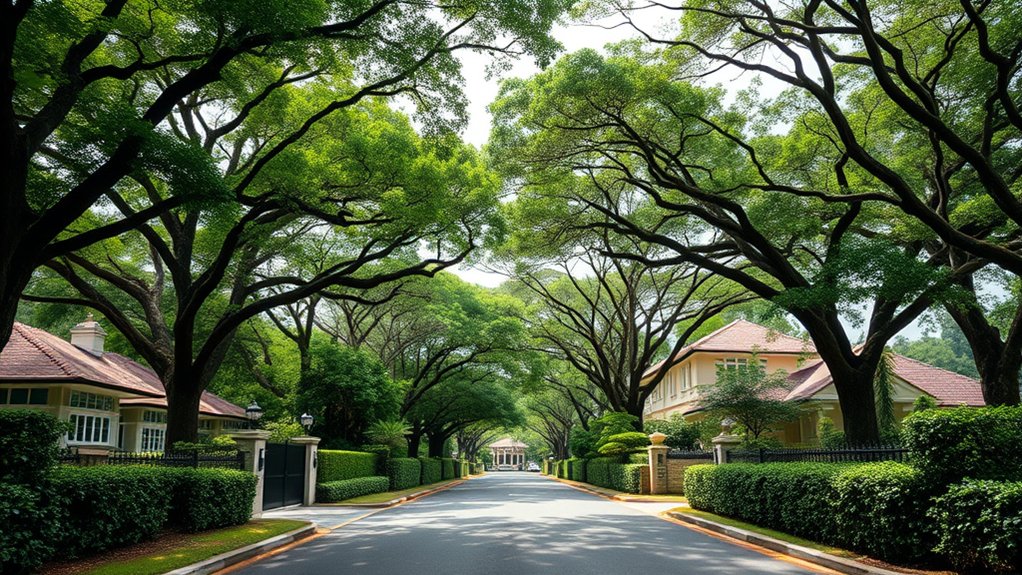
Located within Tyersall Park, the Holland Road site borders the Botanic Gardens and enjoys mature tree canopy and historic significance. Existing zoning permits low‑rise, low‑density residential use, and the URA allows up to four storeys on the parcels. A plot ratio of 0.5 to 0.8 is expected for GCB‑type homes, with strict set‑back requirements to preserve sightlines of the gardens.
Private amenities such as clubhouses, landscaped gardens, and secure perimeters are likely, provided they meet Singapore’s Green Mark and other sustainability standards.
Regulatory approval will involve URA review, SLA land‑use clearance, and a mandatory environmental impact assessment because of the heritage context. Public consultation may be required under the Town Planning Act, and the Building and Construction Authority will enforce fire and safety codes. Final consent hinges on adherence to conservation policies, ensuring that development does not compromise the area’s cultural value.
Financially, the development could cost over S$3 billion, while projected sales revenue ranges between S$4 billion and S$5 billion based on current GCB market averages. A phased sales strategy could mitigate risk and align with demand cycles. The land‑swap itself is classified as a private‑to‑state transaction, leaving no direct fiscal impact on government budgets.
Long‑term appreciation is expected, given the scarcity of GCB sites in central Singapore.
The timeline anticipates land‑swap completion by late 2025, followed by environmental studies and an EIA starting in Q1 2026 for six months. Planning permission is slated for Q3 2026, with a decision by Q1 2027, and groundbreaking is projected for mid‑2027. This schedule reflects a careful, step‑by‑step approach that balances market ambition with heritage stewardship. The swap also includes a provision that the 13‑ha parcel will remain protected until the Botanic Gardens’ UNESCO status is reassessed.