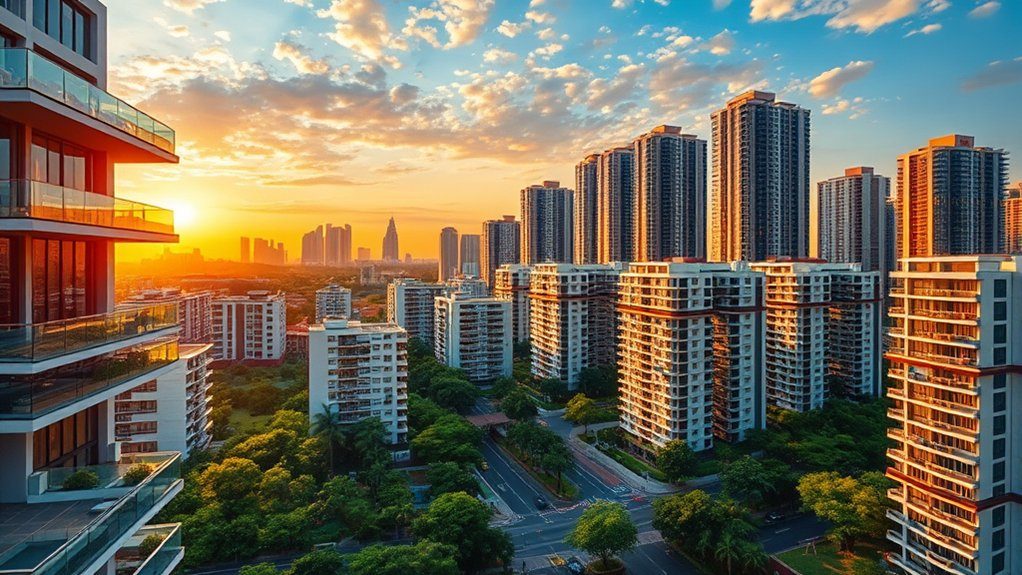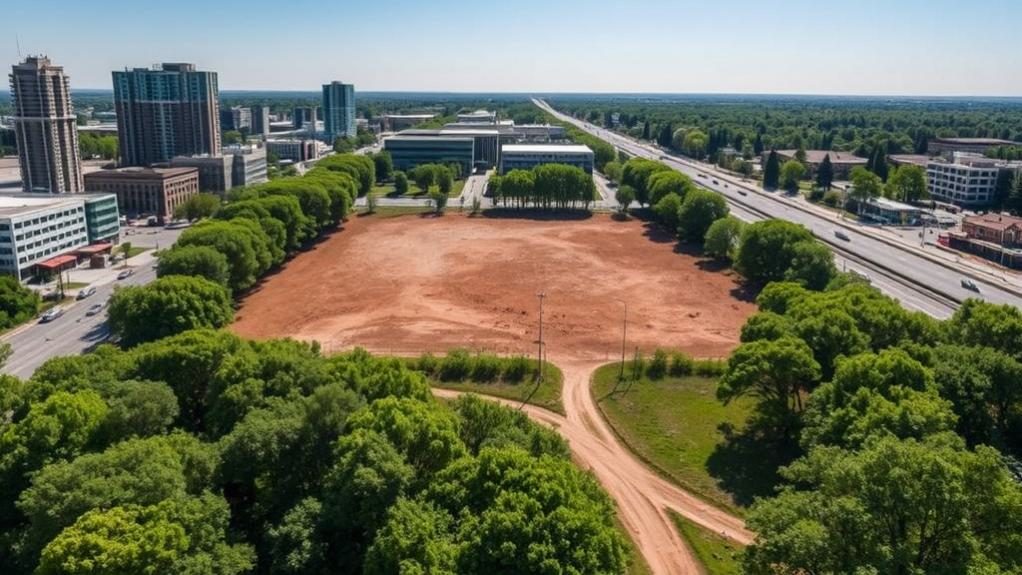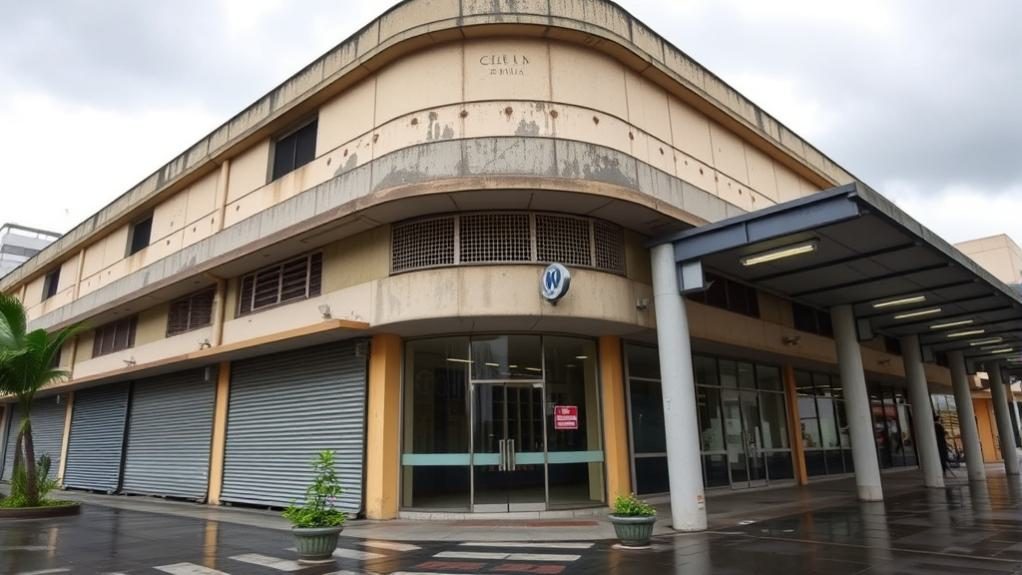
Upper Serangoon Shopping Centre at 756 Upper Serangoon Road has officially launched for collective sale with a reserve price of S$260 million. Completed in 1983, the four-storey strata-titled commercial complex is a familiar landmark in Singapore’s District 19. The freehold property represents one of the few sizable commercial redevelopment opportunities situated along the vibrant Upper Serangoon corridor.
Strata-titled commercial buildings in Singapore face distinct operational challenges as they age. Maintenance backlogs, fragmented ownership structures, and competition from modern institutional shopping malls frequently push unit owners towards en bloc tenders. Similar dynamics are observed across aging developments islandwide, as explored in our report on how aging condominiums and commercial properties face retrofit demands and collective sale pressures. The tender for Upper Serangoon Shopping Centre tests developer appetite for boutique commercial rejuvenation in mature residential estates.
Upper Serangoon Shopping Centre at a Glance
Upper Serangoon Shopping Centre sits on a freehold land parcel spanning approximately 21,255 square feet. The existing development comprises retail shops, tuition agencies, small offices, and personal service shops spread across four storeys and a basement carpark. The total strata area encompasses roughly 176,730 square feet, owned by numerous individual strata title holders who have operated businesses or leased units over multiple decades.
The reserve price of S$260 million translates to a land rate of approximately S$1,471 per square foot per plot ratio (psf ppr), factoring in estimated land betterment charges and statutory requirements. For commercial en bloc sales, obtaining the requisite 80% consensus by both strata area and share value is an essential legal precondition under the Land Titles (Strata) Act administered by the Singapore Land Authority. Achieving consensus requires extensive alignment among retail owners, office occupants, and property investors.
The complex is located approximately 900 metres from the Serangoon MRT interchange station, which connects commuters to both the North East Line and the Circle Line. Bus stops located directly outside the building provide frequent connections towards Hougang, Kovan, and central Singapore, ensuring continuous pedestrian foot traffic along the street frontage. This established transit accessibility supports long-term commercial viable use.
Land Attributes and Master Plan Commercial Zoning
Under the statutory planning guidelines published in the Urban Redevelopment Authority Master Plan, the site is zoned Commercial with a Gross Plot Ratio (GPR) of 3.0. This commercial zoning allows a maximum gross floor area (GFA) of approximately 63,765 square feet upon comprehensive redevelopment.
Crucially for commercial property investors, pure commercial developments do not attract Additional Buyer’s Stamp Duty (ABSD), which applies strictly to residential acquisitions. Both local and foreign corporate entities can purchase commercial zoned real estate without incurring the punitive 60% foreign residential ABSD rate. Furthermore, individual investors are not restricted by residential loan-to-value limits or residential mortgage servicing ratios on commercial strata properties, making commercial land tenders attractive to family offices and private equity real estate funds seeking yield and capital growth.
Developers acquiring the site could consider redeveloping the property into a modern commercial lifestyle building featuring boutique office suites, specialty medical clinics, enrichment hubs, and curated food and beverage outlets on the lower floors. Such a concept would capture strong spending power from nearby private residential estates.
Commercial En Bloc Market Realities in District 19
Collective sale tenders in Singapore operate in a competitive capital market where developers evaluate alternative land acquisition routes, including state land tenders. As demonstrated by other large-scale en bloc campaigns across the market, such as our analysis of whether the Serenity Park freehold collective sale can attract developer bids, institutional buyers perform thorough stress-testing on replacement construction costs, financing rates, and eventual retail absorption.
Strata shopping malls built in the 1980s frequently suffer from layout inefficiencies, including narrow corridors, non-contiguous floor plates, and inadequate electrical loadings for modern high-demand F&B tenants. These technical constraints limit rental yields for current owners, reinforcing the commercial rationale for a unified collective sale.
However, securing an en bloc buyer requires realistic price expectations from owners. While the freehold tenure offers perpetual ownership value, developers must budget for demolition costs, temporary traffic management, and compliance with the latest environmental sustainability standards governed by the Building and Construction Authority. Meeting Green Mark certifications adds construction considerations that developers factor directly into land bid calculations.
Competition from Nex and Established Retail Hubs
Any redevelopment proposal for Upper Serangoon Shopping Centre must address the strong retail dominance of nearby shopping destinations. Just down the road, Nex at Serangoon Central stands as one of the largest suburban retail malls in northeastern Singapore, boasting over 600,000 square feet of retail space directly integrated with the bus interchange and MRT hub.
Additionally, Heartland Mall at Kovan and the vibrant eateries along Upper Serangoon Road cater extensively to everyday neighborhood dining and retail needs. Because mass-market retail needs are already well-served by larger suburban malls, a redeveloped commercial building on the Upper Serangoon Shopping Centre plot must differentiate itself through specialised tenant positioning. Potential redevelopment concepts include healthcare clusters, after-school education centers, or veterinary care facilities that cater to the affluent landed enclaves of Charlton Park, Serangoon Gardens, and Kovan.
Redevelopment Potential and Buyer Considerations
Prospective purchasers will examine whether planning permissions allow for mixed-use rezoning or higher commercial intensification. An application for outline planning permission submitted to URA could clarify if a commercial and residential mix is permissible on the site, which would expand the redevelopment scope to include serviced apartments or boutique residential units above a retail podium.
Should the collective sale conclude successfully, it would represent a meaningful urban renewal milestone for the Serangoon corridor. For strata owners, a successful en bloc transaction offers an exit route from rising building upkeep expenditures, freeing capital for reinvestment into newer, income-generating Singapore commercial assets with higher energy efficiency and superior rental profiles.