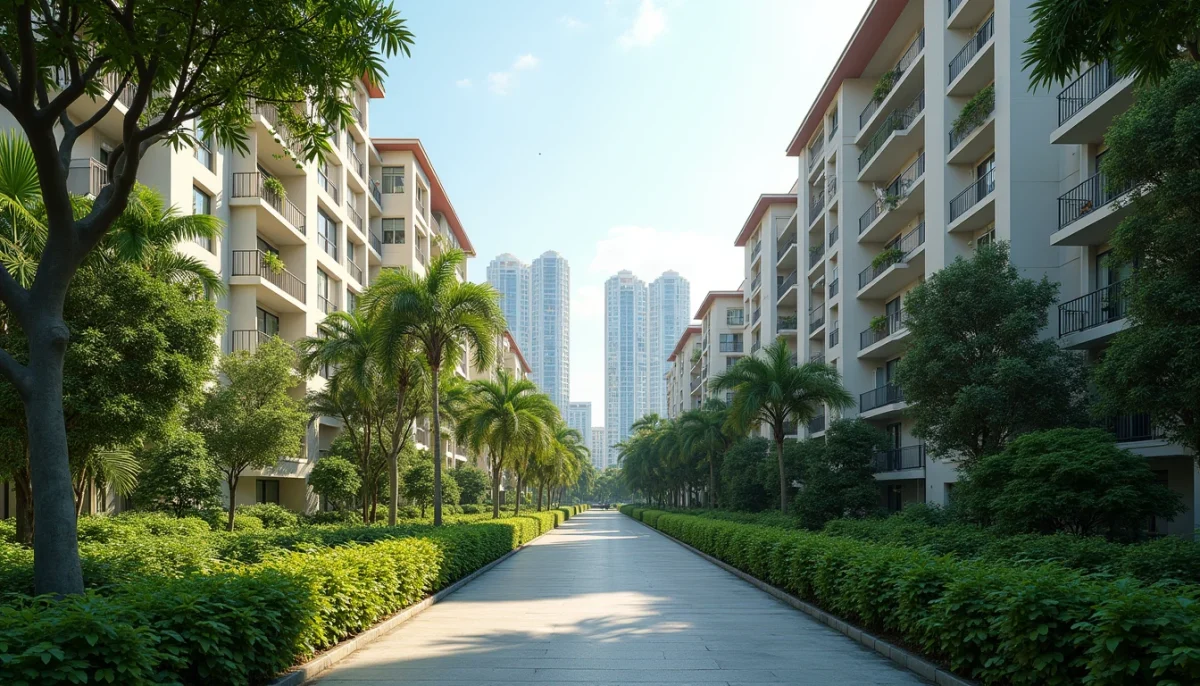
Across Singapore’s mature residential precincts, collective sale committees (CSCs) are actively reconvening. Driven by legislative discussions and proposed amendments to the Land Titles (Strata) Act (LTSA)—which explore easing the longstanding 80% consensus threshold for older developments—thousands of private homeowners in aging estates are eyeing potential en bloc windfalls. Yet, while the legal bar to launch a tender may become more accessible, the fundamental market reality has not changed: developers remain intensely selective, and statutory reform alone cannot compel a builder to sign a multimillion-dollar cheque.
With high construction costs, elevated financing rates, and the relentless pressure of the 5-year Additional Buyer’s Stamp Duty (ABSD) deadline, Singapore’s en bloc market has shifted from an era of exuberant bidding to one of stringent risk mitigation. For owners of aging 99-year leasehold and freehold condominiums, understanding this structural divergence between legal feasibility and commercial demand is essential to avoiding costly false dawns.
1. The Legislative Push: Why Strata Laws Are Under the Spotlight
Singapore’s current collective sale regime, governed by the Land Titles (Strata) Act, enforces a stringent double-tier consensus mechanism:
- Developments 10 years or older: Require at least 80% consent by share value and total area of all lots.
- Developments less than 10 years old: Require at least 90% consent by share value and total area.
While this framework successfully safeguarded property rights for decades, Singapore’s urban fabric is maturing. Hundreds of private condominiums constructed during the residential building booms of the 1980s and 1990s are now entering their fourth and fifth decades. These older developments frequently face mounting structural obsolescence, deteriorating mechanical and electrical (M&E) infrastructure, and severely depleted sinking funds.
In response, policy reviews have evaluated lowering the consensus threshold—potentially to 70% or 75% for severely aged or structurally compromised estates—similar to urban renewal legal mechanisms observed in Hong Kong and Tokyo. Proponents argue that a lower threshold prevents a tiny minority of holdouts from blocking redevelopment that the overwhelming majority desires.
| Proposed Regulatory Relief | Commercial Developer Reality | Practical Homeowner Impact |
|---|---|---|
| Lower Consent Thresholds Easing the 80% mandate for estates aged 30+ or 40+ years. | Severe 5-Year ABSD Penalty Developers must build and sell 100% of units within 5 years or forfeit 35% upfront ABSD. | CSCs can secure mandates faster, but tender close often yields zero matching bids. |
| Streamlined STB Approvals Faster dispute resolution at the Strata Titles Board. | Preference for GLS Land Clean, unencumbered Government Land Sales plots with zero minority litigation risk. | En bloc preparation costs (valuers, marketing agents, lawyers) are incurred without a guaranteed buyer. |
| Better Spatial Optimization Rejuvenation of under-utilized plot ratios in mature estates. | Elevated Land Betterment Charges (LBC) High state levy baselines erode developer redevelopment margins. | Widening bid-ask price gap between owners’ reserve expectations and viable developer margins. |
2. The Developer’s Dilemma: Why Builders Are Passing on Private En Bloc
Even if an aging development achieves 80% or 75% owner consensus with unprecedented speed, the tender outcome ultimately hinges on a developer willing to underwrite the acquisition. In today’s operating environment, private developers are executing a disciplined retreat from complex collective sale sites for three fundamental reasons:
A. The Punitive 5-Year ABSD Guillotine
Unlike individual homebuyers who face tiered stamp duties, housing developers in Singapore are subjected to a massive 40% Additional Buyer’s Stamp Duty (ABSD), of which 35% is remittable only if every single residential unit in the new development is sold within exactly five years of site acquisition.
For a mega-estate yielding 800 to 1,500 new replacement units, clearing 100% of inventory within 60 months amid macroeconomic fluctuations, elevated interest rates, and calibrated household borrowing limits is an existential gamble. If even three or four penthouses remain unsold at month 60, the developer forfeits the entire 35% remittable ABSD plus accrued interest—a catastrophic financial penalty that can instantly wipe out development profits.
B. The Bite-Sized Quantum Sweet Spot
To insulate against ABSD risk, developers have drastically reduced their appetite for massive land parcels. While past cycles saw consortiums comfortably take down billion-dollar sites (such as Tampines Court at S$970M and Pacific Mansion at S$980M), today’s developers strictly prefer bite-sized land parcels priced between S$150 million and S$350 million.
Large suburban en bloc candidates requiring over S$1 billion in total outlay—such as the recurring bids for Pine Grove or Mandarin Gardens—face an almost insurmountable barrier because very few developers or joint ventures possess the balance sheet capacity to take on such concentrated exposure.
C. The GLS Alternative: Clean, Predictable, and Conflict-Free
Developers weighing an en bloc site against a Government Land Sales (GLS) site almost universally favor the latter. A GLS tender from the Urban Redevelopment Authority (URA) or Housing & Development Board (HDB) offers clean legal vacant possession on day one, regular site geometries, predictable handover schedules, and zero risk of disgruntled minority owners dragging the deal through the High Court or Court of Appeal.
As explored in our comprehensive en bloc sale rules and legal process guide, collective sale transactions frequently encounter months of procedural delays at the Strata Titles Board, eating away precious runway before the developer’s 5-year ABSD clock starts ticking.
3. The Land Betterment Charge (LBC) Squeeze
Another major headwind cooling developer aggression is the Land Betterment Charge (LBC)—the statutory tax levied by the Singapore Land Authority (SLA) for enhancing the use of a site or realizing an increase in gross floor area.
For many older low-to-mid-rise estates sitting on prime land, a substantial portion of the redevelopment value lies in intensifying the plot ratio. However, when LBC rates for non-landed residential use are benchmarked at high official baselines, the developer must pay a substantial sum directly to the state before a single brick is laid. This reduces the residual land value that the developer can offer to owners, creating an unbridgeable chasm between what owners expect and what developers can commercially afford.
4. The Holding Cost Trap: When En Bloc Fails Repeatedly
For homeowners living in aging condominiums, the cycle of launching and failing collective sales carries severe hidden financial consequences. When an estate enters “en bloc mode,” two damaging dynamics invariably emerge:
- Deferred Estate Maintenance: Management Corporation Strata Titles (MCSTs) often defer non-critical capital expenditures—such as lift modernizations, facade repainting, waterproofing, and swimming pool repairs—under the assumption that the buildings will soon be demolished. If the collective sale fails, owners face an accumulated backlog of dilapidation.
- Special Levies & Depleted Sinking Funds: Older estates frequently exhaust their sinking funds dealing with emergency spalling concrete, corroded piping, and lift breakdowns. Owners are then hit with unexpected special levies running into thousands or tens of thousands of dollars per unit.
- Lease Decay on 99-Year Titles: For 99-year leasehold estates with 50 to 65 years remaining lease, every 2- to 3-year failed en bloc cycle erodes critical remaining tenure, accelerating lease decay and restricting subsequent buyer financing under CPF and bank loan rules.
Homeowners facing this dilemma must also factor in the complex financial implications of replacement homes, as outlined in our recent analysis on ABSD concessions and replacement housing options for en bloc displaced owners.
5. Strategic Takeaways for Owners of Aging Condos
If your estate is currently forming a Collective Sale Committee or contemplating signing a Collective Sale Agreement (CSA), keep these practical guidelines in mind:
- Anchor Reserve Prices to Empirical Reality, Not Hope: Pegging reserve prices to peak transacted land records from two years ago guarantees tender failure. Successful en bloc sales in today’s market require realistic pricing that leaves enough margin for the buyer to navigate construction and ABSD risks.
- Assess Plot Size and Unit Yield: Estates that yield 200 to 400 new homes upon redevelopment stand a significantly higher chance of attracting competitive developer bids than sprawling mega-plots yielding over 800 homes.
- Evaluate Net Take-Home Proceeds Against Replacement Housing Costs: Ensure your projected en bloc payout comfortably covers the purchase of an equivalent replacement home in today’s higher-cost market, factoring in Buyer’s Stamp Duty (BSD), renovation, and interim rental expenses. For tailored advice on transitioning into new launch developments, consulting trusted private property purchasing advisory helps clarify your numbers before committing to a binding sale.
Evaluating Your Condo’s En Bloc Feasibility or Exit Strategy?
Whether you are assessing an active collective sale agreement, managing an aging estate’s lease decay, or planning your replacement home transition, our advisory team provides objective, data-backed guidance.