Singapore’s shophouse market is heading for a nine-year transaction low in 2026, with only 75 deals recorded year-to-date. Total sales value is projected to reach approximately $675 million—an 18% decline from the $823 million transacted across 92 deals in 2025, and a far cry from the post-pandemic peak of 2021 when over 250 conservation shophouses changed hands for more than $2 billion.
Yet, despite the dramatic drop in transaction velocity, prospective buyers waiting for a fire sale or broad-based price collapse have been met with silence. Rather than capitulating to aggressive lowball offers, shophouse owners across prime conservation enclaves are holding their ground. Anchored by stable rental cash flows, zero holding stress, and absolute land scarcity, the shophouse market has entered a classic liquidity freeze rather than a distressed downturn.
The 2021–2026 Cycle: From Frenzied Safe Haven to Liquidity Stand-Off
To understand today’s transaction impasse, one must examine the capital flows that reshaped the commercial shophouse landscape over the past five years:
- The 2021 Safe-Haven Rush: During the height of pandemic uncertainty, ultra-high-net-worth individuals (UHNWIs) and burgeoning family offices flooded Singapore real estate. Fully commercial shophouses emerged as the crown jewel because they enjoy 100% exemption from Additional Buyer’s Stamp Duty (ABSD) and have no foreign ownership restrictions. Over 250 deals closed that year, breaching $2 billion in aggregate consideration.
- The Higher-for-Longer Interest Rate Reality: Between 2023 and 2026, rising commercial borrowing costs compressed the spread between net rental yields (typically hovering around 2.2% to 2.8%) and financing expenses. Leveraged institutional syndicates and opportunistic funds paused acquisitions as debt service hurdles mounted.
- Tighter Anti-Money Laundering (AML) Compliance: Following high-profile enforcement operations in late 2023, financial institutions and regulatory agencies instituted rigorous source-of-wealth scrutiny on commercial real estate acquisitions, extending conveyancing timelines and cooling speculative turnover.
The result in 2026 is a market characterized by selective, highly deliberate transactions where institutional mega-deals have slowed, leaving family offices and high-net-worth individuals to trade smaller, bite-sized parcels.
A Pivot to Smaller-Ticket Assets: Over 60% of Deals Under $5 Million
One of the most defining characteristics of the 2026 shophouse market is the shift toward lower-quantum properties. In the first quarter of 2026 alone, more than 60% of transacted shophouses were priced below $5 million—the highest proportion of sub-$5 million sales recorded since 2Q 2020.
These smaller-ticket deals predominantly involve:
- 99-Year Leasehold Parcels in Non-Central Districts: Buyers targeting commercial corridors in District 7 (Bugis/Jalan Besar), District 8 (Little India), District 14 (Geylang), and District 15 (Joo Chiat/East Coast).
- Compact Built-Up Footprints: Units with built-up areas below 2,000 sq ft, offering accessible absolute capital requirements for private retail investors and boutique operators.
By keeping absolute purchase quantums below $5 million, buyers minimize their exposure to commercial mortgage borrowing, with many executing acquisitions predominantly in cash.
Notable Marquee Transactions in 2026
While overall transaction counts languish, well-located prime assets with institutional-grade tenancies still commanded benchmark pricing:
| Property Asset | Location | Tenure & Size | Transacted Consideration | Buyer Profile & Anchor Tenancies |
|---|---|---|---|---|
| 29B–33A Lorong Liput | Holland Village (D10) | Freehold · 7,542 sq ft built-up | $70.0 Million | Purchased by Singapore family office TL Developments; tenanted to Tai Cheong Bakery, Natureland Spa, Pet Lovers Centre, and Yee Cheong Yuen. |
| 44, 46 & 48 Upper Cross St | Chinatown / CBD (D01) | 99-Year Leasehold · Mixed-Use | $36.9 Million | Commercial development featuring 17 upper-floor serviced apartments and 3 street-level retail shops. |
| Keong Saik Road Shophouse | Chinatown / Bukit Pasoh (D02) | Freehold · 1,287 sq ft built-up | $22.0 Million | Acquired by a Japanese single-family office for long-term wealth preservation. |
Why Shophouse Owners Refuse to Budge: The 4 Anchors of Holding Power
Unlike residential developers facing statutory ABSD remission deadlines, conservation shophouse owners face zero regulatory pressure to liquidate. Four structural pillars explain why sellers are comfortably sitting out the stand-off:
1. Extreme, Irreplaceable Land Scarcity
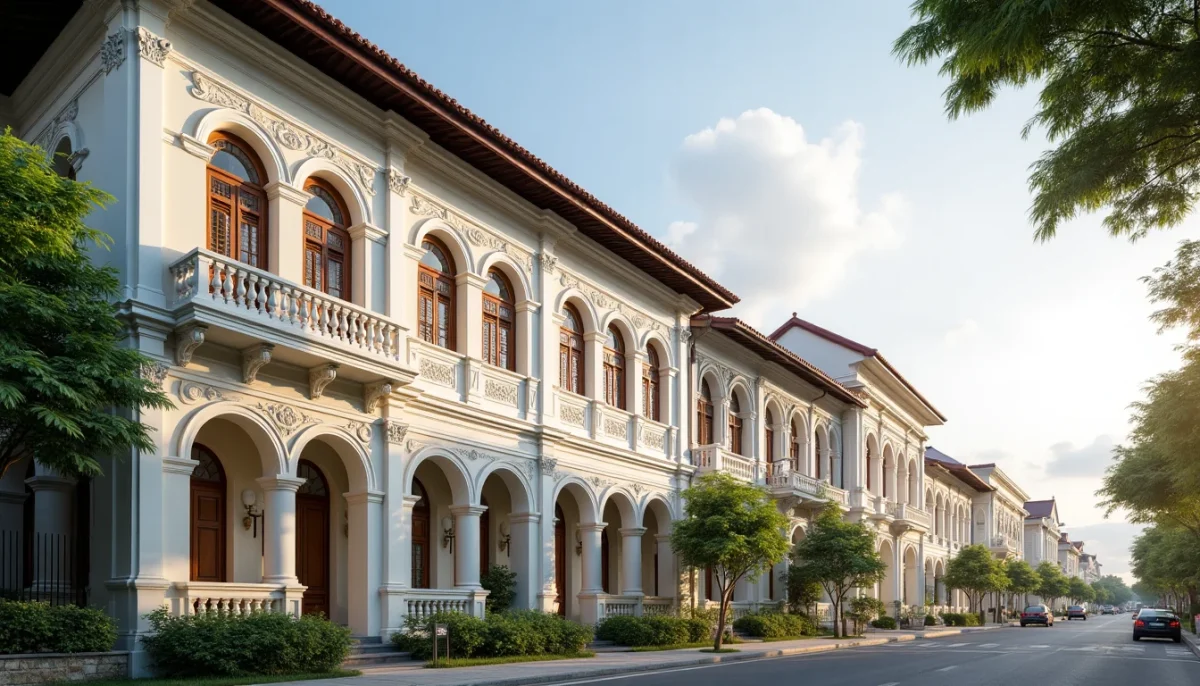
Singapore has approximately 6,500 gazetted conservation shophouses across the entire island. Unlike condominiums or suburban commercial malls, the Urban Redevelopment Authority (URA) cannot release new shophouse plots through the Government Land Sales (GLS) programme. This finite, non-reproducible inventory guarantees perpetual rarity value.
2. Robust, Resilient Rental Cash Flows ($6.50 PSF/Month)
While capital transaction volume has slumped, leasing fundamentals have remained remarkably steady. Over the past nine years, islandwide shophouse rents have fluctuated in a tight band between $5.00 and $6.50 psf per month. In 2026, average shophouse rents held firm at approximately $6.50 psf per month, unchanged from 2025. Supported by vibrant F&B, boutique hospitality, wellness, and creative agency tenants, strong rental collections easily cover holding costs.
3. Rock-Solid Balance Sheets and Low Leverage
A vast majority of shophouses in prime historic districts (Telok Ayer, Amoy Street, Tanjong Pagar, Boat Quay) are owned by multi-generational merchant families, established local institutions, and well-funded family offices. Many carry little to no debt, rendering them completely immune to high SORA borrowing rates.
4. The Safe-Haven Haven: Over 2,000 Family Offices
By the end of last year, the number of registered single-family offices operating in Singapore surpassed 2,000. As global capital seeks jurisdictional stability, rule of law, and generational wealth preservation, commercial shophouses remain an irreplaceable portfolio hedge.
Strategic Takeaways for Real Estate Investors in 2027
For investors navigating commercial and luxury property in Singapore, the shophouse stand-off offers several actionable insights:
- Commercial vs Residential Stamp Duty Arbitrage: While residential property purchases attract punitive Additional Buyer’s Stamp Duty (up to 60% for foreigners and 20% for Singapore citizens on a second home), fully commercial shophouses remain entirely exempt from ABSD. Before finalizing an acquisition structure, model your tax exposures using our Singapore Stamp Duty Calculator.
- Financing Constraints and Leverage: Buyers relying on commercial bank loans must navigate commercial Total Debt Servicing Ratio limits and minimum debt-service coverage ratios. Use our MAS TDSR Borrowing Capacity Calculator to gauge borrowing thresholds under prevailing interest rate floors.
- Selective Negotiation in Non-Central Districts: While prime District 1 and 2 owners will not discount, buyers can uncover selective bargaining room among individual owners of 99-year leasehold shophouses in Districts 8, 14, and 15 who seek to reallocate capital into prime new launch condominiums. For residential portfolio structuring timelines, consult our guide on how to buy a new launch condo in Singapore.
Market Outlook: A Gradual Rebound to ~130 Deals in 2027
Market analysts project that as macroeconomic and geopolitical uncertainties stabilize and global central banks pivot toward rate easing, the bid-ask gap will gradually narrow. Transaction volume is forecasted to recover toward 120 to 130 deals in 2027.
In the world of Singapore real estate, volume may pause, but heritage and scarcity never go out of style. For well-capitalized investors, the current liquidity lull represents a rare window to quietly inspect and negotiate on Singapore’s most culturally cherished asset class.