Singapore’s Public Service Division (PSD) announced on Friday (Sep 25) that it is actively reviewing past private property transactions made between 2007 and 2011 by civil servants involved in rail planning. The internal review follows the release of an academic working paper published by the US-based National Bureau of Economic Research (NBER), which identified statistical patterns of home acquisitions near planned Mass Rapid Transit (MRT) stations before their public announcement.
While PSD noted that statistical correlations alone “do not by themselves establish misconduct or whether an officer had access to non-public information,” the government reiterated its uncompromising commitment to public sector integrity, confirming that any substantiated misuse of privileged information will be referred directly to the police for criminal investigation.
The NBER Working Paper: What Was Discovered?
The academic study—co-authored by researchers from Columbia University, Stanford University, and the University of Hong Kong—analyzed comprehensive housing transaction datasets to study whether public officials engaged in informed property purchases ahead of major transit infrastructure rollouts.
Key highlights referenced from the paper include:
- Concentrated Time Horizon: An estimated 113 property purchases totaling S$138 million were observed among mid-level officers in agencies connected to rail planning between 2007 and 2011.
- Timing of Acquisitions: Transactions clustered approximately one to two years prior to formal government press announcements revealing the exact station footprints.
- Post-2012 Drop: Misconduct patterns declined markedly following formal enforcement tightening, enhanced asset declaration protocols, and stricter governance reviews introduced around 2011 to 2012.
In its official response, PSD underscored that broad transport corridors, regional development hubs, and general rail lines are routinely discussed in public Land Transport Master Plans and URA Concept Plans decades before individual station exits and alignments are gazetted. Consequently, officers or private citizens frequently buy into developments based on market speculation and publicly available urban planning blueprints.
| Infrastructure Phase | Planning Visibility | Typical Market Valuation Impact | Buyer Risk Profile |
|---|---|---|---|
| Master Plan Corridor Gazetted | High-level alignment announced (5–10 yrs ahead) | Mild speculative interest (+3% to +5%) | Construction uncertainty, long holding horizon |
| Exact Station Siting Gazetted | Specific land parcels & exits confirmed | Immediate price re-rating (+8% to +15% PSF uplift) | Clear timeline, temporary construction noise |
| Line Operational / Opening | Trains commence commercial passenger service | Peak rental demand surge & liquidity premium | Lowest risk, fully realized amenity premium |
Why MRT Proximity Is the Ultimate Valuation Anchor in Singapore
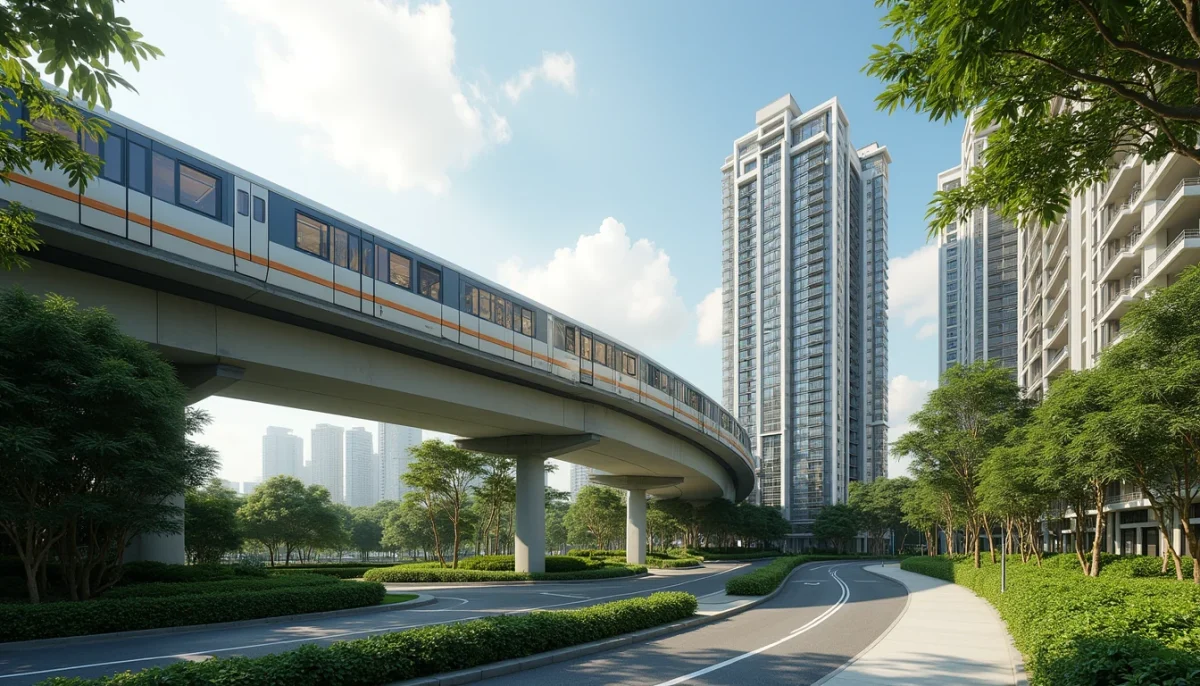
Beyond the governance review itself, this development spotlights an undeniable real estate reality: proximity to an MRT station is the most durable, capital-appreciating catalyst in Singapore’s property market.
Whether analyzing prime CCR condominiums, Rest of Central Region (RCR) city-fringe residences, or Outside Central Region (OCR) suburban family homes, properties located within a 5-minute walk (approx. 400 to 500 meters) of a major transit node command decisive advantages:
- Rental Resilience & Yields: Tenant pools in Singapore—from multinational professionals to local families—overwhelmingly prioritize seamless rail commutes to Marina Bay, Raffles Place, One-North, and Jurong Lake District, compressing vacancy rates to near-zero.
- Interchange Multiplier: Stations connecting two or more rail lines (such as Circle Line interchanges at Bishan, Serangoon, and Dhoby Ghaut) unlock unmatched connectivity across Singapore’s transit web. Developments like One Chuan Grove along the Circle Line demonstrate how immediate station proximity and seamless connectivity to prime interchanges anchor both homeowner demand and long-term capital appreciation.
- Downside Cushioning: Historical transaction data consistently shows that during macroeconomic downturns and property cooling measures, homes situated right next to operational MRT lines experience significantly lower price erosion and higher resale transaction volume compared to car-dependent enclaves.
Strict Public Sector Safeguards in 2026
To preserve Singapore’s benchmark global ranking in clean governance and anti-corruption, public sector compliance measures have been extensively upgraded over the past decade. Today, all civil servants and public officers are subject to stringent declaration mandates:
- Mandatory Property Declarations: All public officers must declare every property transaction—including residential, commercial, industrial, and vacant land, both in Singapore and internationally.
- Recusal Protocols: Officers with access to market-sensitive infrastructure, land zoning, or planning drafts are strictly barred from participating in decisions touching on personal investments and must formally recuse themselves from relevant project committees.
For everyday property buyers, the lesson is straightforward: you do not need privileged access to capture infrastructure uplifts. By diligently studying URA’s Master Plan zoning maps, LTA’s Land Transport Master Plan milestones, and long-term rail completions (such as the Cross Island Line and Jurong Region Line), prudent buyers can legally position themselves ahead of Singapore’s expanding transit network with confidence.

One thought on “PSD Reviews Rail Planners’ Past Property Purchases: The MRT Infrastructure Premium and Singapore Governance”