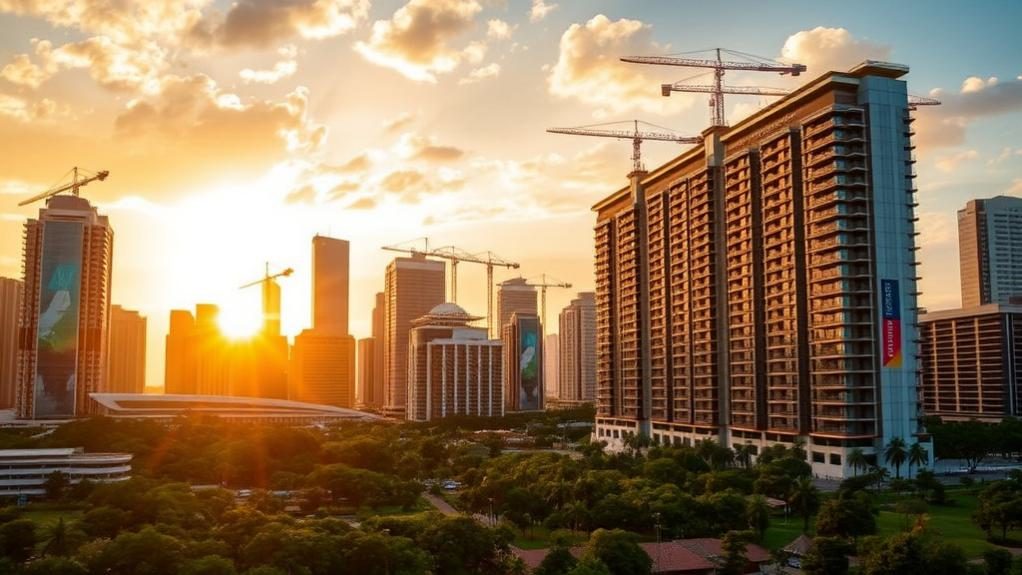
The Housing and Development Board (HDB) restructured Singapore’s public housing classification model during the October 2024 Build-To-Order (BTO) exercise. Replacing the legacy mature and non-mature framework used since 1992, the revised policy divides new public housing into Standard, Plus, and Prime flats. While Plus and Prime projects offer superior connectivity, attractive town centre locations, and higher initial subsidies, they impose strict resale conditions—most notably a subsidy recovery clawback ranging from 6% to 9% of the flat’s resale price or market valuation upon first disposal.
This clawback is accompanied by a 10-year Minimum Occupation Period (MOP), a permanent ban on renting out the entire flat, and stringent eligibility limits on future resale buyers. Prospective homeowners must understand these parameters to assess both housing affordability and long-term capital mobility.
The Standard, Plus, and Prime Housing Framework
Under the model outlined by the Ministry of National Development, new BTO developments are classified based on locational attributes, proximity to transport interchanges, and neighborhood amenities:
- Standard Flats: Comprise the vast majority of new public housing. Standard units receive standard subsidies, adhere to a 5-year MOP, allow open-market resale without income ceilings, and permit whole-flat leasing after MOP.
- Plus Flats: Located in choicer precincts within towns, such as parcels near MRT hubs or integrated developments (for example, in Kallang/Whampoa, Bedok, and Bayshore). They receive extra subsidies to keep initial launch prices accessible.
- Prime Flats: Occupy central, highly connected districts like Bukit Merah, Queenstown, and the Greater Southern Waterfront. Prime units receive the highest tier of government subsidies to make prime urban living affordable.
As set out in the HDB Standard, Plus, and Prime housing framework, these additional subsidies require corresponding safeguards to curb excessive windfall gains from prime public housing.
Mechanics of the Subsidy Recovery Clawback
To ensure fiscal prudence and preserve fairness among citizens, HDB requires the initial buyer of a Plus or Prime flat to return a fixed percentage of the transaction value upon selling the flat on the open market. The subsidy recovery applies to the transacted resale price or the flat’s market valuation, whichever is higher.
The clawback rate is determined before launch based on the market discount provided:
- Plus Flat Clawback: Typically set between 6% and 8%. In the October 2024 launch, projects in Kallang/Whampoa and MacPherson featured a 6% clawback, whereas selected choicer developments carried an 8% rate.
- Prime Flat Clawback: Established at 9% for initial projects like Crawford Heights, reflecting the substantial subsidy required to price central homes within reach of median earners.
Unlike an HDB resale levy—a fixed cash payment triggered when buying another subsidised property—the subsidy recovery is a direct percentage deducted from resale gross proceeds. It applies only to the first resale; subsequent secondary market buyers do not receive the initial subsidy and are not subject to clawbacks when selling later.
Worked Calculations: Estimating Net Resale Proceeds
The following scenarios demonstrate how the clawback affects net cash returns on a 4-room flat sold after the 10-year MOP.
Scenario A: 4-Room Prime Flat (9% Clawback)
- Original BTO purchase price: S$560,000
- Resale selling price: S$1,100,000 (market valuation: S$1,080,000)
- Subsidy clawback (9% of S$1,100,000): S$99,000
- Outstanding mortgage balance: S$220,000
- CPF principal refunded with accrued interest: S$380,000
- Estimated transaction expenses: S$25,000
- Net cash proceeds: S$1,100,000 – S$99,000 – S$220,000 – S$380,000 – S$25,000 = S$376,000
In this Prime example, the seller repays S$99,000 to HDB. Despite a paper gain of S$540,000, the subsidy recovery moderates the payout to account for upfront taxpayer support.
Scenario B: 4-Room Plus Flat (6% Clawback)
- Original BTO purchase price: S$480,000
- Resale selling price: S$880,000 (market valuation: S$860,000)
- Subsidy clawback (6% of S$880,000): S$52,800
- Outstanding mortgage balance: S$190,000
- CPF refund with accrued interest: S$310,000
- Estimated transaction expenses: S$20,000
- Net cash proceeds: S$880,000 – S$52,800 – S$190,000 – S$310,000 – S$20,000 = S$307,200
Here, the 6% deduction recovers S$52,800, leaving substantial proceeds to support the household’s next housing transition.
Ten-Year MOP and Permanent Rental Restrictions
Prime and Plus flat buyers must fulfill a 10-year MOP before selling on the open resale market. Homeowners should consult our guide on the minimum occupation period (MOP) in Singapore to understand how physical occupation is computed.
Prime and Plus owners are also permanently prohibited from leasing out the entire flat, even after completing the 10-year MOP. Owners may rent out individual spare bedrooms provided they continue to reside in the flat. Prospective purchasers seeking investment yields should examine the prevailing regulations for renting out an HDB flat before committing, as these categories are strictly reserved for owner-occupation.
Additionally, buyers planning long-term housing steps can review detailed requirements regarding HDB MOP rules and compliance requirements before undertaking an extended lock-in period.
Eligibility Conditions and Wait-Out Periods for Resale Buyers
Resale buyers of Plus and Prime flats remain subject to BTO-level eligibility conditions for the lifetime of the property:
- Citizenship Requirement: At least one buyer must be a Singapore Citizen. Households composed entirely of Permanent Residents cannot buy Plus or Prime resale flats.
- Income Ceiling: Resale buyers must observe a household income ceiling of S$14,000 per month (or S$7,000 for singles aged 35 and older purchasing 2-room flats or Plus units).
- Private Property Wait-Out Period: Former private property owners must wait 30 months after selling their private home before buying a Plus or Prime flat on the open market.
While the temporary 15-month wait-out period for private property owners buying non-subsidised Standard resale flats was removed, the 30-month wait-out period remains strictly enforced for all Plus and Prime secondary purchases.
Balancing Location Advantages Against Financial Flexibility
Deciding between a Standard, Plus, or Prime flat requires balancing superior convenience against reduced asset liquidity. With an estimated 4-to-5-year construction time plus a 10-year MOP, buyers face an occupancy horizon of roughly 15 years before they can sell or invest in private property.
Moreover, capping future buyers at a S$14,000 household income ceiling means resale price growth will reflect eligible buyers’ borrowing capacity. Buyers weighing their long-term options can study pathways for Singapore property progression across BTOs, ECs, and resale flats to determine which model matches their lifestyle and financial goals.