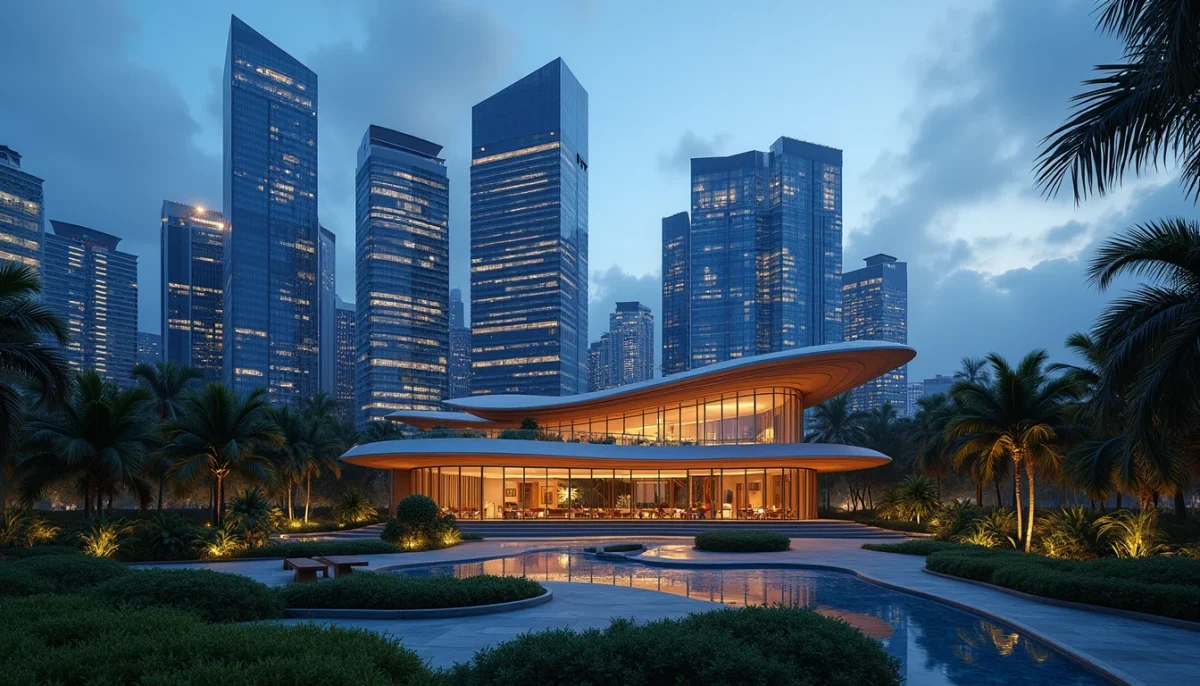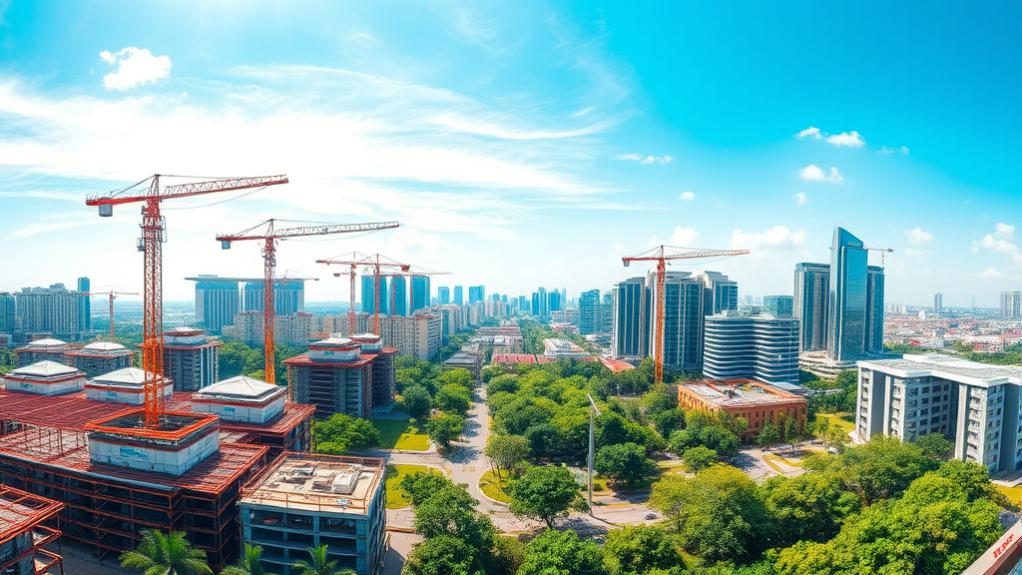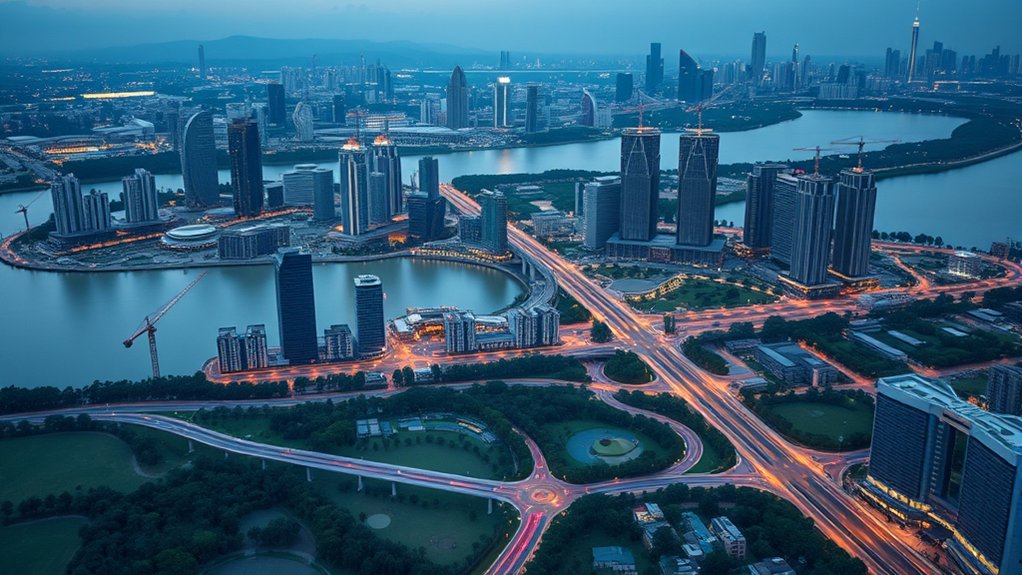
Jurong Lake District is emerging as a bold new rival to Singapore’s traditional CBD, with a blend of office towers, homes, and amenities that promises a live‑work‑play vibe. The Urban Redevelopment Authority has already begun clearing the existing state property for the Town Hall Link white site, a move that signals serious intent. An underground link to the Cross Island Line MRT station will be woven into the government’s infrastructure works, while unnecessary roads are being removed to streamline development.
Jurong Lake District is poised as a vibrant, mixed‑use rival to Singapore’s traditional CBD.
In parallel, the government is pouring resources into the 90‑hectare Jurong Lake Gardens, a key piece of the precinct revitalisation, and new MRT lines – the Jurong Region Line and the Cross Island Line – will knit the area tightly into the city’s transport network.
The white site itself holds a total potential floor area of 186,139 sq m, with a minimum of 40,000 sq m earmarked for office space. Around 1,200 private residential units will sit alongside 44,000 sq m of retail, serviced apartments, hotel, sports, recreation, community spaces, medical clinics and attractions. The gross plot ratio of five for the carved‑out parcel reflects a dense, mixed‑use vision.
Across the whole district, the target is 1.4 million sq m of office space, a figure that could reshape Singapore’s commercial geography. Private office occupancy in Jurong East already sits at 87 % in Q4 2025, a rise from the pre‑COVID average of 80 %, suggesting strong demand. The Town Hall Link project alone will add at least 40,000 sq m of new office space, comparable to the iconic Shaw Tower, and the decentralisation strategy aims to bring quality jobs closer to homes.
Residentially, the 1,200 homes will augment the precinct’s housing stock, mixing private units, serviced apartments and community facilities. Proximity to the existing Jurong East catchment is expected to fuel demand, while integrated planning encourages a seamless live‑work‑play environment. The district’s location near Nanyang Technological University and the National University of Singapore further strengthens its appeal to a skilled, educated workforce and knowledge-based businesses.
The 44,000 sq m of retail and leisure space is designed to attract high footfall from both workers and residents, with medical clinics and attractions adding everyday convenience. Community spaces will foster social interaction, enhancing overall livability.
Financially, the original master‑developer tender of S$2.5 billion was deemed too low, prompting a scale‑down to reduce risk. Land costs may exceed S$1.8 billion, likely inviting consortium partnerships. Rising oil prices could push inflation, interest rates and construction costs higher, but government infrastructure commitments aim to cushion developers. The reserve‑list sale will require a minimum price or sufficient market interest to proceed.
government will also demolish existing state property as part of the infrastructure works. The project’s scale is set to provide a critical mass for precinct development.