Why do homes abroad look cheaper than Singapore’s, and what’s the catch? The headline figures often mask fundamental differences. For example, the United States has one of the lowest property price-to-income ratios at 8.8, underscoring how headline affordability can vary widely by market.
Singapore’s land area is roughly 728 km², so scarcity is built into every square meter, and urban density ranks among the world’s highest. That pressure funnels demand into limited supply, pushing values up and nudging people into high-rise living.
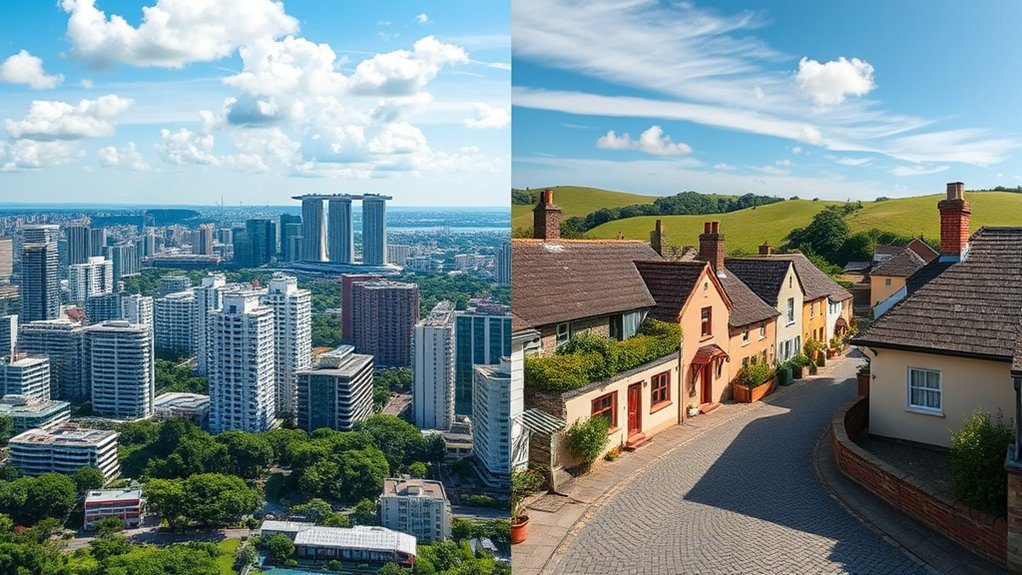
Many overseas markets, by contrast, sprawl across larger geographies, with suburbs, regional towns, and rural areas creating a wide price spectrum. Comparing a city-core condo in Singapore to a distant suburb elsewhere is like comparing durians to apples—both fruit, very different bite.
Currency is another quiet culprit. The Singapore dollar is stable and strong, which helps locals at home but complicates overseas purchases. Properties priced in weaker or more volatile currencies can look cheap today, then swing wildly with exchange rates, changing affordability overnight.
Mortgage rates and financing structures also vary, so a “low price” sticker might come with higher interest, shorter terms, or less flexible lending—costs that don’t show up in simple price-per-square-foot charts.
Market mechanics differ too. Singapore’s housing supply is tightly managed through land sales, cooling measures, and loan-to-value rules. The limited supply of historic properties like shophouses helps maintain their value even during market downturns. Inventory remains lean, supporting price resilience even when global sentiment softens; the private property price index hit a record 215.80 points in Q3 2025. In Q3 2024, the CCR registered a 1.1% quarter-on-quarter price decline, underscoring how different segments can move out of sync even within Singapore.
Many overseas markets have lighter intervention, which can foster boom-and-bust cycles and, at times, oversupply from speculative building. Buyers might enjoy cheaper entry, but also face sharper volatility.
Taxes and rules add more layers. Singapore’s ABSD, SSD, and strict LTV ratios raise transaction costs, while CPF usage and targeted grants shape affordability.
Overseas jurisdictions may lack such levies, yet they often impose foreign ownership limits, capital gains taxes, or rental taxes. Legal compliance, conveyancing, and property management vary widely, influencing hassle and net returns.
Finally, yields deserve careful reading. Singapore’s gross rental yields average about 3.29%, with areas like Alexandra/Commonwealth near 3.69%, underpinned by steady tenant demand.
Higher advertised yields abroad can be eroded by vacancy, management fees, and maintenance. In short, price tags travel well on social media, but context doesn’t—smart buyers bring a currency calculator, a risk lens, and patience.