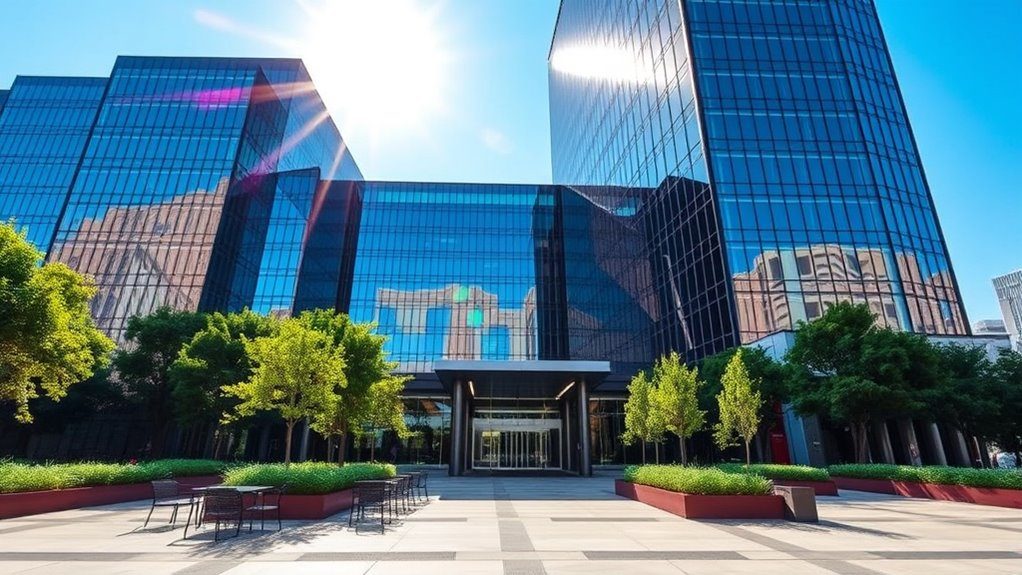
Even as overall office demand remains about 30% below pre-pandemic levels, prime office rents jumped in Q3 2025 as tenants competed for high-quality space amid a tight pipeline of new supply. Strength was broad-based, with year-over-year rent gains in prime space across 42 of 74 tracked global markets. The U.S. led momentum as top-tier buildings in major urban cores drew active bidding, especially in mixed-use districts and central business areas where availability was already thin. This momentum aligns with forecasts for a 5% rise in leasing volume in 2025, supported by a robust tenant pipeline.
In many of these locations, landlords of true prime assets regained negotiating leverage, trimming incentives as vacancies tightened and tour activity improved. Prime Class A offices have vacancy rates 500 basis points below the market average, underscoring the resilience of top-tier assets despite broader weakness.
Demand was driven by a clear preference shift. Small tenants seeking 10,000–20,000 square feet accounted for more than half of new leasing, and many prioritized premier amenities, contemporary design, and sustainability certifications. Flexible workspace remained part of the mix, with 65% of commercial real estate investors expecting further growth by year-end.
A sizable share of transactions were renewals, reflecting a desire for stability, while landlords worked to keep anchor tenants on competitive terms. Manhattan and Miami showed especially active pipelines, now above pre-pandemic averages, signaling firm near-term interest. Similar to luxury residential developments like Arina East Residences offering freehold status that ensures long-term property value, prime office spaces provide tenants with stability and prestige in competitive markets.
Supply constraints added fuel. Only 17 million square feet of new offices delivered in 2025, far below the 10-year average of 44 million. Conversions and demolitions of outdated stock accelerated, shrinking the pool of prime assets.
National office vacancy hit a record 19.6% in Q1 2025, but prime rates were consistently lower, in some top cities dipping below 14%. Looking ahead, prime vacancies are projected to revert to 8.2% by 2027, and availability is already tight in Midtown Manhattan.
Regional patterns varied. New York City turned positive on prime absorption, yet overall vacancy remained above 14% early in the year. West Coast hubs, including San Francisco, posted elevated vacancies near 22.65%, though some stabilization appeared elsewhere.
A few Sun Belt markets—Austin, Nashville, Dallas—faced near-term oversupply, but most locations reported shrinking Class A availability.
The flight to quality continued. Lower-grade buildings saw vacancies top 20% in some markets, forcing deeper concessions and rent cuts. Prime landlords, meanwhile, priced confidence—perhaps not exuberance, but close enough to make tenants sharpen pencils.