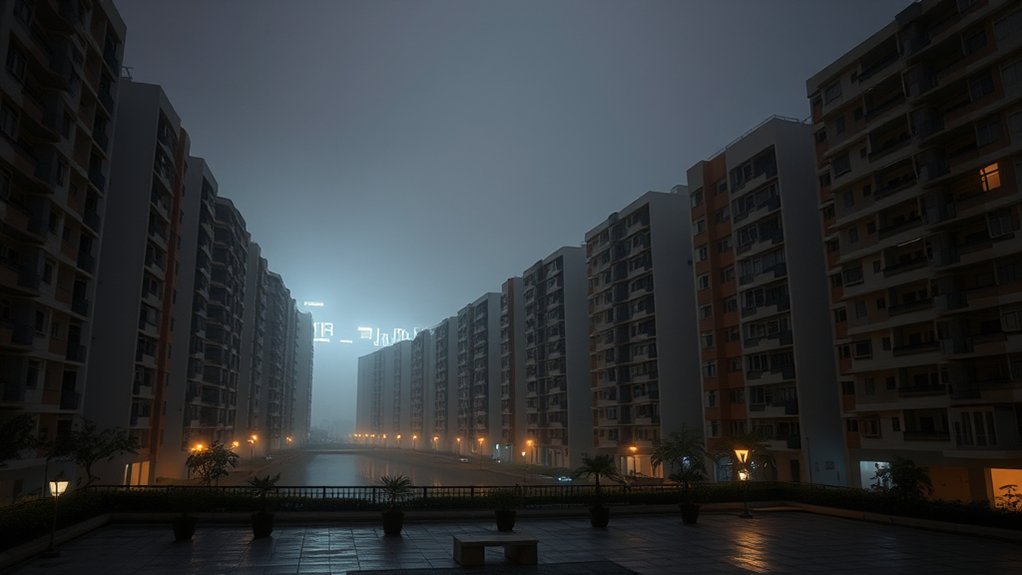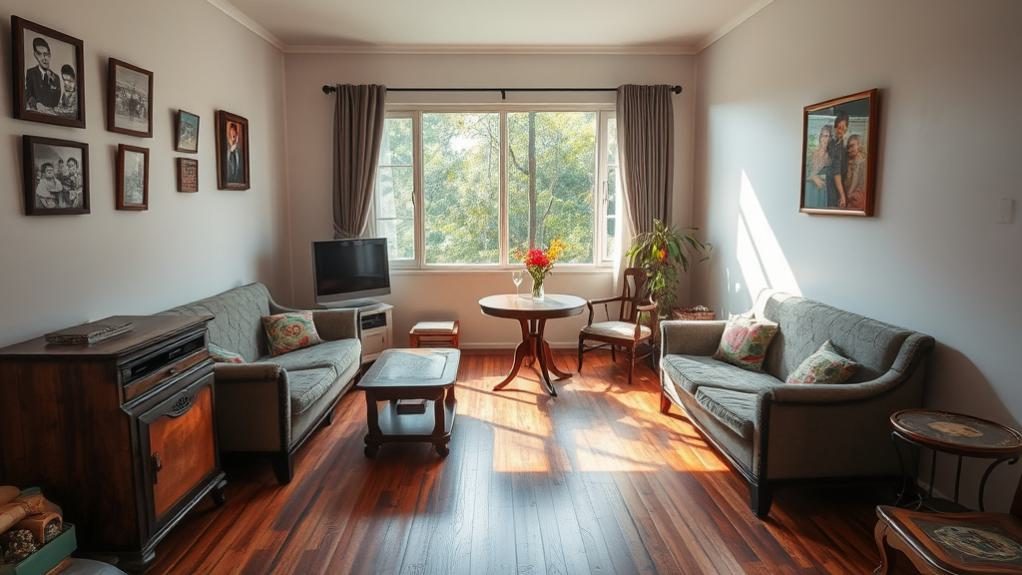
In Singapore’s fast-moving residential landscape, few real estate transactions ignite as much passionate public debate as a million-dollar resale public housing transaction. Yet, when headline records reveal buyers paying upwards of $1 million for a 50-year-old HDB flat—a property that has already traversed more than half of its statutory 99-year leasehold—onlookers frequently question the financial rationality of the decision.
Is paying seven figures for an aging public apartment an act of speculative irrationality, or does it reflect a calculated compromise between immediate lifestyle value, unreplicable urban spatial efficiency, and family continuity? An objective analysis of transaction dynamics across mature estates indicates that for a specific profile of Singaporean households, acquiring an older, prime-location HDB flat remains both financially defensible and emotionally grounded.
The Premium for Unreplicable Prime Urban Infrastructure
The single most potent driver behind seven-figure valuations in aging flats is geographic irreplaceability. Towns such as Queenstown, Bukit Merah, Toa Payoh, and Marine Parade were planned and built during the foundational decades of Singapore’s urbanisation. Over the past fifty years, billions of dollars in state infrastructure have crystallized around these estates.
A 50-year-old point block flat along Mei Ling Street in Queenstown or Jalan Rajah in Toa Payoh frequently sits within a 3- to 5-minute walk of an established MRT interchange, comprehensive hawker centres, supermarkets, public polyclinics, and reputable primary schools. Conversely, newly launched Build-To-Order (BTO) estates in non-mature frontiers—while boasting full 99-year leases—often require a decade or more for transit lines, commercial malls, and community amenities to reach complete maturity.
For working professionals with demanding schedules or multi-generational families with elderly parents, eliminating 45 minutes of daily transit friction carries quantifiable economic and wellness value that easily outweighs theoretical lease amortization decades into the future.
The Space Equation: Generous Square Footage That Newer BTOs Cannot Offer
Beyond location, older generation HDB flats possess a structural advantage that modern urban planning has phased out: sheer internal floor area. Flat sizes constructed during the 1970s and 1980s reflect an era when land was less constrained and family units were larger:
- Standard Modern 4-Room BTO: Strictly standardized at approximately 90 to 93 square metres (approx. 968 to 1,001 sq ft).
- 1970s–1980s 5-Room Point Block & Improved Units: Frequently measure between 115 and 130 square metres (approx. 1,238 to 1,400 sq ft).
- Executive Apartments & Maisonettes: Span 140 to 160 square metres (approx. 1,500 to 1,720 sq ft) with double-volume ceiling heights.
When evaluated on a per-square-foot (PSF) basis, a $1.05 million 5-room flat offering 1,300 sq ft translates to approximately $807 psf. In a city where city-fringe private new launches transacts between $2,500 and $2,800 psf, and older suburban resale condos command $1,400 to $1,700 psf, paying $800-plus psf for extensive living space in a central district represents an accessible price point for middle-class families seeking expansive space without incurring private condominium debt service burdens.
Financing Realities: How CPF Rules Shape Buyer Eligibility for Older Leases
While demand exists, buyers evaluating older leases must operate within stringent statutory parameters set by the Central Provident Fund (CPF) Board and the Housing & Development Board (HDB).
Under revised regulations implemented in May 2019, CPF usage and HDB housing loans are tied directly to whether the property’s remaining lease can cover the youngest buyer up to at least age 95:
- Lease Covers Youngest Buyer to Age 95: The household can utilize the maximum allowable CPF Ordinary Account (OA) savings up to the Valuation Limit (VL) and secure the full allowable Loan-to-Value (LTV) limit.
- Lease Does NOT Cover to Age 95: CPF usage and housing loan limits are prorated based on the ratio of remaining lease to the buyer’s life expectancy. If the remaining lease falls below 20 years, no CPF funds can be utilized.
Consequently, the buyers committing $1 million to 50-year-old flats are rarely fresh 28-year-old first-time couples. Instead, they are typically affluent 45-to-55-year-old Singaporean downsizers or mature households whose age profiles neatly fulfill the 95-year lease coverage threshold, allowing them to fund the purchase comfortably using substantial accrued CPF balances and cash proceeds from prior property disposals.
The SERS vs VERS Dilemma: Dispelling En Bloc Windfall Assumptions
A hazardous misconception among inexperienced buyers is the assumption that an aging flat in a prime estate is guaranteed a state-sponsored windfall through the Selective En bloc Redevelopment Scheme (SERS). The Ministry of National Development (MND) has reiterated consistently that SERS is an exceptional urban renewal mechanism applied to less than 5% of all public housing stock with high redevelopment potential.
For the remaining 95% of flats, the Voluntary Early Redevelopment Scheme (VERS) represents the eventual policy resolution once leases cross their 70-year threshold. However, VERS is voluntary, requires a high supermajority consensus vote by resident owners, and will offer compensation packages benchmarked to prevailing market valuations of aged leases rather than replacement-cost windfalls. Buying an older flat with the speculative hope of state redevelopment is a flawed financial strategy.
Family Proximity and Emotional Anchors
Real estate economics often overlooks the immense non-monetary value of social capital. Families raising young children heavily rely on parental caregiving for infant care and after-school supervision. Purchasing an older flat within 4 kilometres of parents not only unlocks the Proximity Housing Grant (PHG) of up to $30,000, but saves thousands of dollars annually in outsourced domestic help and infant care fees.
Furthermore, staying embedded within familiar neighborhoods where owners grew up—supported by long-standing religious, commercial, and peer networks—provides emotional continuity that cannot be quantified on a balance sheet. For many mature buyers who intend for the flat to serve as their permanent retirement home, future capital appreciation is irrelevant; the property’s job is to deliver comfort and functional utility for the rest of their natural lives.
Due Diligence Checklist: Navigating the Exit Horizon
For buyers considering committing capital to an older mature estate flat, rigorous pre-purchase screening is mandatory. Before committing an Option to Purchase, review the essential criteria outlined in our independent guide to the 5 essential checks before buying an old HDB flat, and examine how older HDB resale flats sustain structural market liquidity.
Key risk factors to account for include:
- Future Buyer Pool Constraints: In 15 to 20 years, when the remaining lease reaches 30 years, incoming buyers will face severe CPF restrictions and commercial banks may decline mortgage underwriting, compressing resale liquidity.
- Maintenance & Upgrading History: Verify whether the block has undergone the Home Improvement Programme (HIP), Lift Upgrading Programme (LUP), and electrical rewiring to prevent sudden renovation cash outlays.
- Estate Capital Benchmarks: Examine whether nearby private new launches or upcoming BTO clusters are introducing alternative housing stock that could recalibrate local rent and sub-sale pricing.
Conclusion: A Deliberate Trade-Off Between Time and Space
Paying $1 million for a 50-year-old HDB flat is neither foolish nor a universal recommendation. It represents an intentional lifestyle decision that prioritizes central location, expansive interior living area, and daily family convenience over multi-generational capital inheritance. When backed by conservative financing and viewed as an owner-occupied consumption asset rather than an en bloc lottery ticket, it remains a pragmatic choice in Singapore’s evolving urban tapestry.