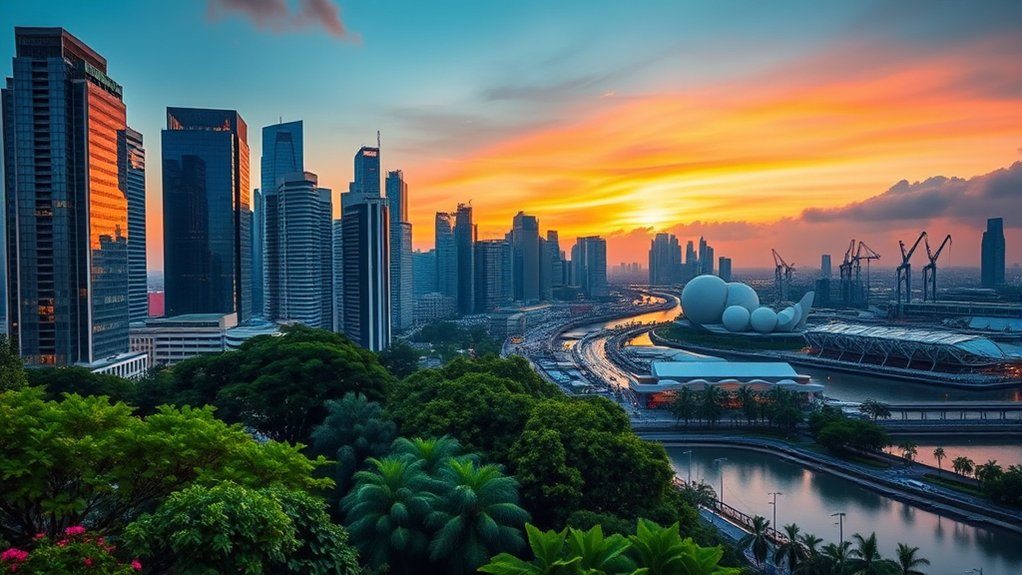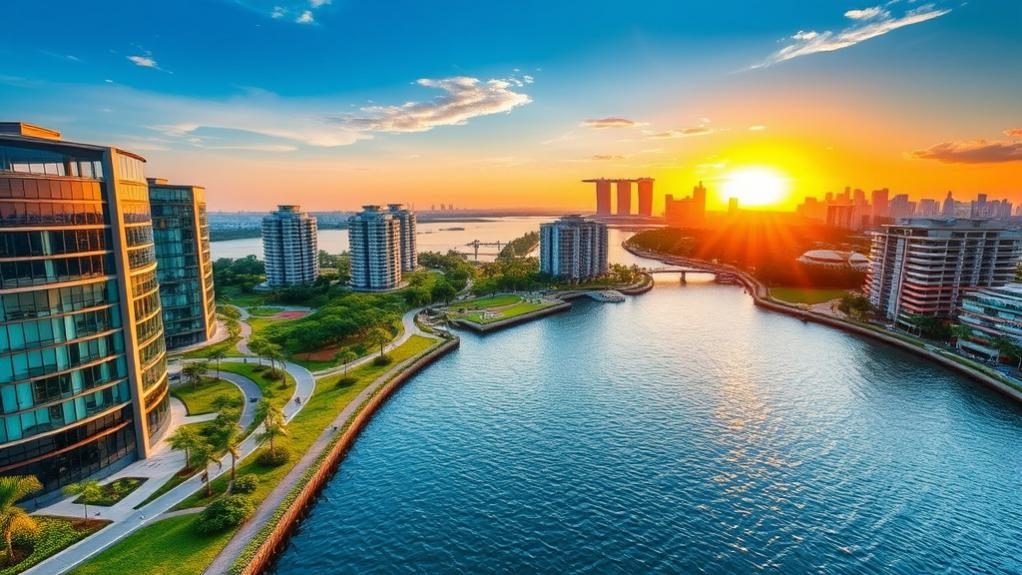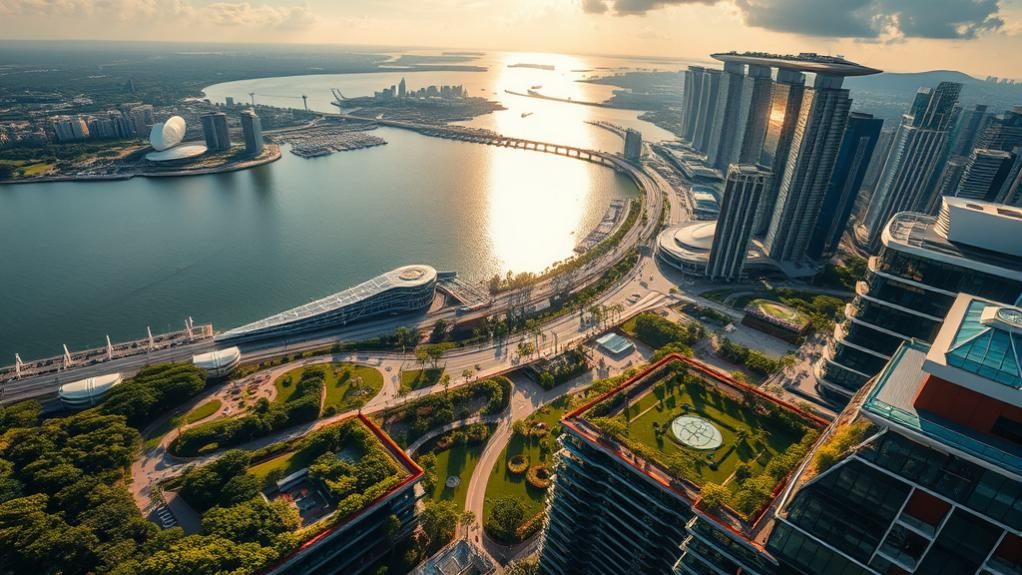
How is Marina Bay poised to transform from a showcase district into a livelier, more connected urban core? The answer rests in a planned network of new bridges, mixed-use developments, and high-profile cultural anchors that aim to knit waterfront assets into daily life.
Marina Bay’s future hinges on new bridges, mixed-use hubs, and cultural anchors weaving the waterfront into daily life.
A key component is the Marina Centre–Bay East Bridge, scheduled for 2026–2029, which will improve pedestrian and cyclist access across Marina Channel. It links Marina Centre, Gardens by the Bay Bay East, and the forthcoming Founders’ Memorial, increasing accessibility to major cultural sites and supporting large public events with smoother crowd flow.
The planned IR2 ultra-luxury resort at Marina Bay, costing about US$8 billion, will anchor the transformation with a 570‑suite flagship hotel and a 15,000-seat arena.
Beyond bridges, the area is shaping a dense, mixed-use landscape. Grade A offices, hotels, and distinctive homes are rising together, while public spaces, retail, and hospitality weave with residential and business uses. The expansion of MICE facilities positions Marina Bay as a global events hub, and the Disney Cruise Line’s year-round operations at Marina Bay Cruise Centre boost tourism and local spending.
Planned wellness attractions in Marina South add lifestyle-oriented options that complement work and recreation.
Ultra-luxury hospitality and entertainment are central to the makeover. Marina Bay Sands is slated to host an US$8 billion new ultra-luxury resort (IR2) by 2030, with a 570 all-suite hotel and premium amenities. A new 15,000-seat arena promises top-tier live entertainment, while 200,000 square feet of premium MICE space targets high-value business tourism.
The project anticipates stronger luxury retail, destination F&B, and wellness spaces, complementing existing properties through a reinvestment of about US$1.75 billion by the parent company.
Economically, the plan aims to generate roughly one million new jobs in the central urban region, broadening opportunities across finance, tourism, lifestyle, events, and hospitality. Similar to integrated developments like The Reserve Residences, this transformation offers enhanced connectivity with direct access to transport hubs and amenities. Upgraded infrastructure and sustainable design choices are meant to boost business operations and attract talent, while low-carbon, resilient planning supports long-term value.
Sustainability plays a guiding role, with water management, microclimate, and sustainable transport integrated into the Marina Bay Master Plan. Green corridors and landscape engineering extend the “City in a Garden” concept, helping maintain livability and ensuring the waterfront remains vibrant for residents and visitors alike.
The pedestrian and cyclist link across Marina Channel will also help ensure safer and smoother movement for residents and visitors during major events and daily activities.