The collective sale committee of Serenity Park has officially relaunched the prime freehold condominium for collective sale with a revised guide price of S$440 million. The strategic move represents a decisive S$65 million (12.9%) reduction from its initial S$505 million tender launched earlier this year, directly reflecting the hard economic realities developers face in today’s cautious residential land market.
When the 179-unit development along Tamarind Road in District 28 first tested the market, our earlier analysis on whether Serenity Park’s S$505M price tag could attract developer bids highlighted that while suburban freehold land is exceptionally rare, the headline reserve price left virtually zero margin for developers contending with elevated construction overheads and high borrowing costs. By recalibrating expectations downward to S$440 million, the owners have made a calculated bid to clear the transaction before market sentiment shifts further.
The S$65 Million Adjustment: Breaking Down the S$1,266 Psf Ppr Land Rate
At the revised S$440 million price point, the land rate works out to approximately S$1,266 per square foot per plot ratio (psf ppr). This marks a sharp decline from the earlier S$1,453 psf ppr benchmark, fundamentally altering the development feasibility equation for prospective bidders.
Accounting for construction expenses (conservatively estimated at $460 to $530 psf), financing costs, professional consultancy fees, and marketing commissions, a land cost of S$1,266 psf ppr translates to an estimated developer all-in breakeven cost of around $1,950 to $2,050 psf. Under current market conditions in Yio Chu Kang and the wider Outside Central Region (OCR), new private residential launches regularly transact between $2,200 and $2,450 psf.
This spread provides a viable 10% to 15% development margin that was entirely absent at the previous S$505 million valuation. By pricing the land to accommodate prevailing retail prices rather than speculative future inflation, the collective sale committee has transformed a stalled tender into a commercially viable proposition.
Redevelopment Potential: 380 Low-Rise Homes in Yio Chu Kang
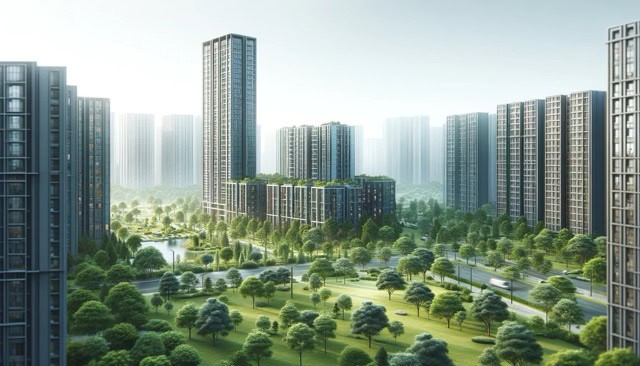
Completed in 1995, Serenity Park sits on an expansive land area of approximately 248,173 sq ft (23,056 sq m). Under the prevailing Urban Redevelopment Authority (URA) Master Plan, the parcel is zoned “Residential” with a gross plot ratio (GPR) of 1.4 and a building height restriction capped at five storeys.
Based on the allowable gross floor area (GFA) of approximately 347,442 sq ft (approx. 32,278 sq m), the sprawling suburban parcel can yield approximately 380 brand-new private homes, assuming an average unit size of 85 to 90 sq m. For developers seeking to replenish land banks, the site offers unique advantages:
- Pure Freehold Title: Unlike 99-year leasehold sites which require multi-million dollar lease top-up payments to the Singapore Land Authority (SLA), freehold plots require zero lease refreshment premiums, preserving substantial gross development value.
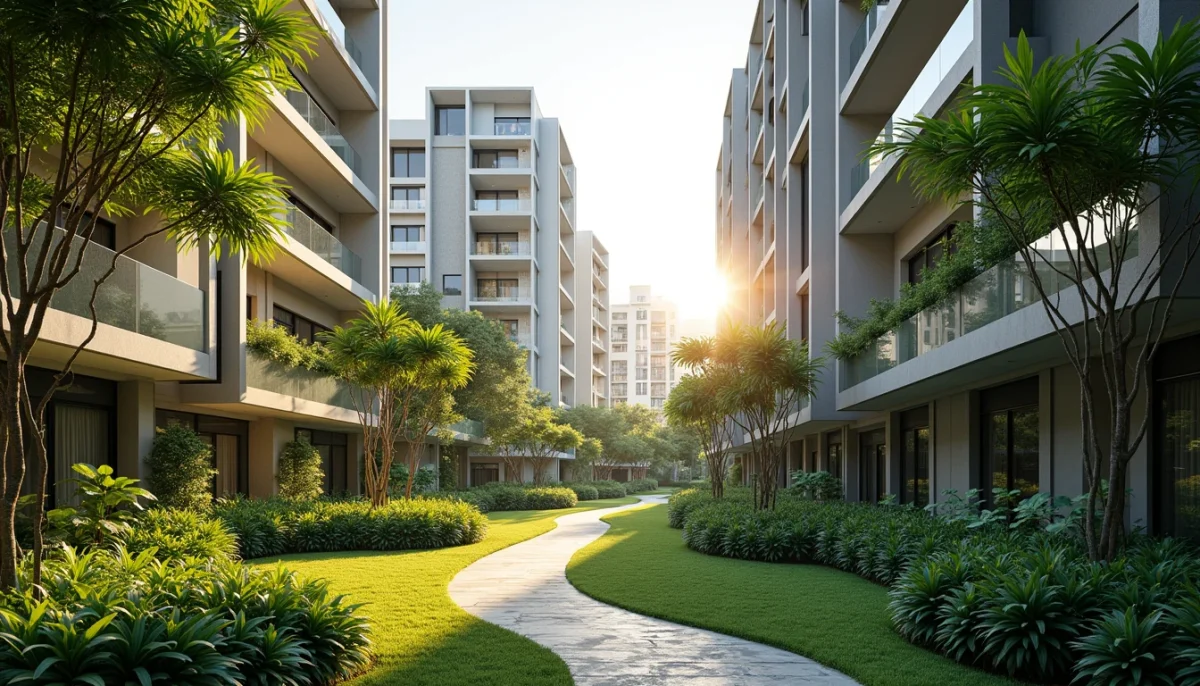
- Low-Rise Density Appeal: A 5-storey boutique architectural footprint nestled within the established Seletar and Yio Chu Kang landed housing belt caters directly to affluent upgraders and downsizers seeking tranquil low-density living.
- Bite-Sized Redevelopment Scale: At roughly 380 units, the project falls well below mega-condominium thresholds, significantly reducing inventory absorption risk.
Buyers looking at how boutique low-density living is structured in prime central enclaves can explore comparable boutique layouts such as Dunearn House freehold residences.
Owner Payout Economics: S$2.2M to S$2.7M Replacement Math
Even after accepting a 12.9% reduction from their original target, existing Serenity Park homeowners stand to walk away with substantial capital windfalls. Estimated gross sales proceeds are projected to range between S$2.2 million and S$2.7 million per unit, depending on unit strata floor area and existing share values.
When evaluated against recent individual resale caveats within Serenity Park—where 1,313 sq ft 3-bedroom units transacted between S$1.65 million and S$1.77 million (approximately $1,250 to $1,350 psf)—the revised en bloc guide price still delivers an impressive 30% to 35% premium over secondary market resale values.
This premium provides outgoing owners with strong equity liquidity to acquire replacement homes in the resale private condominium market or rightsized landed homes nearby without taking on excessive leverage.
Why Developers Remained Hesitant at S$505M: The 35% ABSD Clock
To understand why the price cut was necessary, one must examine the institutional constraints governing Singapore property developers. Under prevailing Ministry of Finance and IRAS macroprudential cooling measures, developers acquiring residential land must commit to a non-remissible 5% Additional Buyer’s Stamp Duty (ABSD), plus a hefty 35% remissible ABSD.
To qualify for the 35% remission, the developer must develop the site and legally sell 100% of the new units within a strict five-year statutory timeframe from the date of acquisition. Even a single unsold unit on day 1,826 results in the clawback of the entire 35% ABSD plus compound interest—a penalty that can easily obliterate total development profits.
At a land cost of S$505 million, a developer faced an immediate S$176.75 million ABSD liability hanging over the project. For a site located in District 28 without immediate sheltered doorstep access to an MRT station, committing to a launch price above $2,500 psf to clear 380 homes within five years was viewed as an unacceptable risk profile. The S$65 million price reduction directly mitigates this exposure.
Freehold Appeal vs the Suburban GLS Pipeline
Serenity Park’s relaunch comes at a pivotal moment in the collective sale cycle. While Government Land Sales (GLS) tenders continue to feed developers with 99-year leasehold plots across suburban regions like Lentor, Upper Changi, and Jurong Lake District, genuine freehold land parcels remain exceptionally scarce.
As detailed in our analysis of en bloc laws and collective sale thresholds, securing 80% statutory owner consensus under Section 84A of the Land Titles (Strata) Act is notoriously difficult. If Serenity Park secures a buyer at S$440 million, it will prove that pricing realism—rather than entrenched owner resistance—is the key to unlocking successful collective sales in the current interest rate environment.
What the En Bloc Market Watches Next
The relaunch of Serenity Park at S$440 million serves as a critical bellwether for Singapore’s private collective sale market. It sends a clear signal to en bloc hopefuls islandwide: developers possess the balance sheet liquidity to acquire quality land, but only when vendors price their expectations in line with end-buyer affordability and regulatory risk.
Should this revised tender attract competitive bids from local or regional developers, it could revitalize momentum across other stalled suburban collective sales, establishing S$1,200 to S$1,300 psf ppr as the realistic clearance zone for prime OCR freehold land.