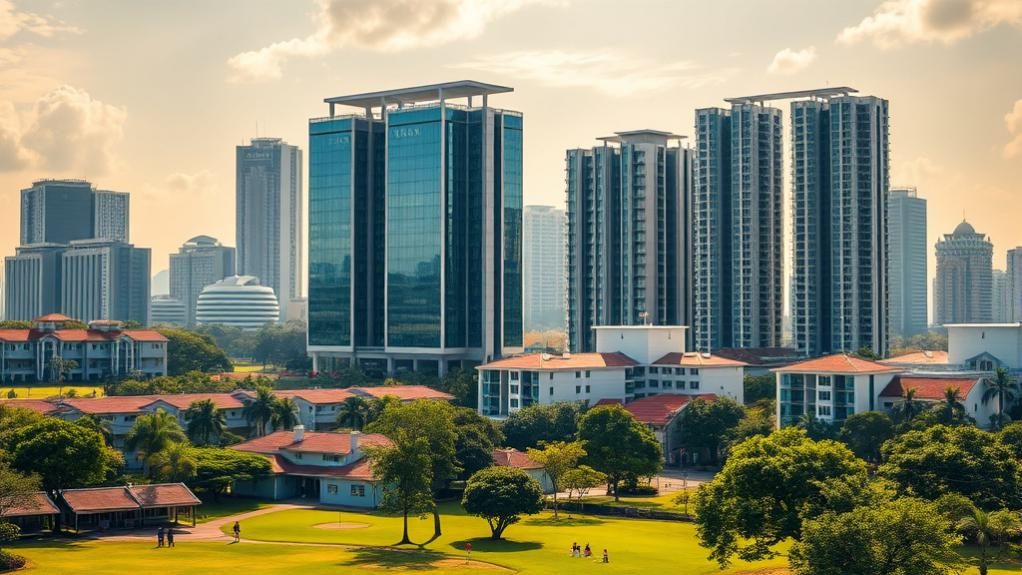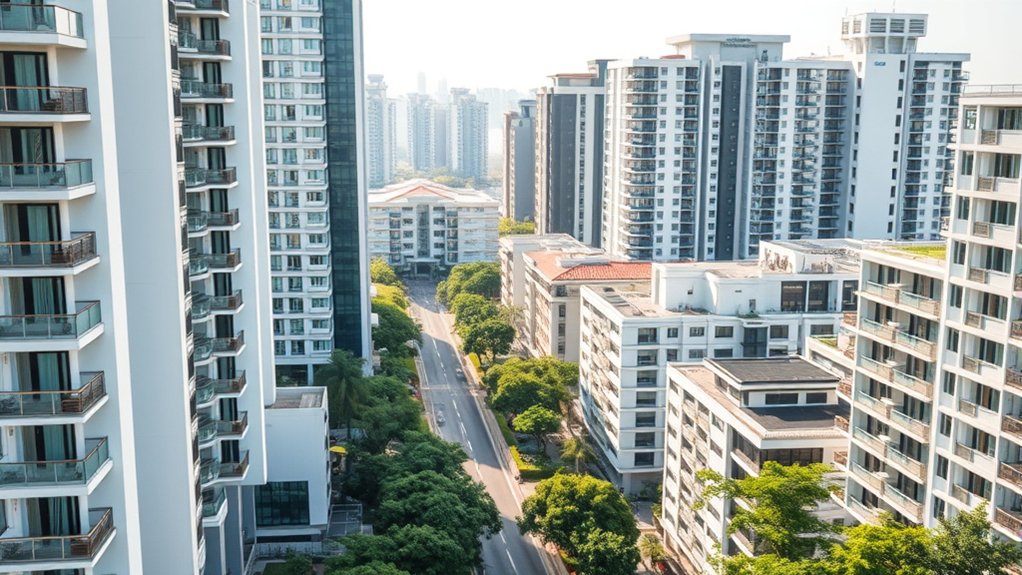
The Singapore Land Authority revised Land Betterment Charge rates across the island, introducing an average 4.1% increase for non-landed residential properties. Announced on 27 February 2026 and taking effect on 1 March 2026, the adjustment represents the sharpest upward revision for the non-landed private residential sector since September 2022. The semi-annual update applies across the six-month cycle ending 31 August 2026, recalibrating the statutory charges developers pay when enhancing land value through rezoning or higher development intensity under statutory guidelines established by the Singapore Land Authority.
Framework and Legal Basis of the Land Betterment Charge
The Land Betterment Charge framework was introduced under the Land Betterment Charge Act 2021, which came into full operational effect in August 2022. The system consolidated three formerly separate statutory levies: the Development Charge administered by the Urban Redevelopment Authority, the Temporary Development Levy, and the Differential Premium collected by SLA for lease modifications or title lifting. By consolidating these levies under a single statutory regime, the government created a streamlined framework where developers face unified rates and procedures when unlocking additional development potential on private or state land.
LBC rates are reviewed twice annually, taking effect on 1 March and 1 September. The rates are determined by the Singapore Land Authority in consultation with the Chief Valuer, an independent statutory officer. Assessments rely on real-world transaction evidence gathered from recent Government Land Sales tenders, private collective sale transactions, and commercial real estate deals. When a developer submits a planning application to the Urban Redevelopment Authority that results in a higher baseline use or increased gross floor area, SLA issues a formal Liability Order stating the required charge, which must be settled within one month of issue.
Sector-Specific Adjustments Across Non-Landed Residential Zones
Singapore is divided into 118 geographical sectors for the purpose of assessing land betterment values. In the March 2026 review for non-landed residential use (designated as Use Group B2), 114 out of the 118 sectors experienced rate increases ranging between 3% and 23%. Only four sectors recorded no change in rates, and no sector saw a rate reduction. This broad upward adjustment confirms that upward revisions were not confined to isolated hotspots but reflected broad land appreciation across suburban and city-fringe precincts.
The sharpest percentage increases were concentrated in sectors experiencing active redevelopment interest or benchmark-setting land sales. Sector 114, which covers the Bayshore and Upper East Coast corridors, posted the highest single increase at 15.4%. This sharp movement was driven by competitive bidding during recent state land tenders in the Bayshore housing precinct, as well as subsequent private development commitments along East Coast. Similar upward adjustments affected selected suburban districts where developers competed aggressively for residential parcels, mirroring previous patterns documented in our review of sharp Land Betterment Charge hikes in Bayshore and Lorong Chuan.
Cross-Sector Comparison: Landed, Commercial, and Industrial Rates
While non-landed residential land charges recorded the strongest growth at 4.1%, other property sectors reflected varying degrees of commercial demand. Landed residential properties (Use Group B1) saw rates increase by an average of 4.0%, indicating continued developer appetite for landed housing redevelopment and luxury cluster housing sites. Industrial land (Use Group D) registered a moderate 3.2% increase, driven primarily by demand for modern logistics hubs and high-spec industrial facilities.
Commercial land charges (Use Group A) posted a minimal uptick of just 0.5%, reflecting cautious leasing sentiment and higher yield requirements among institutional investors. Hotel, hospital, and civic community land categories (Use Groups C and E) remained entirely unchanged with a 0.0% adjustment. The clear divergence between residential and commercial sectors illustrates that residential housing demand remains the primary anchor of land value appreciation in Singapore, a trend consistent with earlier analyses of how Singapore raises LBC rates across diverse land uses.
How LBC Rates Are Computed: Table of Rates vs Chief Valuer Assessment
Developers determining their financial liabilities generally rely on the Table of Rates method. Under this system, the Land Betterment Charge is calculated as the difference between the post-enhancement value and the pre-enhancement value of the site, based on the published rate per square metre of gross floor area for that specific sector. This published table gives developers cost certainty during feasibility studies and land acquisition planning, allowing precise forecasting of regulatory charges before committing capital.
However, the statutory framework also provides an alternative path. If a landowner or developer believes the Table of Rates does not accurately reflect the market value enhancement of their specific site, they may request a formal site-specific valuation by the Chief Valuer. This option carries valuation risk: if the Chief Valuer’s assessment yields a figure higher than the Table of Rates calculation, the developer is legally required to pay the higher assessed sum. Consequently, most market participants accept the published Table of Rates rather than triggering a bespoke valuation.
Practical Implications for Residential Redevelopment and En Bloc Sites
The 4.1% average increase in non-landed residential LBC rates carries direct consequences for the collective sale market. In an en bloc transaction, developers must factor in both the reserve price demanded by existing owners and the Land Betterment Charge required to redevelop the plot to its maximum master plan plot ratio. When LBC rates rise, the statutory cost of buying additional gross floor area increases, effectively narrowing the financial margin available to offer existing homeowners.
For prospective private housing buyers, higher betterment charges reinforce the baseline cost of new housing supply. Developers bidding for redevelopment land must account for financing costs, construction materials, regulatory compliance fees, and statutory land charges. As these input costs trend higher, developers have limited room to lower launch prices, sustaining price resilience across new condominium releases islandwide.