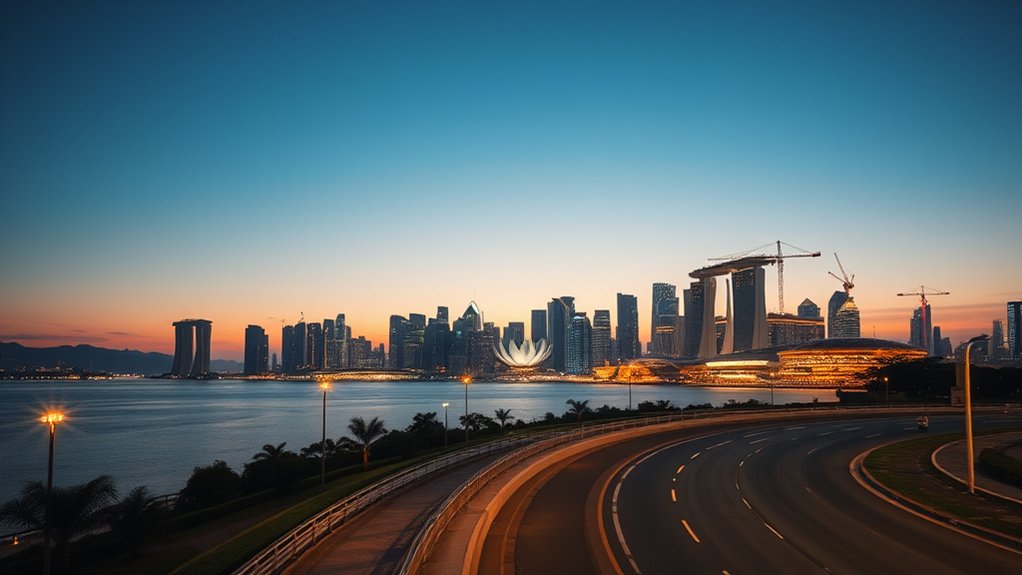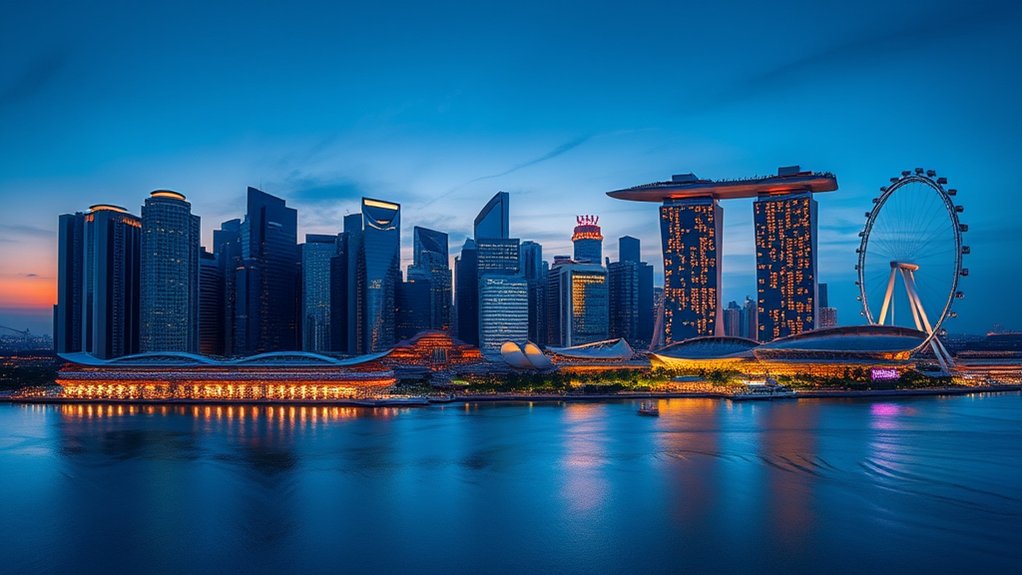
While risk management traditionally dominates real estate conversations, Singapore has demonstrated that resilience serves as a powerful competitive advantage, securing second place globally in the WiredScore Global Cities Resilience Index 2026 for both digital and cyber resilience.
The city-state joined Chicago, Dubai, and Madrid as the world’s most resilient cities, earning the highest tier placement in WiredScore’s assessment framework.
The WiredScore Global Cities Resilience Index 2026 evaluated commercial real estate across multiple criteria, including cyber threats, climate impact, power instability, and technological advancement.
Singapore’s performance establishes the Asia-Pacific region as a global benchmark for digital and cyber resilience, with the city serving as a prime exemplar of what robust infrastructure can accomplish.
Strong connectivity and infrastructure emerged as the primary factors driving Singapore’s impressive ranking.
The city maintains consistently strong indoor mobile signal quality across its built environment, a achievement made possible through close coordination between mobile network operators and property owners.
This collaboration guarantees floor-to-floor mobile signal reliability throughout buildings, meeting the seamless connectivity standards that occupiers increasingly demand.
Singapore’s mobile experience ranks among the best globally according to independent assessments referenced by WiredScore.
Mobile connectivity reliability extends beyond individual properties, creating expected performance levels across entire commercial districts.
This infrastructure development aligns directly with commercial real estate occupier requirements, supporting advanced digital capabilities that modern tenants consider essential rather than optional.
Occupier expectations have evolved substantially, requiring connectivity that works reliably from floor to floor and between buildings.
Premium connectivity standards now factor heavily into location and lease decisions, transforming digital and cyber resilience from background infrastructure into a measurable commercial differentiator.
Properties that meet these elevated expectations position themselves competitively in Singapore’s demanding market.
The recognition carries implications beyond rankings, as resilience capabilities support the city’s ability to attract both capital and occupiers. Singapore CBD Grade A office rents rose for seventh straight quarter, with vacancy falling to 6.7% in Q4 driven by flight-to-quality trends.
Singapore’s performance demonstrates that built world resilience represents more than risk mitigation, it creates tangible competitive advantages in an increasingly connected commercial real estate landscape where infrastructure quality directly influences market positioning.
Buildings with robust mobile solutions enjoy vacancy rates up to 50% lower than competitors.
The city’s occupancy rate reached 96% as of September 2022, reflecting strong tenant demand amid continued return of workers to the office post-Covid.