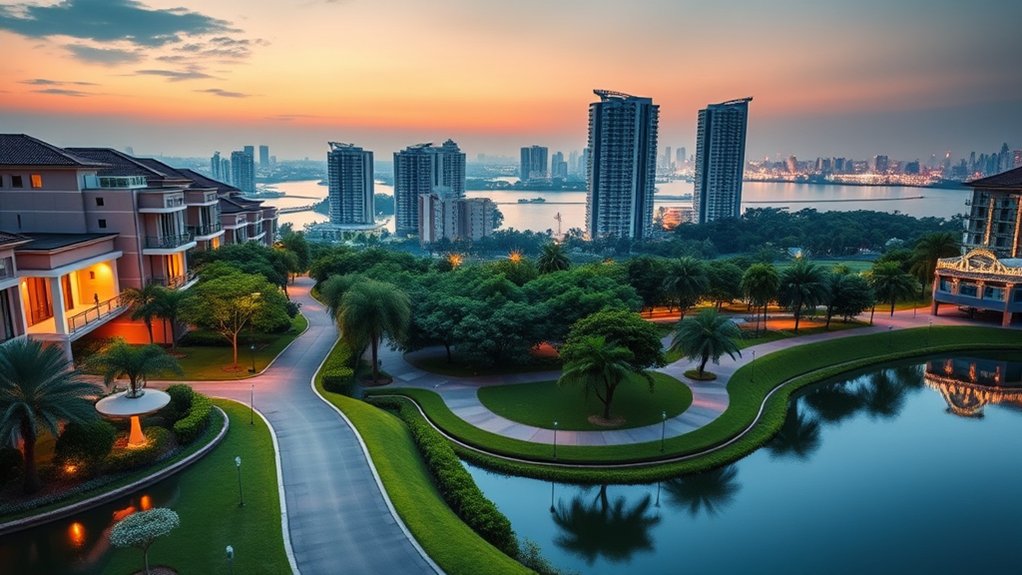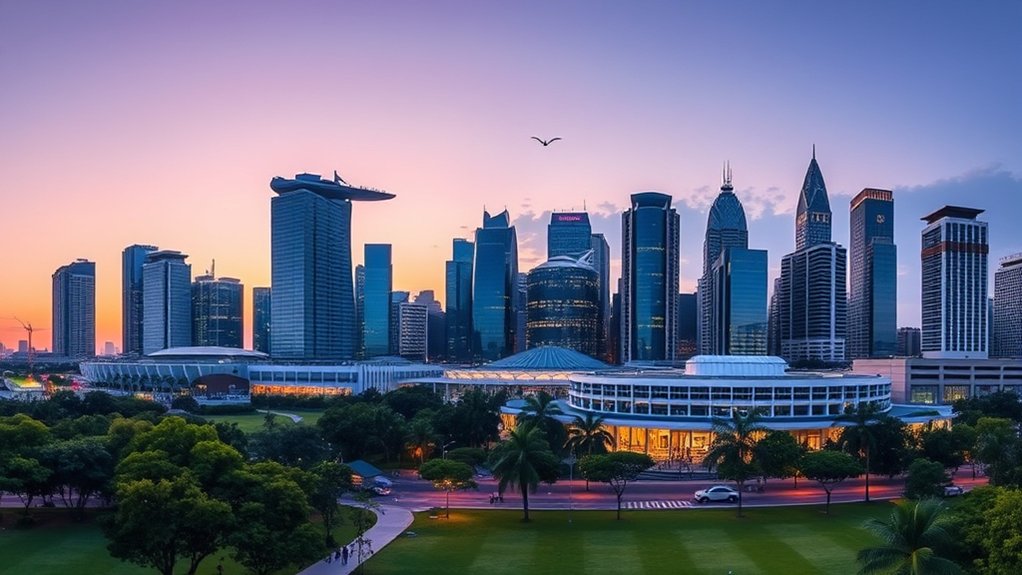
The Singapore housing market wrapped up the final quarter of 2025 with a fascinating mix of price moderation and explosive sales activity, presenting a unique landscape for observers and buyers alike.
While private residential prices technically rose by 0.7% quarter-on-quarter, this represents a deceleration from the 0.9% seen previously, bringing full-year growth to 3.4%. This is the slowest annual pace since 2020, and notably, the Core Central Region saw non-landed prices slide by 3.2%, proving that even prestige properties aren’t immune to gravity. Growth was instead propped up by landed properties, which climbed 7.7% for the year and offset weakness elsewhere.
Annual growth decelerated to 3.4%, while central region prices slid, proving prestige properties aren’t immune to gravity.
Consumer enthusiasm, however, told a very different story. A stunning 10,667 new private homes were sold in 2025, nearly doubling the 6,469 units recorded in 2024 to hit a four-year high. Buyers flocked to launches like Lyndenwoods, which sold 94% of its units instantly, and River Green, which cleared 88%. Even Springleaf Residence achieved 92% sales, showing that demand is robust. Despite this surge in local activity, international demand remained subdued due to tax hikes, with foreign purchases comprising just 2% of new sales.
This frenzy was fueled by a surprising GDP growth of 4.8% and a friendly monetary environment where the 3-month SORA fell markedly to 1.19% by December.
Supply dynamics also shifted gears to meet this hunger. Developers launched 4,191 units in the third quarter alone, a massive 226.4% year-on-year increase. For the first nine months, 8,850 units entered the market, up nearly 175%.
Looking ahead, the government has confirmed 4,575 units for the first half of 2026, ensuring the pipeline remains flowing. Two prime River Valley sites have just been released under the Government Land Sales program, adding approximately 960 new private residences to future supply. With the total Government Land Sales supply sitting at 9,200 units, comparable to late 2025, competition among developers will likely stay heated.
Economically, the upward GDP revision boosted confidence, while stable employment kept mortgage applications active. Analysts now forecast 2026 prices to grow between 2.5% and 4.5%, aligning with broader economic trends.
However, with resale HDB transactions falling and major launches tapering off in the fourth quarter, households are advised to exercise prudence. As the market digests the new supply and updated economic data, the interplay between enthusiastic buyers and stabilizing prices will surely keep everyone guessing and watching well into the new year.