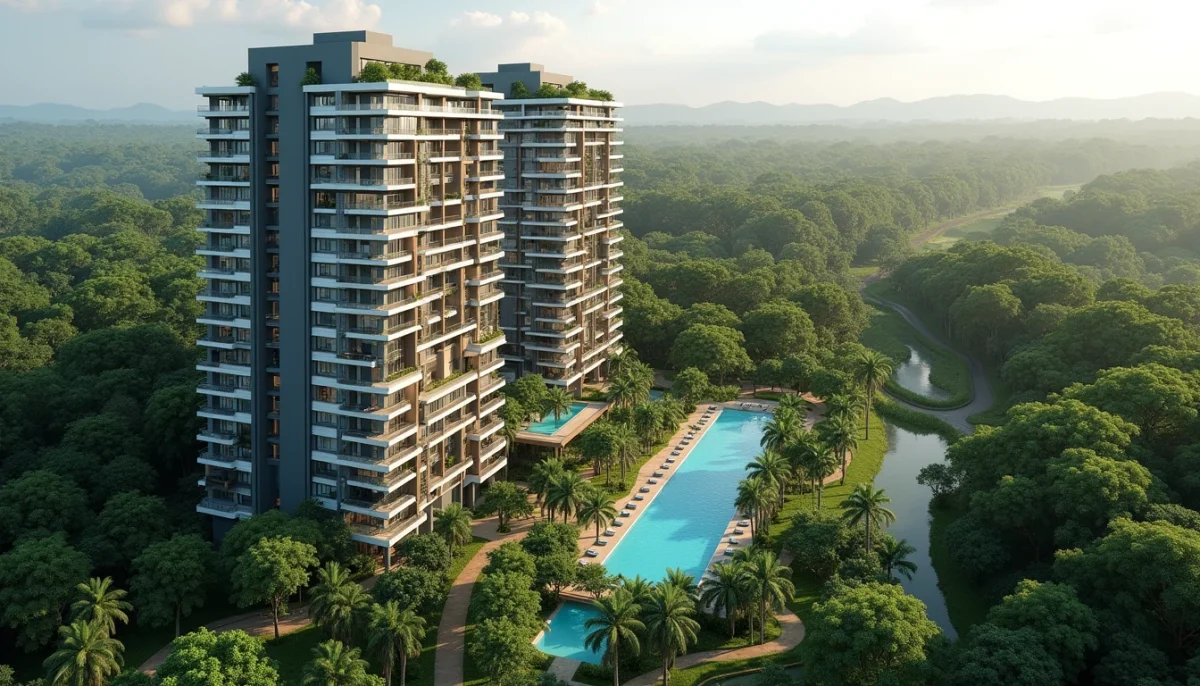
A bustling home to over 221,000 residents, Yishun distinguishes itself as an essential mature town with a massive inventory of more than 65,000 residential units designed for long-term settlement. Dominated by spacious family-sized flats, the area clearly aligns with strong national trends where nearly 31.6% of households currently opt for standard 4-room layouts, creating a distinctively family-oriented environment.
This specific focus on larger living spaces is heavily supported by a strategic mix of public housing and private condominiums, effectively allowing upgraders or multi-generational households to remain within the same town boundaries. The local real estate market remains remarkably active, evidenced by a recent year seeing 3,746 HDB units sold for a substantial total of $1.73 billion, indicating a robust appetite for family homes. However, urban planners note that such specific demographic concentrations can inadvertently entrench SES-based geographic divides, creating a marked contrast with wealthier districts like Bukit Timah.
The local real estate market remains remarkably active, indicating a robust appetite for family homes.
Despite real estate prices rising, with average per-square-foot costs crossing S$750 between 2023 and 2024, Yishun is generally more affordable than many central locations. This competitive pricing attracts families seeking value-for-money homes, even as executive apartments and rare, large-format flats occasionally fetch above S$1.0 million.
It caters to a practical demographic, given that historically only 5.4% of families here earn above S$20,000 monthly, reinforcing the crucial need for safe, budget-friendly choices. Reflecting strong demand from active buyers, Yishun recently ranked as the high-performing number four estate by HDB resale transactions, proving that people genuinely want to live here. This trend aligns with Singapore’s growing preference for suburban living, as evidenced by the 22% rise in OCR transactions in 2024.
Looking to the future, the new Chencharu estate promises to add approximately 10,000 homes by 2040, with at least 80% designated as public housing, greatly expanding supply for hopeful young families. These new developments will also feature distinct green spaces and smart designs to promote long-term sustainability.
Daily life is vigorously supported by solid network infrastructure, served by Yishun and Khatib MRT stations on the North-South Line, providing direct connections to the city.
Integrated transport hubs around Yishun MRT, like Northpoint City, centralize shopping and childcare, while decentralized employment nodes under the URA Master Plan encourage live-near-work patterns.
With high satisfaction rates regarding the Home Improvement Programme, 99% of residents feel content, enjoying comfortable homes without the headache of constant repairs.
This broad, self-sufficient ecosystem greatly reduces cross-island travel, ensuring that necessary amenities are never far away, making the daily grind for busy working parents just a little bit easier to manage effectively.