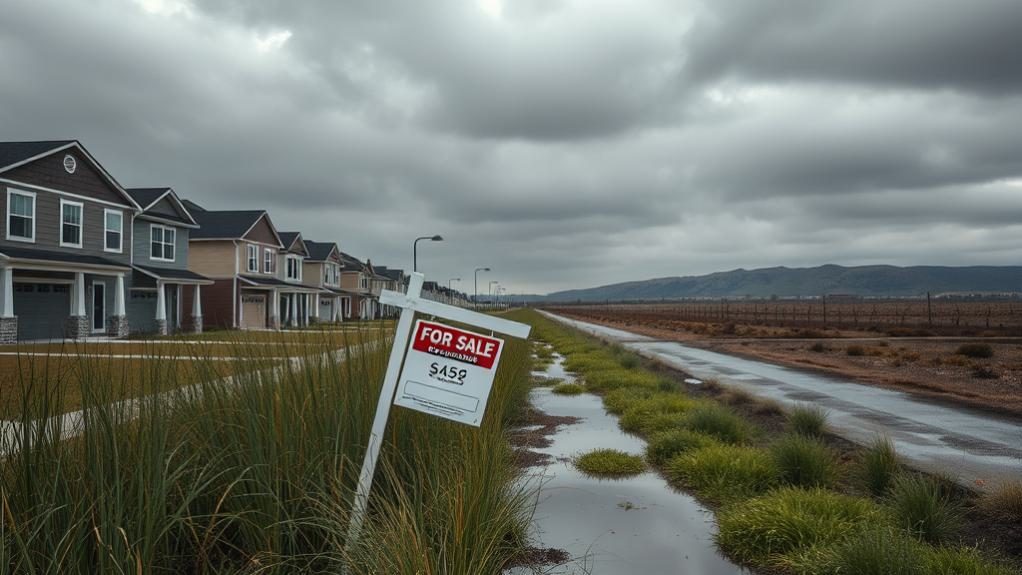
Uncertainty looms over the housing market as new home sales present a mixed picture, with recent data showing both gains and concerning trends. April 2025 reported a seasonally-adjusted annual rate of 743,000 new single-family home sales, a solid 10.9% jump from March’s revised 670,000. Yet, whispers of a potential plunge in May have analysts on edge, especially since earlier months like January saw sales dip to 657,000, down 10.5% from December 2024. It’s a rollercoaster, folks, and while the numbers climbed steadily through February and March, the market’s unpredictability keeps everyone guessing.
Looking year-over-year, April 2025’s sales edged up 3.3% from 719,000 in April 2024, a modest win. But not every month tells a happy story—January 2025 slipped 1.1% compared to the prior year. Still, March 2025 showed some muscle with strong gains over 2024, hinting at resilience. Similar to Singapore’s recent 68.4% sales drop in October, limited new launches are contributing to market fluctuations globally. Inventory, meanwhile, is stacking up, with 504,000 new homes for sale in April 2025, up 8.6% from last year’s 464,000. That’s a lot of houses waiting for buyers, though the months’ supply dropped 11.0% from March to 8.1, suggesting sales pace isn’t entirely sluggish. Notably, new home sales data often face large revisions due to their preliminary nature, adding another layer of uncertainty to these figures.
Prices are another piece of this puzzle. January 2025’s median sales price hit $446,300, up 7.5% from December 2024 and 3.7% from January 2024. But the average price dipped 3.4% year-over-year to $510,000, showing buyers might be hunting for deals. With mortgage rates creeping up to 5.92% for a 15-year loan in May, affordability could take a hit, potentially cooling off buyer enthusiasm down the road. Additionally, builders are increasingly offering incentives, with 61% providing sales incentives in April 2025 to attract hesitant buyers.
Forecasts aren’t exactly a crystal ball, but they project sales at 690,000 units by mid-2025, with a dip to 610,000 in 2026 before a rebound to 680,000 in 2027. Volatility, interest rates, and economic headwinds are the usual suspects behind these shifts. Builders are tweaking prices and tossing in incentives, which helped April’s numbers, per the U.S. Census Bureau and HUD data. Still, with supply building as construction outpaces sales surges, the market feels like a tightrope walk. Will May’s rumored drop be a blip or a warning? Only time will tell.